Why the Disposable Camera Nostalgia Trend Hits
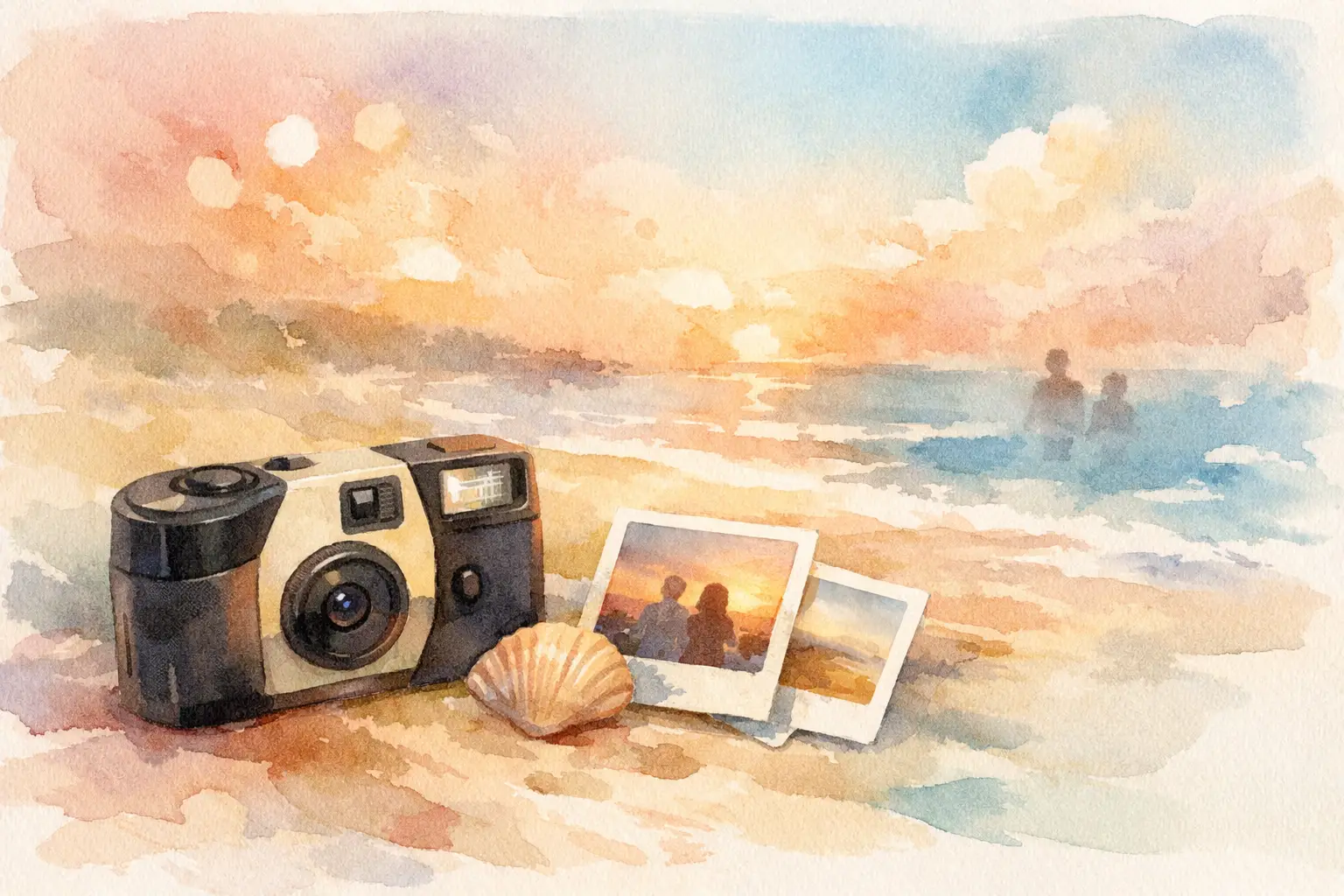
Someone always says it at a party now: wait, who took that? The blurry one with the flash blown out, the half-cut smile, the dance floor chaos. It looks nothing like the polished camera roll everyone posts the next morning, and that is exactly why the disposable camera nostalgia trend keeps showing up everywhere from weddings to brand events.
This trend is not really about cameras. It is about permission. Permission to take bad photos, funny photos, unplanned photos, and the kind of photos that feel like proof you were there instead of proof you styled the moment correctly. For a generation that has spent years curating feeds, that shift feels fresh.
What the disposable camera nostalgia trend is really selling
On the surface, the appeal is obvious. Disposable-camera photos have a look people still love - direct flash, soft grain, weird framing, and a little unpredictability. The image feels less edited before you even look at it. It suggests honesty, even when the moment itself is still staged.
But the stronger pull is emotional. Disposable cameras create distance between capture and review. You do not take the photo and immediately decide whether it is worthy. You move on. The night keeps going. That small delay changes the energy of the event more than people realize.
When every photo can be checked, retaken, filtered, and posted within seconds, people start performing for the result. When the result is hidden for a while, people tend to act more like themselves. That is a big reason the disposable camera nostalgia trend resonates so hard with Gen Z and millennials. It borrows the aesthetics of the past, but the deeper appeal is relief from constant self-editing.
Why polished photos are losing some ground
People still want beautiful event photography. Nobody is pretending otherwise. Weddings need the hero shots. Brand activations need clean content. Birthday dinners still deserve the perfect group photo where everyone looks awake.
But polished photos only tell one version of the story. They cover the centerpiece, the outfit, the planned moment. They usually miss the side conversations, the blurry laughter, the ten minutes before the candles came out, the friend who somehow became the unofficial photographer for one corner of the night.
That is where this trend wins. It fills in the social texture.
A perfect event gallery can still feel incomplete if it only reflects what was meant to happen. Disposable-style photos capture what actually happened. For hosts, that matters. For guests, it matters even more, because people want to see the event from inside the crowd, not just from the outside looking in.
The real engine behind the trend: low-pressure participation
Here is the part most coverage misses: the disposable camera nostalgia trend works because it lowers the stakes.
When people think a photo has to be good, they contribute less. They second-guess. They hold back. They assume someone else is documenting everything better anyway. That is why so many event albums end up thin, even when everyone had a phone in hand.
A disposable-camera mindset flips that. The expectation is not perfection. The expectation is contribution.
That changes behavior fast. Guests become more willing to snap what is happening in front of them. They stop aiming only for polished group shots and start catching in-between moments. More people participate because the format feels playful instead of demanding.
For hosts and organizers, this is the difference between chasing photos after the event and actually collecting them while the energy is still alive. The best event photo systems understand that friction kills participation. If joining takes too many steps, people skip it. If the experience feels fun and temporary, people jump in.
Why this trend fits group events so well
Disposable cameras always had a social quality. You passed them around. Different people saw the same night differently. Nobody knew exactly what was on the roll until later.
That same structure feels made for modern group events, especially ones where people care as much about the shared memory as the individual post. Weddings, birthdays, vacations, reunions, retreats, and company offsites all benefit from this because the best moments are distributed. No single person sees everything.
The trend thrives when the format turns guests into contributors instead of spectators. That is why digital versions of the idea have taken off. They keep the fun part - limited shots, nostalgic filters, delayed reveals - without the old headaches of buying cameras, collecting them, paying for film, and discovering half of them never worked.
For event hosts, that trade-off matters. Analog charm is great until you are trying to recover twenty disposable cameras from people who left them in rideshares.
The analog fantasy vs the modern reality
This is where it depends on what kind of event you are planning.
If you are hosting a small dinner party or a weekend cabin trip, real disposable cameras can still be a fun move. The physical object adds novelty. People love grabbing one off a table and taking a flash photo they cannot immediately inspect. There is genuine charm there.
But for larger events, the analog version starts breaking down. Film costs add up. Shot counts are limited in a way that is sometimes fun and sometimes just frustrating. Photos can come back underexposed, overexposed, or missing entirely. And after the event, someone still has to gather cameras, get them developed, digitize the prints, and send everything around.
That is a lot of effort for a vibe.
Digital disposable camera experiences work because they keep the vibe and remove the chore list. Guests can join quickly, contribute from their phones, and still get the sense of scarcity and surprise that made disposables exciting in the first place. For hosts, that means more usable photos, more participation, and far less admin.
That balance is the heart of why this trend has stuck around instead of fading as a short-lived aesthetic.
Why brands and planners are paying attention
The disposable camera nostalgia trend is not just for weddings and birthdays. It is showing up at conferences, pop-ups, launches, and team events because it solves a real engagement problem.
Most event content plans focus on what the brand captures. Smart organizers also think about what attendees will capture. User-generated content feels more immediate, more credible, and more alive than the official recap alone. But again, participation drops when the process feels like work.
A disposable-style format gives people a reason to play along. It feels interactive. It creates a shared challenge. It also produces content with a built-in point of view, which is exactly what standard event galleries often lack.
The delayed reveal matters here too. When people know the full gallery opens later, they have a reason to come back. That post-event return creates a second wave of engagement, which is useful whether you are hosting a wedding weekend or a branded experience.
What people actually want from event photos now
They want the nice portrait, sure. But they also want the messier set. The one that feels social instead of promotional. The one that captures the energy in the room, not just the room itself.
This is the shift underneath the trend. People are less impressed by volume alone. They want perspective. They want variety. They want moments that feel lived-in.
That is also why private, shared albums feel more relevant than posting everything publicly. Not every great photo is feed material. Some of the best ones are too inside-joke, too chaotic, too specific to the people who were there. Those are usually the photos everyone talks about most.
A platform like Revel fits naturally into this shift because it takes the best parts of the disposable-camera feeling - spontaneity, limits, anticipation, shared payoff - and makes them easy enough for actual modern events. No app. No hunting people down later. No losing the gallery to twelve separate text threads.
The disposable camera nostalgia trend is really about memory friction
People often describe this trend as retro, but retro is only half the story. The stronger story is that modern photo-taking has become too smooth in the wrong places and too fragmented in the moments that matter.
It is easy to take hundreds of photos. It is weirdly hard to end up with one shared collection that captures the whole event.
That gap creates frustration. Hosts feel it when they realize the best guest photos are scattered across DMs and camera rolls. Guests feel it when they know everyone took great pictures but nobody ever sees the full set. The disposable format, especially in a digital version, fixes that by giving the night a container.
That container changes the memory itself. The event feels more collective because the photos become collective.
And maybe that is the reason this trend has real staying power. It is not just chasing a Y2K look. It is restoring something people miss - surprise, shared perspective, and photos that feel like they belong to the moment instead of the algorithm.
The best event photos do not just show what happened. They bring everyone back into it for a second, flash and all.
A writer interested in connection, memory, and the everyday moments that matter more than we realize.
Tags: Disposable camera , Digital disposable camera , Disposable camera app , Wedding disposable camera