Digital Disposable Camera Guide for Events
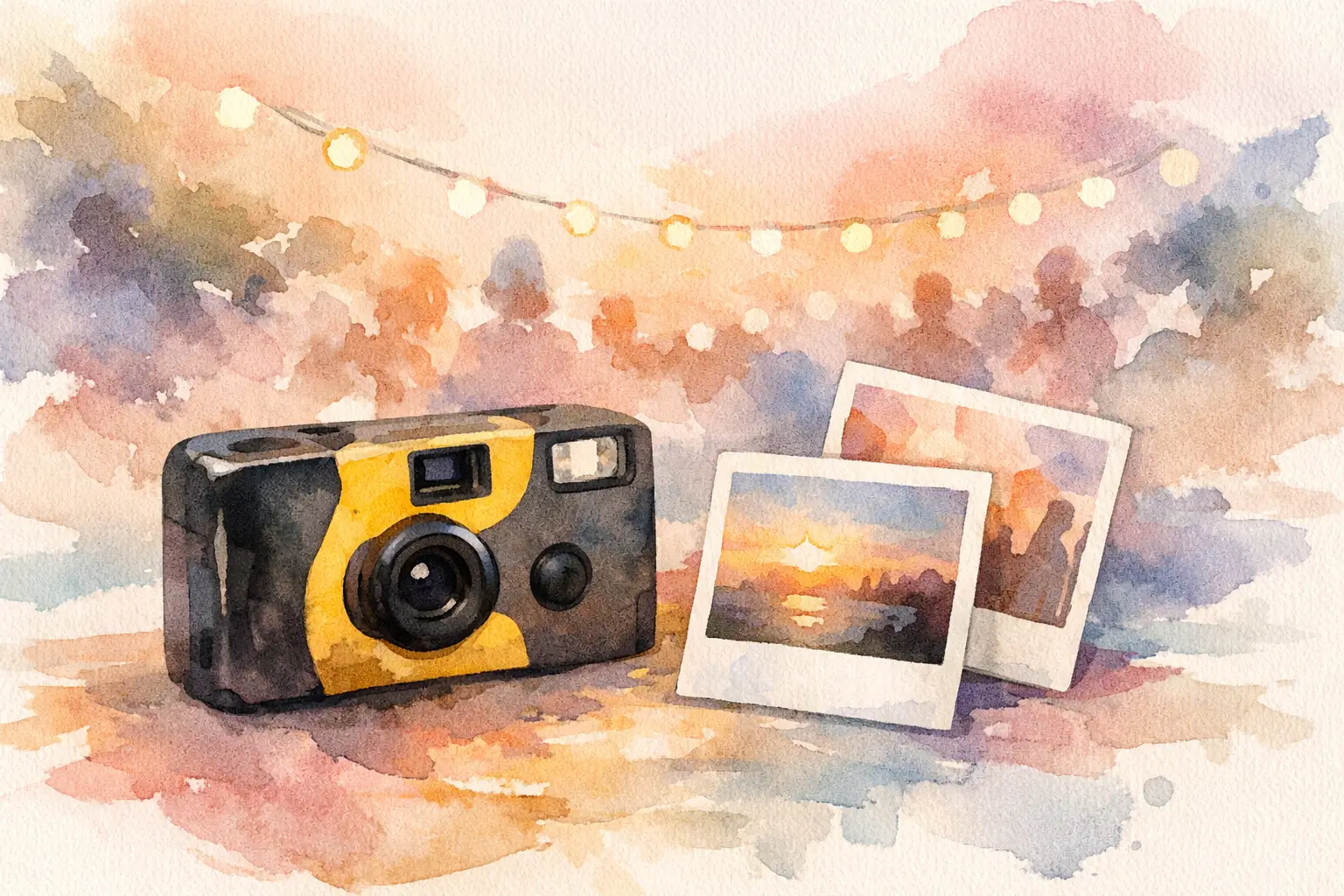
The group chat said, “Send me your pics,” and then absolutely nobody did. That’s the problem this digital disposable camera guide is here to solve. If you want the fun, candid energy of a throwaway camera without the film cost, lost cameras, or three-week wait, digital is the move.
But not every digital disposable camera setup actually works at a real event. Some feel cute in theory and fall apart the second guests have to download an app, make an account, or remember a password while balancing a drink and a tiny plate of cake. The best version is simple enough that people actually use it.
What a digital disposable camera actually is
A digital disposable camera takes the core idea of a classic disposable camera - limited shots, candid moments, low-pressure participation, surprise after the event - and rebuilds it for phones. Instead of handing out physical cameras, you give guests a quick way to join on their own device, snap photos, and add them to a shared gallery.
That sounds obvious, but the format matters. The whole charm of a disposable camera is that it changes behavior. People stop trying to stage every frame. They take quick, weird, funny shots. They capture the in-between moments. A good digital version keeps that energy while fixing the old problems.
Film disposables are nostalgic, but they’re also expensive, easy to lose, and unpredictable in ways that are not always charming. You might get ten great photos and twenty pictures of someone’s shoe. Digital gives you more control without killing the spontaneity.
Why people want a digital disposable camera guide now
Events have a photo collection problem. Everyone takes pictures, but almost none of them end up in one place. They stay trapped in camera rolls, text threads, AirDrop attempts, and social posts that disappear into the feed.
That gap is exactly why digital disposable cameras have taken off for weddings, birthdays, vacations, baby showers, company offsites, and brand activations. They turn guests from passive attendees into contributors. More angles. More candids. More of the night as it actually felt.
The appeal is practical, too. You skip film processing, skip buying multiple cameras, and skip the awkward follow-up where the host has to ask for photos three times. Instead, the collection happens during the event, while the energy is still there.
The best digital disposable camera guide starts with one question
What kind of event are you trying to capture?
That changes everything. A wedding needs broad participation across age groups and a simple setup that works fast. A birthday trip might care more about playful filters and a delayed reveal. A company event might need private sharing, cleaner branding, and a way to collect content without making employees jump through hoops.
If your event is high-energy and social, friction is your enemy. Every extra step costs you photos. If your event is more curated, you may care more about moderation, gallery structure, or export quality. There isn’t one perfect setup for every occasion. There is a right fit for the experience you want.
What to look for in a digital disposable camera
Start with access. If guests need to install something, sign up, or remember login details, participation drops fast. The strongest setups let people join instantly, usually through a QR code, and start shooting right away.
Next is shot behavior. The “disposable” part matters because limits create better energy. When guests only get a certain number of photos, they use them more intentionally. It feels more playful, more interactive, and less like dumping 600 random images into a folder.
Then there’s the reveal. Delayed gallery access is one of the smartest parts of the format. Instead of everyone posting in real time and moving on, you create anticipation. Guests take photos now and see the full collection later, together. That small delay makes the gallery feel like an event of its own.
Filters can help, but they shouldn’t do all the work. The goal is not to fake bad film. It’s to add a little texture and nostalgia while keeping images sharp enough to save, share, and print.
And finally, look at upload quality and device compatibility. If photos come out compressed beyond recognition or the experience breaks on half the guest list’s phones, the concept doesn’t matter. Cute idea, bad execution.
Digital vs film disposable cameras
Film still has a place. If you want true analog grain, zero screen time, and the ritual of development, physical disposables can be part of the vibe. They work especially well when the aesthetic itself is the point.
But for most events, digital wins on convenience and coverage. You get more cameras because every guest already has one. You don’t need to collect devices at the end of the night. You don’t risk losing whole rolls. You can keep the surprise element without gambling on whether the camera survived the dance floor.
There’s also the cost factor. Buying several film cameras, developing them, and hoping the results are usable adds up quickly. A digital setup usually gives you more content, less waste, and a much easier path to actually seeing the photos.
The trade-off is simple. Film has unmatched authenticity for certain tastes. Digital is better if you want participation at scale.
Where digital disposable cameras work best
Weddings are the obvious fit because guests are already taking photos. The challenge is collecting them. A digital disposable camera gives you table-to-table candids, getting-ready moments, dance floor chaos, and little pockets of emotion your formal photographer can’t cover every second.
Birthday parties and baby showers work well because the format is light and social. People understand it immediately. Scan, shoot, keep moving. No awkward instructions needed.
Vacations and reunions benefit from the shared memory angle. Everyone sees the trip differently, and that’s the whole point. Instead of one person becoming the unofficial documentarian, the group builds the album together.
For company events and brand activations, the format does double duty. It captures authentic attendee content while making participation feel like part of the experience rather than a marketing task. That only works, though, if the entry point is fast and the gallery stays organized.
How to get more guest participation
This is where most hosts overcomplicate things. You do not need a long explanation. You need a visible prompt, a fast join flow, and a reason to care.
Put the QR code where people naturally pause - welcome signage, tables, bars, lounges, registration desks. Mention it once early, then let social proof do the rest. The moment a few guests start using it, others follow.
It also helps to frame the experience clearly. Don’t pitch it as “upload your photos later.” That sounds like homework. Pitch it as part of the event. Capture together. Reveal together. That feels immediate and fun.
Shot limits and delayed reveals both help participation because they create a game-like structure. Guests know what to do, and they want to see how everyone else used their shots. People are much more likely to contribute when the experience feels shared, not administrative.
Common mistakes to avoid
The biggest mistake is adding friction in the name of control. If your setup requires too much from guests, you’ll get fewer photos, no matter how polished the platform looks.
The second mistake is treating the digital disposable camera like a generic shared album. Those are not the same thing. Shared albums are passive. A digital disposable camera should feel designed, time-bound, and participatory.
Another miss is forgetting the post-event payoff. If the gallery reveal feels messy or underwhelming, the momentum fades. The reveal should feel like a reward, not just a dump of files.
And yes, aesthetics matter. If the experience looks clunky, people trust it less. Especially at weddings and branded events, clean design helps guests feel comfortable joining fast.
Choosing the right setup for your event
If you want the simplest path, choose a digital disposable camera experience that works instantly on guests’ phones, keeps the vibe playful, and makes the gallery feel worth waiting for. That combination matters more than a long feature list.
For personal events, prioritize ease and emotional payoff. For professional events, add privacy, scale, and gallery structure to the checklist. If you need both, that sweet spot exists. Revel is built around exactly that use case - fast entry, limited shots, private group galleries, and a reveal that turns scattered photos into one shared moment.
The best part of a digital disposable camera isn’t the tech. It’s what the tech fixes. No chasing people for photos. No missing perspectives. No folder full of random uploads with zero energy. Just a better way to collect what the event actually felt like.
If you’re planning something worth remembering, make it easy for people to contribute while the moment is still happening. That’s usually the difference between a gallery with a few nice photos and one that feels alive.
A writer interested in connection, memory, and the everyday moments that matter more than we realize.
Tags: Digital disposable camera , Disposable camera app , Wedding disposable camera , Event photo collection , Event photo sharing , Shared event photos