Why a Delayed Photo Reveal Makes Events Better
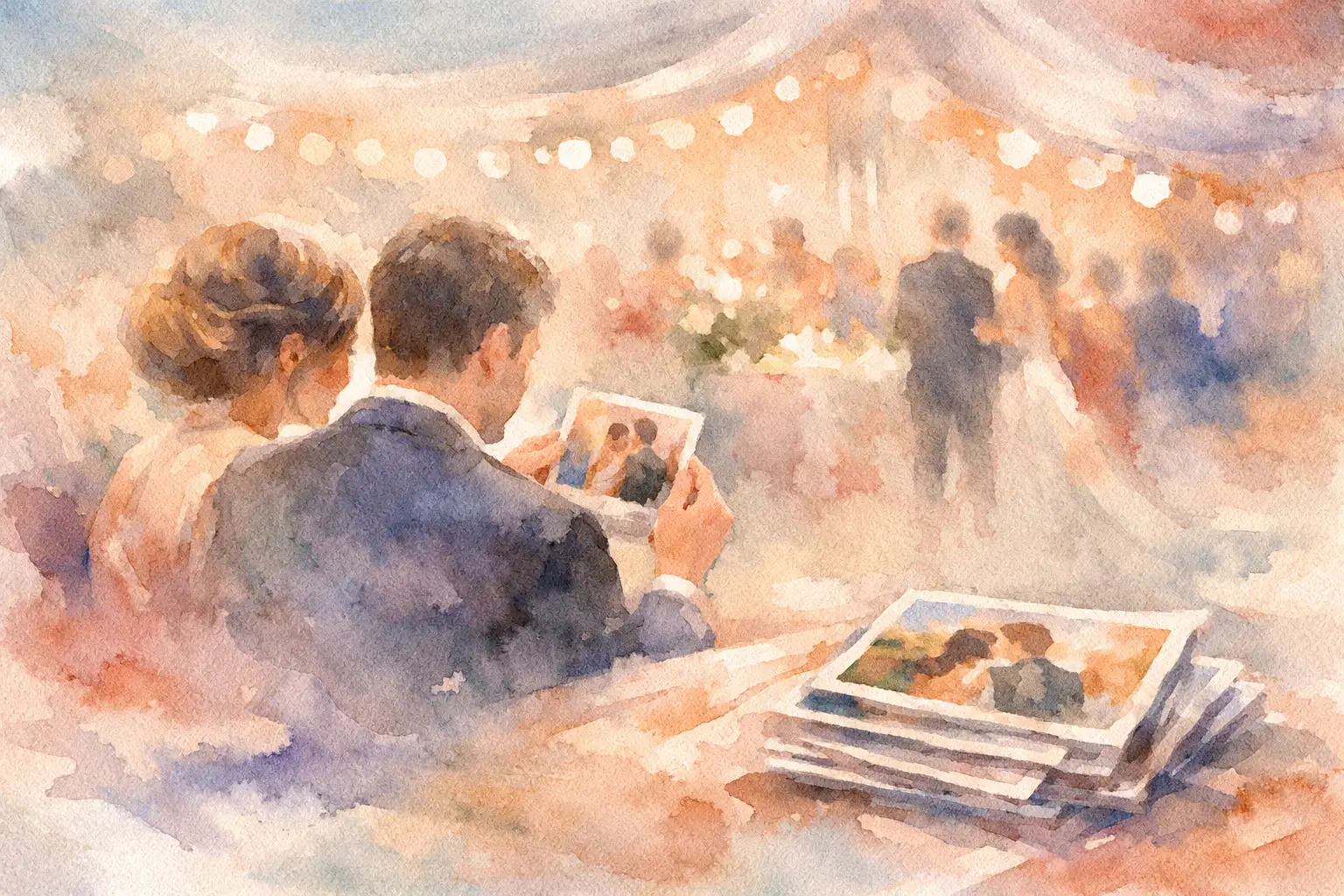
The best photo from your party probably will not be the one you took. It might be the blurry laugh from across the table, the dance-floor move nobody remembers attempting, or the quiet hug that happened while you were greeting someone else. A delayed photo reveal gives those moments a proper entrance. Instead of watching photos disappear into camera rolls, group chats, and Instagram Stories before the night is over, everyone gets to experience the event again - together.
That small shift changes the whole energy of event photos. Guests stop thinking like spectators and start noticing what is worth capturing. Hosts stop sending the dreaded “Can everyone drop your pics here?” text three days later. And the gallery becomes more than a folder of files. It becomes the party’s second act.
What Is a Delayed Photo Reveal?
A delayed photo reveal is exactly what it sounds like: guests take and contribute photos during an event, but the shared gallery stays hidden until a time you choose. That could be the next morning, the end of a wedding weekend, Monday after an offsite, or a week after a vacation when everyone is back home and ready to relive it.
The key is that people can capture in the moment without immediately scrolling through everyone else’s uploads. There is no live feed stealing attention from the actual celebration. No pressure to post first. No running commentary on every photo before dessert arrives.
It brings back a little of what made disposable cameras fun. You took the shot, hoped it worked, and waited. The difference is that a modern photo-sharing experience does not leave you with grainy prints and a drugstore envelope. It gives the whole group a high-quality gallery, from every angle, at the exact right time.
Why Waiting Makes Photos More Fun
Instant sharing is useful. It is also a little exhausting.
At weddings, birthdays, and reunions, guests already have enough reasons to look down at their phones. A live photo stream can turn a celebration into a content review session. People start checking who posted what, whether they look good, and how their own photo compares. The candid magic gets replaced by camera-roll management.
A delayed reveal flips that behavior. Since nobody can browse the gallery yet, there is less incentive to curate every moment for an audience. Guests can take the silly photo, the imperfect photo, the wonderfully unplanned photo. They know it is all headed somewhere shared, but they do not have to perform for the feed in real time.
Anticipation does a surprising amount of work here. Think about the group chat the morning after a great weekend. Everyone is already saying, “Wait, did anyone get a picture of that?” The reveal answers that question with a flood of perspectives. Someone caught the toast. Someone got the outfit change. Someone documented the exact second the surprise landed.
The event feels bigger because the story becomes bigger. One person remembers their own night. A shared reveal lets them see everyone else’s.
The Real Win: More Guests Actually Participate
Most photo-sharing systems fail for a very boring reason: they ask too much.
Download this app. Make an account. Find the right album. Remember the password. Upload your photos later. By the time guests reach step three, they are back to talking, dancing, or trying to find the bar. Fair enough.
The best event photo setup should feel nearly invisible. A QR code should get guests into the experience in seconds. They should be able to take photos from the same device already in their hand, without creating an account or interrupting the night. If their connection drops in a venue with spotty service, their photos should still be able to sync when they are back online.
That is why participation matters more than a perfectly polished gallery design. A gallery with 400 candid contributions beats a gallery with 12 carefully uploaded photos every time. You are not just collecting images. You are collecting viewpoints.
For a bride and groom, that may mean seeing cocktail hour through the eyes of their college friends, cousins, and coworkers. For a birthday host, it means discovering that the kitchen had its own mini party. For a team organizer, it means getting the candid proof that people actually connected beyond the scheduled agenda.
How to Set Up a Delayed Reveal That People Use
The mechanics should be simple, but the timing deserves a little thought. Choose a reveal window that fits the emotional rhythm of the event.
For a one-night birthday or graduation, the next morning is usually perfect. Everyone wakes up curious, slightly tired, and ready for the receipts. For a wedding, revealing photos the day after the send-off keeps the celebration going without competing with the official photographer’s sneak peeks. For a multi-day trip, wait until the final day or the first evening home, when the group has enough distance to miss it already.
A few details make a major difference:
- Put the QR code where guests naturally pause: the bar, welcome table, place cards, or a sign near the dance floor.
- Tell people the simple rule early: take photos now, see everything later.
- Give the reveal a specific time, not a vague “soon.” A countdown creates a reason to come back.
- Keep the message playful. “Your evidence is developing” works better than a long set of instructions.
You do not need to over-explain the experience. In fact, the more it feels like an invitation than an assignment, the better. A quick announcement from the DJ, host, or event lead is enough: scan, shoot, and meet back here tomorrow.
Limited Shots Make Better Moments
There is a reason people take more interesting photos with a disposable camera than with an unlimited camera roll. A little scarcity makes people look before they shoot.
Giving guests a limited number of shots can make a delayed reveal even more memorable. It turns every capture into a small choice: Is this the moment? Is this funny enough? Is this worth one of my photos? The result is often less random clutter and more personality.
This does not mean every event needs strict limits. A large conference or brand activation may want unlimited contributions to maximize content volume. A wedding might prefer a generous shot count so no one holds back. But for a birthday dinner, bachelorette weekend, or friend getaway, a digital disposable camera format adds just enough playful pressure to make the experience feel special.
Filters can help set the tone, too. A nostalgic color treatment creates visual consistency without asking guests to become photo editors. Just avoid turning every event into a costume. If the event is elegant and editorial, keep the look subtle. If it is a pool weekend with matching shirts and questionable karaoke, let it be loud.
When a Delayed Reveal Is Not the Right Move
Waiting is powerful, but it is not always the goal.
If you are running a live brand activation and want attendees to share content publicly in the moment, an instant gallery may better support the campaign. If family members cannot attend a wedding, a limited live preview can help them feel included. If your event depends on real-time feedback, such as a conference social wall, hiding everything until later may work against the experience.
There is also a middle ground. Keep the full guest gallery delayed while allowing a photographer, organizer, or selected team member to share a few approved highlights during the event. That protects the surprise without making the occasion feel invisible online.
The question is not whether delayed is always better. The question is whether immediate access adds to the moment or pulls people out of it. For most social celebrations, the answer is pretty clear: the best stuff can wait a little.
Turn the Reveal Into Its Own Moment
Do not treat the gallery unlock like an administrative handoff. Make it part of the event story.
Send the reveal at a time when people can actually enjoy it, not at 2:13 a.m. while half the group is in a rideshare. Pair it with a short message that feels like the event: “You made the memories. Here’s what you missed.” For work events, it can be a smart way to extend post-event engagement while the conversations are still fresh. For personal celebrations, it is the group-chat spark that brings everybody back together.
Revel is built around that exact feeling: easy capture while the moment is happening, then a private gallery everyone can open at once. No chasing photos. No mystery folders. Just the full, messy, funny, beautiful record of the room.
A great event does not end when the last song plays. Give everyone one more reason to smile at their phone the next day.
A writer interested in connection, memory, and the everyday moments that matter more than we realize.
Tags: Photo reveal , Cam QR , Camera app , QR code camera , Wedding photo app