How to Collect Reunion Photos Without Chaos
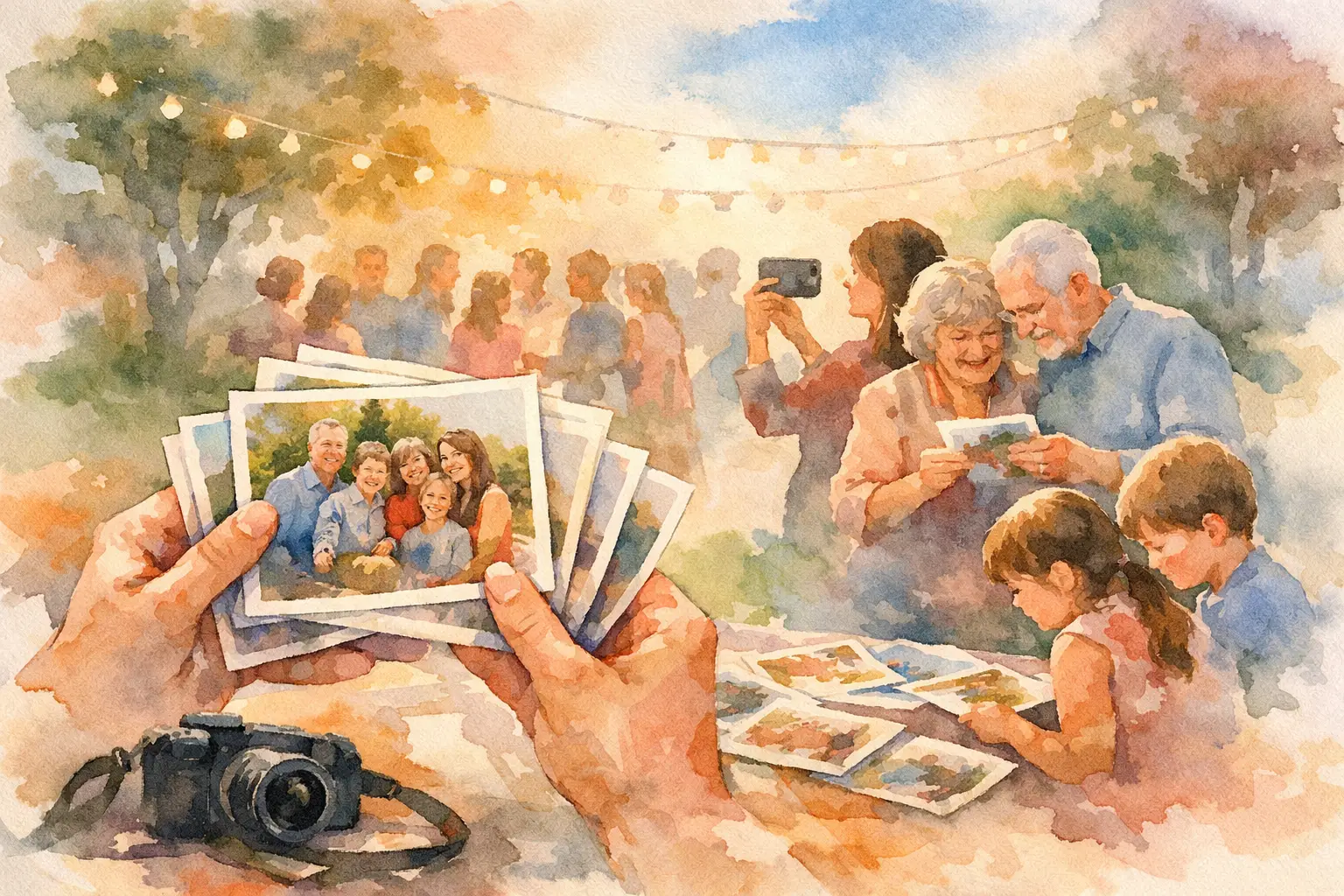
The group chat starts strong. Someone drops 12 photos. Your cousin uploads three blurry selfies two days later. An aunt promises to email hers "when she gets home." A month passes, and half the best reunion moments are still living on other people’s phones.
That’s exactly why people search for how to collect reunion photos after the fact - and why the better move is to set up the collection before the reunion even starts. If you want one complete album instead of a digital scavenger hunt, the trick is simple: remove every possible excuse not to upload.
How to collect reunion photos before they disappear
Most reunions don’t have a photo problem. They have a participation problem.
People are taking pictures. A lot of them. The issue is that those photos end up scattered across text threads, AirDrop circles, social apps, and camera rolls that never get revisited. The more people attend, the worse the fragmentation gets. By the time someone says, "Can everyone send me their photos?" the energy is gone.
If you want to collect reunion photos successfully, you need a system that works in the moment, not one that depends on everybody being unusually organized later.
That means your setup should be easy to join, obvious to use, and fast enough that even the least tech-motivated family member can figure it out. No app download is better. No account creation is even better. If guests can scan, shoot, and move on, you’ll get more photos from more people.
Why reunion photos are so hard to gather later
Reunions are uniquely messy in the best way. Multiple generations. Different friend groups within the family. A mix of planned moments and total randomness. That also means there isn’t one photographer catching everything.
Your uncle gets the backyard grill shots. Your younger cousins capture the funniest candids. Somebody’s partner documents the family game. Grandparents end up in sweet, quiet moments no one else even notices. The full story only exists if everyone contributes.
Traditional collection methods usually break down for predictable reasons. Shared folders can feel like work. Email chains are clunky. Social media leaves people out and compresses quality. Text threads are chaos by design. Even when people mean well, uploading becomes one more task they’ll do later, which usually means never.
There’s also a subtle trade-off here. The more steps your photo-sharing method requires, the more control you may feel like you have. But every extra step cuts participation. For reunion albums, volume and ease often matter more than perfect file naming or strict folder structure.
The best setup for collecting reunion photos
The strongest reunion photo systems all have the same core qualities.
They’re immediate. Guests should be able to join on the spot while they’re already holding their phone.
They’re private. Family photos don’t need to be pushed onto public feeds just to be shared.
They’re centralized. One album, one place, no hunting.
And they feel lightweight. If the process feels like admin, people skip it.
A QR-based shared gallery works especially well for reunions because it fits how people already behave. Phones are already out. Guests can scan a code from a table card, welcome sign, or printed handout and start contributing right away. No explanation-heavy setup. No chasing people later. Just one obvious action during the event.
If you want to make it more fun, even better. Features like limited shots or delayed reveals can turn photo sharing from a chore into part of the experience. That nostalgic disposable-camera feeling tends to get people participating because it feels playful, not procedural.
How to collect reunion photos with more guest participation
If your goal is more than a handful of uploads, design for low friction and high visibility.
Start by introducing the photo album early. Don’t wait until the reunion is halfway over and everyone is busy. Put the sharing prompt where people naturally look when they arrive - at check-in, near food, on tables, or next to the event schedule. If there’s a host or organizer making announcements, mention it once in a casual, upbeat way.
The language matters too. "Upload your reunion photos here" is fine. But people respond better when they know what kind of moments you want. Try something more human: candid family moments, old friends reconnecting, the kids running wild, the cousins’ group pic, the dance floor, the barbecue champion. Specific prompts give guests permission to contribute imperfect, fun, real-life photos instead of waiting for something polished.
You should also assume people will forget. That’s normal. A good system gives them multiple chances to join without making it awkward. A QR code on signage, a reminder card at seats, and one post-event follow-up can do a lot. More than that can start to feel pushy.
There’s an it-depends factor here if your reunion has a wide age range. Some families will need a super simple digital option plus one or two designated helpers for older guests. Others can go fully mobile with no issues. The right setup is the one your actual family will use, not the one that sounds smartest on paper.
Keep the album organized without killing the vibe
Nobody wants to spend reunion week acting like a content manager. But a little structure helps.
If your event runs across multiple days, separate albums or sections can make browsing easier later. Think welcome dinner, main reunion day, picnic, and farewell brunch. For a one-day event, one shared gallery is usually enough.
It also helps to decide who’s lightly overseeing things. Not editing every image. Not approving every upload. Just making sure the collection method stays visible and that nobody has questions. This can be a cousin, sibling, family friend, or event organizer. The role is less "photo police" and more "helpful nudge person."
Quality matters, but not in the way people think. You do want high-resolution images if possible, especially if anyone might print them later. But don’t let the hunt for perfect photos block the casual ones. Reunion albums are better when they include the real texture of the day - the half-laughs, side conversations, snack table raids, and accidentally iconic blurry dance shots.
What usually goes wrong when collecting reunion photos
The biggest mistake is waiting until after the reunion to start asking.
By then, people are traveling home, re-entering work mode, or clearing storage on their phones. The window for easy contribution closes fast.
The second mistake is using too many channels at once. If some people are texting photos, others are posting them on social, and a few are adding them to a cloud folder, you don’t have a system. You have a mess with branding.
Another common issue is overcomplicating access. Requiring signups, passwords, or downloads can be worth it in some professional settings, but for family reunions, simplicity wins. Every barrier trims your upload rate.
And finally, some hosts forget the emotional payoff. People are more likely to contribute when they know everyone will actually see and enjoy the gallery later. A shared reveal gives the photos a destination. It turns random uploads into a collective memory drop.
That’s part of why platforms like Revel work well for reunions. The process feels social from the start, and the payoff feels shared at the end. Guests don’t need to install anything or create an account, which removes the classic participation-killer right away.
A simple plan that actually works
If you’re figuring out how to collect reunion photos, keep your plan boring in the best possible way. One gallery. One join method. Clear prompts. A couple of reminders. That’s it.
Before the reunion, choose the photo-sharing setup and create your signs or handouts. During the event, place the join prompt where people can’t miss it and mention it once or twice. After the event, send one friendly reminder while the memories are still fresh, then share the final gallery when it’s ready.
That approach works because it matches real behavior. People want to participate, but only if participating is easier than ignoring it.
The best reunion album isn’t the one with the most formal structure. It’s the one that actually gets filled. When the process feels effortless, people contribute more. And when more people contribute, the reunion looks like it really felt - full, funny, chaotic, and worth remembering from every angle.
Stop chasing photos one by one. Give your reunion a place to land, and let the memories come to you.

A writer interested in connection, memory, and the everyday moments that matter more than we realize.
Tags: Reunion , Family reunion , Family photo sharing , Guest photo sharing , Photo sharing