Photo Nostalgia Is Why Events Feel Better
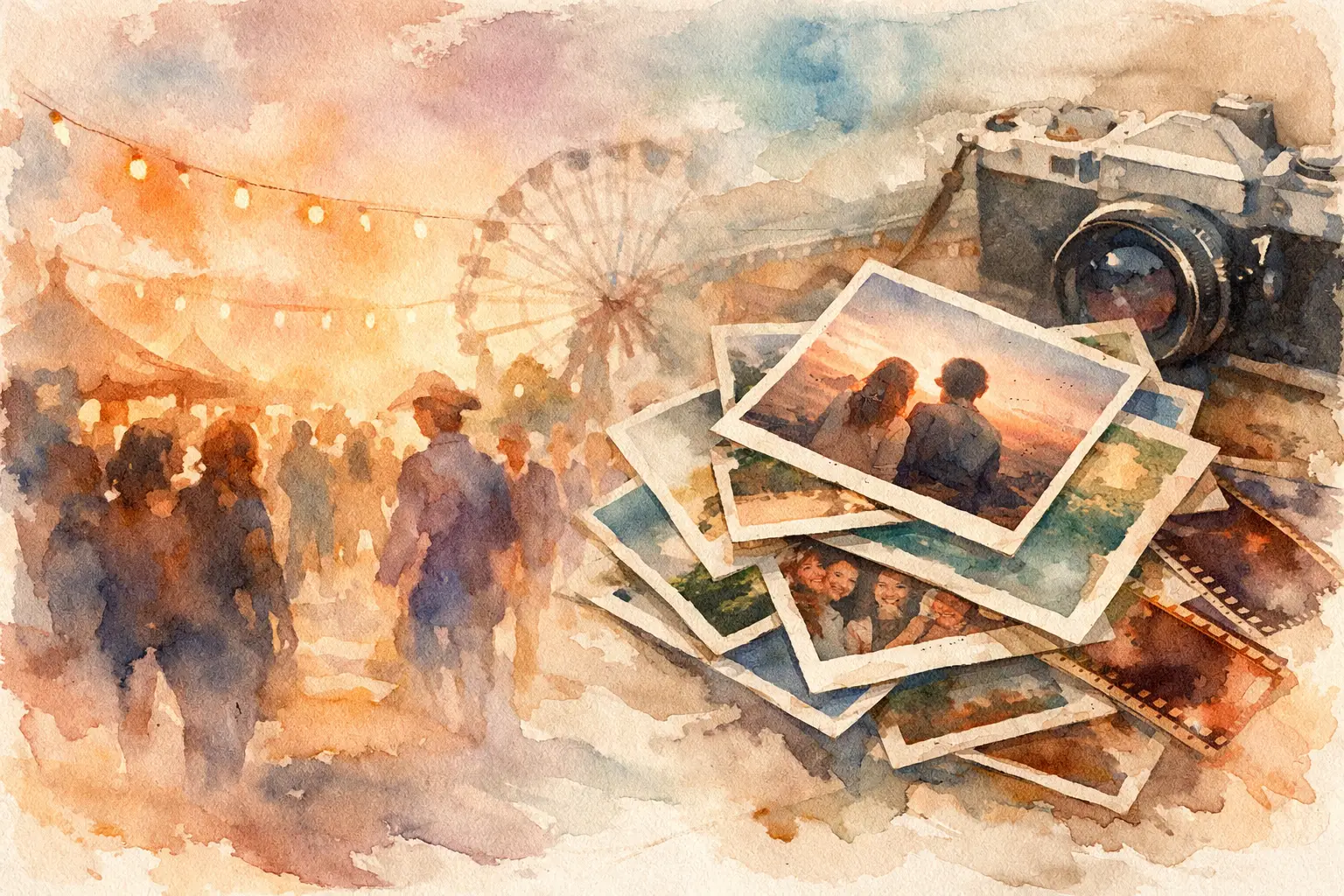
The best photo from a party is rarely the one where everyone noticed the camera. It is the blurry laugh from the corner booth, the dance-floor shot taken half a second too late, the friend you did not know was making that face. Photo nostalgia is the reason those imperfect images can feel more alive than a perfectly posed gallery.
That feeling is not really about grain, flash, or a date stamp. It is about getting back a little mystery. When every photo is polished, previewed, edited, posted, and judged in real time, the moment can start to feel like content production. Nostalgic photography changes the assignment. It asks people to participate, not perform.
For weddings, birthdays, trips, team offsites, and brand events, that shift matters. More guests pick up their phones. More perspectives make it into the album. And when the gallery opens later, everyone gets to relive the event together instead of scrolling through a few scattered uploads.
Why photo nostalgia hits so hard
Disposable cameras were never beloved because they were technically superior. They were beloved because they created constraints. You had a limited number of shots. You could not immediately check whether one worked. You had to wait.
Those limitations gave ordinary moments more weight. Pressing the shutter felt like a choice, not a reflex. A bad photo was not a failure. It was part of the story: the accidental finger over the lens, the too-bright flash, the friend caught mid-sneeze. The imperfections signaled that a real person was there.
Modern cameras solved nearly every technical problem, then created a social one. With unlimited storage and instant playback, people can take 40 versions of the same photo and still feel dissatisfied. The pressure to get the right angle, the right expression, and the right post can pull attention away from the actual room.
Photo nostalgia gives people permission to stop optimizing. A retro filter can set the mood, but the deeper appeal is behavioral. Limited shots encourage people to look around before they capture. Delayed viewing keeps the focus on the night, not the screen. The eventual reveal turns photos into a shared payoff rather than a private camera roll.
The missing ingredient is collective memory
A professional photographer captures the big moments beautifully. They should. But no single person can see the entire event.
Your best friend sees the quiet five minutes before the ceremony. Your cousin catches the group trying to coordinate a surprise. Someone at the company party gets the CEO attempting karaoke. On a vacation, each traveler notices different details: the snack run, the cab ride, the view from the back seat, the exact moment everyone gave up on the map.
Those images become meaningful because they create a fuller record of what it felt like to be there. They are not just proof that an event happened. They show the event from inside the crowd.
That is also why text threads and social feeds are such weak photo archives. Photos disappear between reactions, duplicate uploads, and unrelated messages. Someone promises to send theirs later. Later becomes never. A month after the event, the organizer is still chasing pictures while guests have moved on.
A shared album fixes the storage problem, but only if people actually contribute. The photo experience has to be easier than doing nothing. If guests need to download an app, make an account, remember a password, or figure out where to upload, participation drops fast. Good event design respects that people are busy having fun.
How to create photo nostalgia without faking it
You do not need to turn your event into a themed prop closet. The goal is not to manufacture a vintage aesthetic. The goal is to create a low-pressure reason for people to capture each other honestly.
Give guests a simple prompt
A blank camera roll can make people default to selfies and posed group shots. A small prompt gives them a better mission. At a wedding, try “take one photo the couple will not see coming.” At a birthday, ask for “your favorite moment before the candles.” For a work event, prompt guests to capture “the most unexpectedly competitive person here.”
Keep it playful, specific, and optional. The best prompts point people toward candid moments without making anyone feel watched or managed.
Add just enough scarcity
Unlimited photos can be useful for documenting a large event, especially when you need broad coverage. But a limited-shot format changes the energy. It makes each guest feel like they have a tiny assignment: notice something worth saving.
The sweet spot depends on the crowd. A small dinner party may work with a handful of shots per person. A wedding weekend or conference needs more room for spontaneous moments. Scarcity should create intention, not anxiety. Nobody wants to spend the reception calculating whether they can afford one more photo.
Let the reveal be part of the event
Instant sharing is great when the goal is live social posting. It is less great when you want people present. A timed gallery reveal brings back the anticipation that made disposable camera prints feel special.
Reveal the photos the next morning after a party, on the flight home from a group trip, or a few days after a wedding. That timing gives everyone a reason to return to the memory at once. The gallery becomes a second little gathering, complete with the group chat reactions, the surprise angles, and the inevitable debate about who took the most chaotic picture.
Make participation feel effortless
Nostalgia works best when the technology stays out of the way. Guests should not need a tutorial to join in. A QR code at the bar, on the table, or in the welcome sign is enough to turn a familiar phone into a shared event camera.
That simplicity matters for every kind of crowd. Your college friends may scan anything instantly. Your aunt may need a clearer cue. Colleagues may hesitate if they think a work tool is collecting personal information. The experience should make the next step obvious: scan, capture, enjoy the event.
Revel is built around that exact behavior. Guests can join a private event album through a QR code, take photos without an app download or account, and contribute to a gallery that opens on your schedule. It keeps the disposable-camera feeling while avoiding the part where someone loses the camera in a coat pile.
For organizers, the practical upside is huge. You get photos from across the room, across the guest list, and across the parts of the event you were too busy to see. For guests, it feels lighter than being asked to upload files later. They are simply adding to the night while they are already in it.
When nostalgia is not the right move
There are times when instant access wins. A brand activation may need real-time user-generated content for an on-site screen. A conference team may need same-day event photos for recap posts. A destination wedding might need a quick preview gallery for relatives who could not attend.
You can still borrow the nostalgic approach without locking everything away. Use a delayed reveal for guest candids while sharing a small set of professional highlights right away. Or keep the gallery live but use a limited-shot challenge to encourage more intentional contributions. The format should serve the feeling you want guests to have, not the other way around.
The same applies to filters. Warm flash and soft grain can make an album feel cohesive, but they are not mandatory. If the event is sleek, colorful, or daytime bright, heavy retro effects may feel costume-y. The memory matters more than the imitation.
The photos people keep are rarely the perfect ones
Years from now, nobody will care whether every image was crisp enough for a feed. They will care that someone caught the pre-toast nerves, the impromptu dance circle, and the face their friend made when the surprise finally landed.
Build an event photo experience that makes room for those moments. Make joining easy. Give people a reason to notice one another. Then let the photos wait just long enough to become a gift back to the whole group.
Capture together. Reveal together. The story gets better when everybody has a camera.
A writer interested in connection, memory, and the everyday moments that matter more than we realize.
Tags: Event photography