7 Best Ways to Collect Event Photos
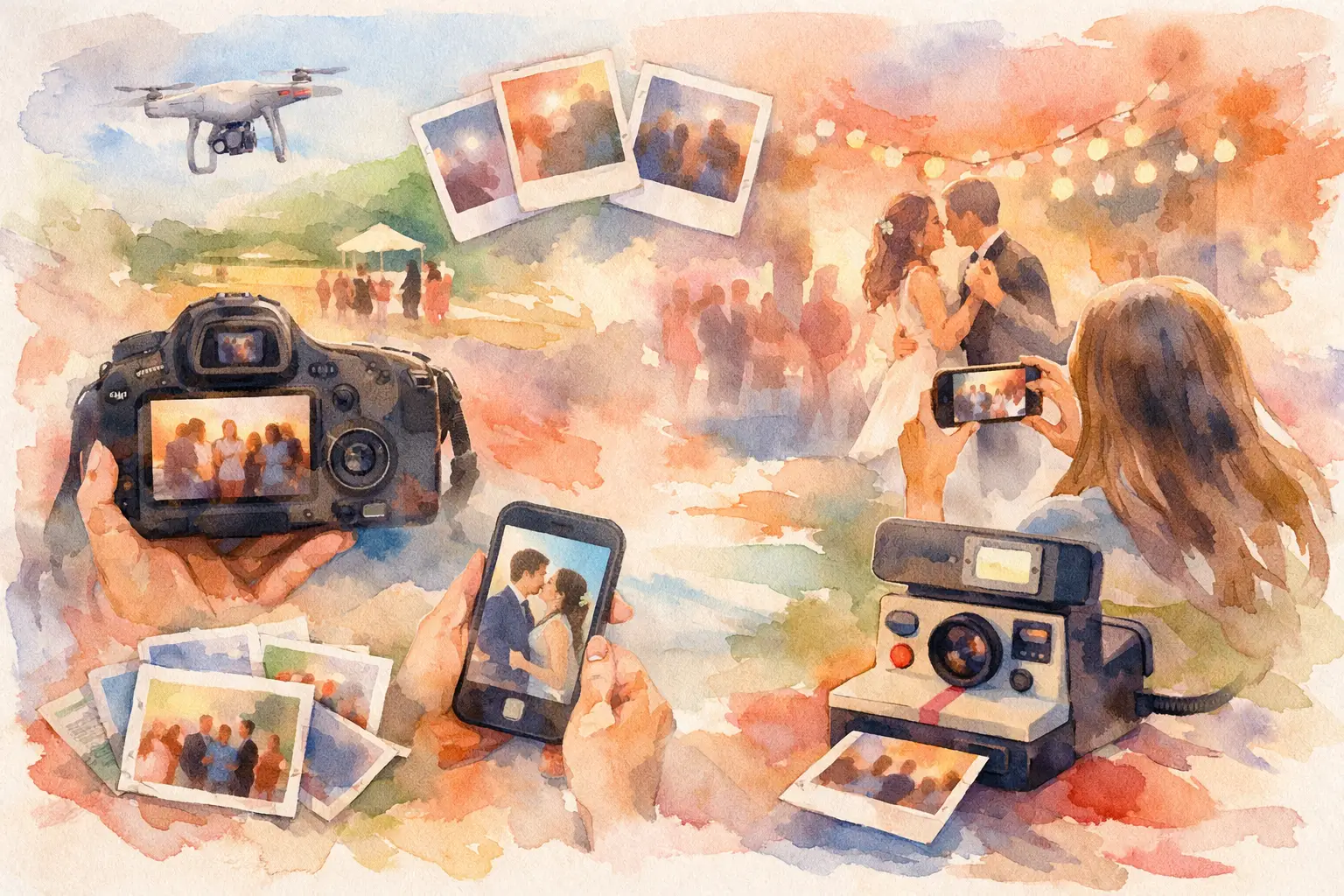
The camera roll after a great event always tells the same story: one person took 200 photos, ten people took amazing ones you never got, and the best candids are stuck in someone else's phone forever. If you're looking for the best ways to collect event photos, the real challenge is not storage. It's participation.
People mean well. They say they'll send the pictures. Then the group chat gets buried, the AirDrop moment passes, and the shared album invite sits unopened. By the time you remember to follow up, the energy is gone. That's why the smartest photo collection methods are the ones that make sharing feel instant, easy, and built into the event itself.
What actually makes event photo collection work
Most photo-sharing setups fail for a boring reason: they ask guests to do extra work after the fun part is over. That is the whole problem.
If you want more photos from more people, you need a system with almost no friction. Guests should be able to join fast, understand what to do in seconds, and contribute without creating accounts, downloading apps, or hunting for a link later. The best setup also works across different phones and comfort levels. Your tech-savvy friend and your aunt who still has 47 unread texts should both be able to use it.
There is also an emotional layer here. People share more when it feels social, not administrative. A tool that turns photo-taking into part of the event will almost always outperform one that feels like homework the next day.
1. Use a QR code photo-sharing system at the event
This is one of the best ways to collect event photos because it meets people where they already are - on their phones, in the moment.
A QR code at the bar, on the tables, by the welcome sign, or in the program gives guests a dead-simple entry point. They scan, join, and start taking or uploading photos right away. No chasing. No "send me that later." No hoping someone remembers the shared album link after three days and two brunches.
This approach works especially well for weddings, birthdays, baby showers, reunions, company offsites, and brand activations because it turns collection into a live behavior instead of a post-event task. It also solves the classic visibility problem. Guests cannot use a system they never notice, but a printed QR code is hard to miss.
The trade-off is that the experience has to be genuinely easy. If the QR code leads to a clunky form or an app download, participation drops fast. The best version is one that opens instantly in the browser and lets people contribute in a few taps.
2. Set up a shared album, but don't expect magic
Shared albums are familiar, which is their biggest advantage. Many guests already know how they work, and for smaller casual gatherings they can be enough.
But familiarity is not the same as effectiveness. Shared albums often underperform because the invite gets lost, compatibility can be messy across devices, and uploading still feels like something to do later. They are fine when your group is small, your guests are fairly organized, and you do not mind reminding people more than once.
For bigger events, they start to show cracks. Not everyone uses the same ecosystem. Some people never accept the invite. Others upload a week later when half the room has already moved on. You get photos, just not all of them.
3. Build photo collection into the event flow
The best ways to collect event photos are not just tools. They are prompts.
If you want guests to participate, give them a reason at the right moment. Mention the photo-sharing setup during the welcome toast. Put signage where people naturally pause. Add a quick note to the itinerary or event program. At corporate events, have the host or MC call it out before a key moment. At weddings, let the DJ or planner remind guests before the dance floor fills up.
This matters because even a great system needs visibility. Guests are not ignoring you. They are just busy being at the event. A small nudge at the right time can double participation more reliably than a long reminder text after the fact.
4. Use a digital disposable camera format for better participation
There is a reason disposable-camera energy still hits. People like having a role in capturing the night, especially when the experience feels playful instead of polished.
A digital disposable camera format gives guests permission to shoot the weird, funny, blink-and-you-miss-it moments that usually never make it into the official gallery. It shifts the vibe from "upload your files later" to "be part of the memory right now." Features like limited shots, nostalgic filters, and a delayed gallery reveal make the whole thing feel more intentional and more social.
That last part matters. When people know everyone is contributing to one shared reveal, they engage differently. They are not just sending assets. They are participating in a collective memory. That is a big reason platforms like Revel tend to pull in more guest photos than traditional collection methods.
5. Put one person in charge, but don't make them do everything
Every event needs an owner for the photo plan. Not a person who manually gathers every image one by one. Just someone responsible for making sure the system is set up, visible, and easy to use.
For a wedding, that might be the planner, maid of honor, or a super-organized sibling. For a company event, it could be the event lead or marketing manager. For a birthday or group trip, it is usually whoever made the reservation and already has the itinerary in their Notes app.
The point is simple: if nobody owns it, it gets forgotten. But if one person handles setup before the event and a couple of reminders during it, the whole thing runs smoother. The trick is picking a collection method that does not turn that person into unpaid tech support.
6. Avoid post-event-only collection methods
If your entire plan begins after the event ends, expect a thin gallery.
Text threads, email requests, DMs, and "drop your pics here" messages feel easy because they are familiar. In reality, they create a slow leak. Every extra step lowers the odds that someone follows through. Some people forget. Some mean to do it later. Some send three photos instead of thirty because they do not want to sort through their camera roll.
Post-event collection can still help as a backup, especially for stragglers or professional follow-up. It just should not be your main strategy. The strongest setup captures the bulk of participation while the energy is still high.
Best ways to collect event photos for different event types
Not every event needs the same system, and this is where a little nuance helps.
Weddings and milestone parties
You want candid coverage from lots of people, minimal guest friction, and one clean place for memories afterward. A QR-based browser experience or digital disposable camera setup usually works best because it feels fun, not technical.
Birthdays, showers, and reunions
These events live on spontaneity. People are mingling, moving, and not thinking about file management. Keep it light, visible, and phone-first.
Vacations and group trips
A shared album can work if the group is small and already coordinated. But if you have multiple households, mixed phone types, or people coming and going, a simpler universal capture system wins.
Company events and brand activations
You need fast participation, broad device compatibility, and content that is easy to review afterward. Anything that requires login friction or onboarding is risky, especially with large groups. The more instant the entry, the better the results.
How to choose the right photo collection method
When comparing your options, ask four practical questions.
How fast can guests join? If the answer is more than a few seconds, expect drop-off.
Does it work without an app? For consumer events especially, app downloads are where good intentions go to die.
Can people contribute during the event, not just after? Live participation almost always beats later reminders.
Does the experience make sharing feel fun? This sounds soft, but it drives real behavior. People contribute more when the setup feels like part of the event, not paperwork.
That is why the best ways to collect event photos are usually the ones designed around human behavior, not just storage. A technically functional tool is not enough. It has to fit the mood, the crowd, and the way people actually use their phones in real life.
Stop chasing photos. Start collecting them while the night is still happening. The easiest system is usually the one that gets you the memories you would have missed.
A writer interested in connection, memory, and the everyday moments that matter more than we realize.
Tags: Event photo collection , Event photo sharing , Event photography , Corporate Event Photography , Shared event photos