Do Shared Albums Reduce Photo Quality for Events?
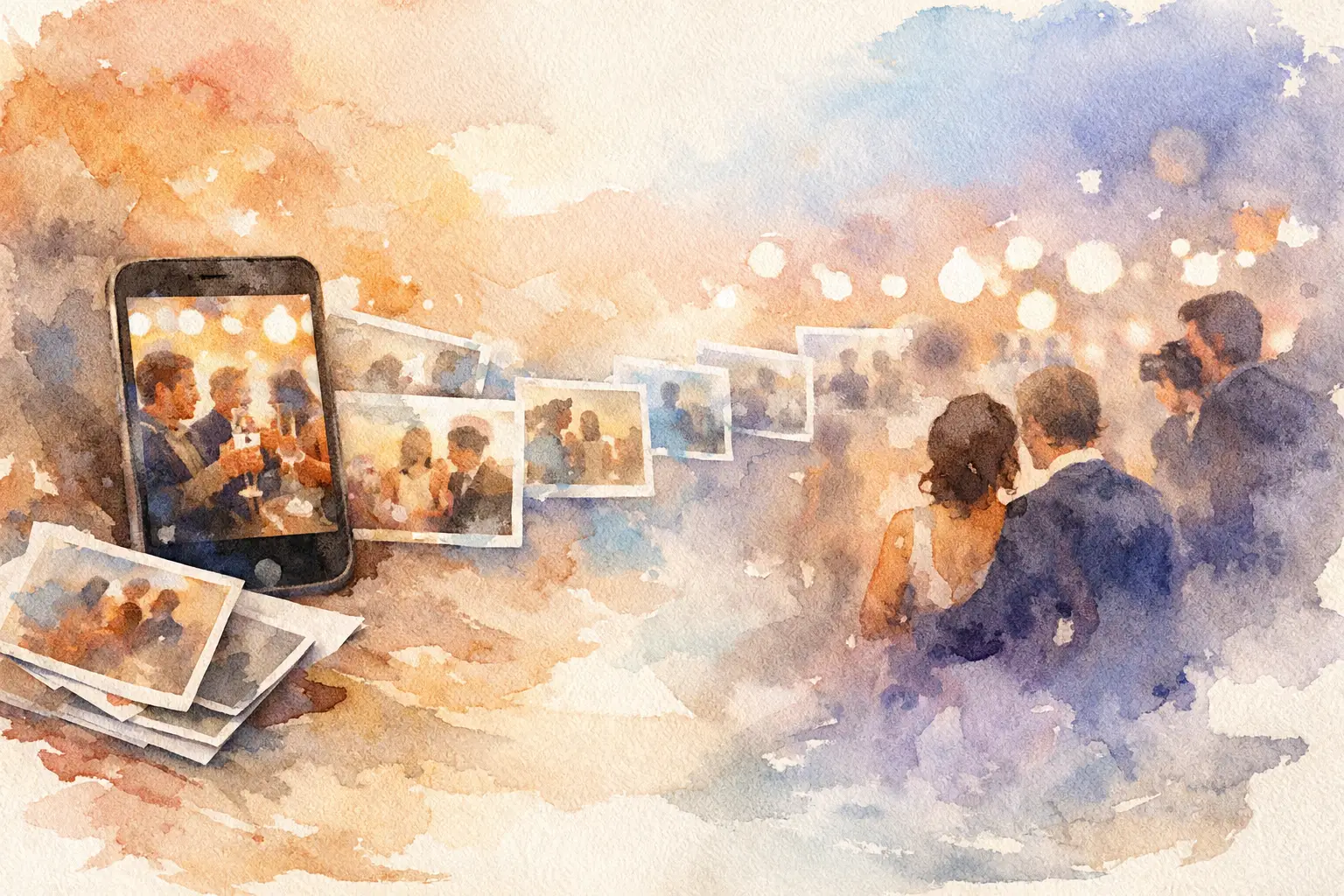
Your best friend caught the exact second the champagne popped. Your cousin got the surprise hug. Someone's blurry-but-perfect dance floor photo somehow became everyone's favorite. Then the shared album opens, and the question hits: do shared albums reduce photo quality?
Sometimes, yes. But the real answer depends on the platform, the upload settings, the file type, and what you want to do with the photos after the party. A picture that looks great on a phone can be disappointing when you crop it, print it, or turn it into a giant welcome sign for next year's reunion.
The good news: you do not have to choose between getting photos from everyone and keeping the good stuff looking good. You just need to know where quality gets lost.
Do Shared Albums Reduce Photo Quality? It Depends on the Upload
A shared album is not automatically a quality killer. The album is simply the place where photos gather. What matters is what happens to each image on its way there.
Many photo-sharing tools compress images to make uploads faster, reduce storage costs, and keep galleries easy to load on spotty Wi-Fi. Compression shrinks the file size by removing visual data the platform thinks you will not notice. On a small phone screen, you may not. Zoom in, crop tightly, or print the shot, and you might.
Other services preserve the original file or offer a high-resolution upload option. That means the photo stays closer to what the camera captured, including its full pixel dimensions and finer details. The trade-off is larger files, slower uploads, and more storage.
There is also a middle ground. Some apps keep a high-quality version for download but show a smaller preview while you browse. That is usually a smart approach for event galleries: the album stays quick, while the keepsake photos do not get flattened into mush.
Where Event Photos Actually Lose Quality
Compression gets the blame, but it is rarely the only culprit. Event photos often go through a full relay race before they reach the final album.
Messaging apps are usually the first quality drop
Sending a photo through a group text, social DM, or chat app can create a smaller copy. Then someone saves that copy, edits it, reposts it, screenshots it, and uploads it again. By the time the host gets it, the photo may have been compressed several times.
That is why chasing pictures after an event is such a gamble. You are not just chasing people. You are chasing the best version of every file through text threads, camera rolls, and stories that disappeared yesterday.
Screenshots are not original photos
A screenshot is handy when someone forgot to send the actual image. It is not a replacement for the original. Screenshots can have lower resolution, altered color, interface elements, and odd crops. They work for a quick laugh in the group chat, not for the photo you want to frame.
Repeated edits can soften a photo
Most modern editing tools handle photos well, but repeatedly exporting an image at lower quality can add artifacts, blur small details, or create strange blocks in shadows and skin tones. A moody reception or dimly lit dance floor is especially vulnerable because low-light images already contain more visual noise.
Your guests' cameras are part of the equation
Not every photo starts at the same quality level. A newer phone in good light can produce a crisp, detailed image. An older phone in a dark venue may produce a softer shot before it ever reaches a shared album. That does not make the moment less valuable. It just means the album cannot create detail that was not captured in the first place.
What High Resolution Really Means for a Shared Album
High resolution is not code for "looks good." It refers to the amount of image detail available, usually measured in pixels. More pixels give you more flexibility to crop, enlarge, and print without making the photo look fuzzy.
For social sharing, a compressed image can be totally fine. Most people are looking at it on a phone for a few seconds. For a wedding album, a poster, a brand recap, or a photo book, you want the biggest clean file you can get.
File format matters, too. JPEGs are common because they are compact and easy to share, but they use compression. HEIC files, common on newer iPhones, can keep strong quality at a smaller file size, though compatibility can vary. RAW files hold much more editing information but are larger and usually overkill for a casual guest gallery.
The practical takeaway is simple: preserve originals or high-resolution uploads when the photos may have a life beyond the feed.
How to Keep Shared Event Photos Looking Sharp
Start before the first guest arrives. If your album platform has a setting for original-size or high-resolution uploads, use it. Do not assume it is the default. Some platforms prioritize speed and storage unless you actively choose the better-quality option.
Next, give guests one easy place to contribute. The more steps you add, the more likely people are to send images through whatever app is already open - usually the one that compresses them. A QR code at the bar, on the table cards, or near the entrance makes the ask obvious: scan, shoot, add your perspective.
Make the photo experience feel like part of the event, not admin. A digital disposable camera setup, for example, gives people a reason to take candid photos instead of promising they will upload something later. Limited shots and a delayed reveal add a little suspense. Suddenly, guests are not doing homework. They are part of the memory-making.
That is the sweet spot Revel is built for: easy QR entry, no account obstacle, and high-resolution uploads collected in one private gallery. More people participate when the process takes seconds, and better participation means you get the moments the official photographer never saw.
Quality vs. Convenience Is Not a Real Either-Or
There is a reason compressed sharing took over. It is fast. A huge original file can take longer to upload, chew through mobile data, and make an album feel sluggish in a crowded venue with questionable Wi-Fi. For a casual weekend trip, that trade-off may be worth it.
For milestone events, think differently. You only get one first dance, one graduation walk, one retirement roast, one launch party where the whole team is actually in the same room. The photos do not need to be museum-grade, but you should not accidentally throw away the best versions because collecting them felt annoying.
A smart event photo setup handles both needs. Guests should be able to join immediately and see an album that loads fast. Hosts should still be able to access high-quality files afterward, especially the shots worth printing, posting, or revisiting when the group chat has moved on.
A Quick Quality Check Before You Choose a Platform
Before sending out an album invite, look for clear answers to a few questions. Does the service upload original files or compress them? Can guests download high-resolution versions? Are videos handled differently from photos? Does the gallery preserve orientation, color, and Live Photo or motion features? And can guests contribute from different phone types without downloading an app?
If the answers are vague, test it. Upload a detailed image with faces, text, shadows, and bright colors. Download it again, compare it to the original, and zoom in. This takes five minutes and beats discovering that your favorite group photo is too soft for a print.
Also check how the platform works when reception is weak. Events happen in barns, rooftops, conference halls, beaches, and crowded restaurants. If guests can capture first and sync once they reconnect, fewer moments get lost just because the Wi-Fi was having a bad night.
The Better Question to Ask
Instead of asking whether shared albums reduce photo quality, ask whether your photo-sharing setup preserves the versions you will care about later. A fast, simple gallery is great. A fast, simple gallery that leaves you with files you can actually keep is better.
Your event should not end with 47 separate text threads and a plea for "anyone who has pics." Give people an easy way to contribute while the moment is still happening, keep the good files intact, and let the full story of the day show up in one place. The best photo is often the one you did not know someone took.
A writer interested in connection, memory, and the everyday moments that matter more than we realize.
Tags: Shared album , Shared photo album , Shared photo gallery