11 Party Photo Collection Tips That Work
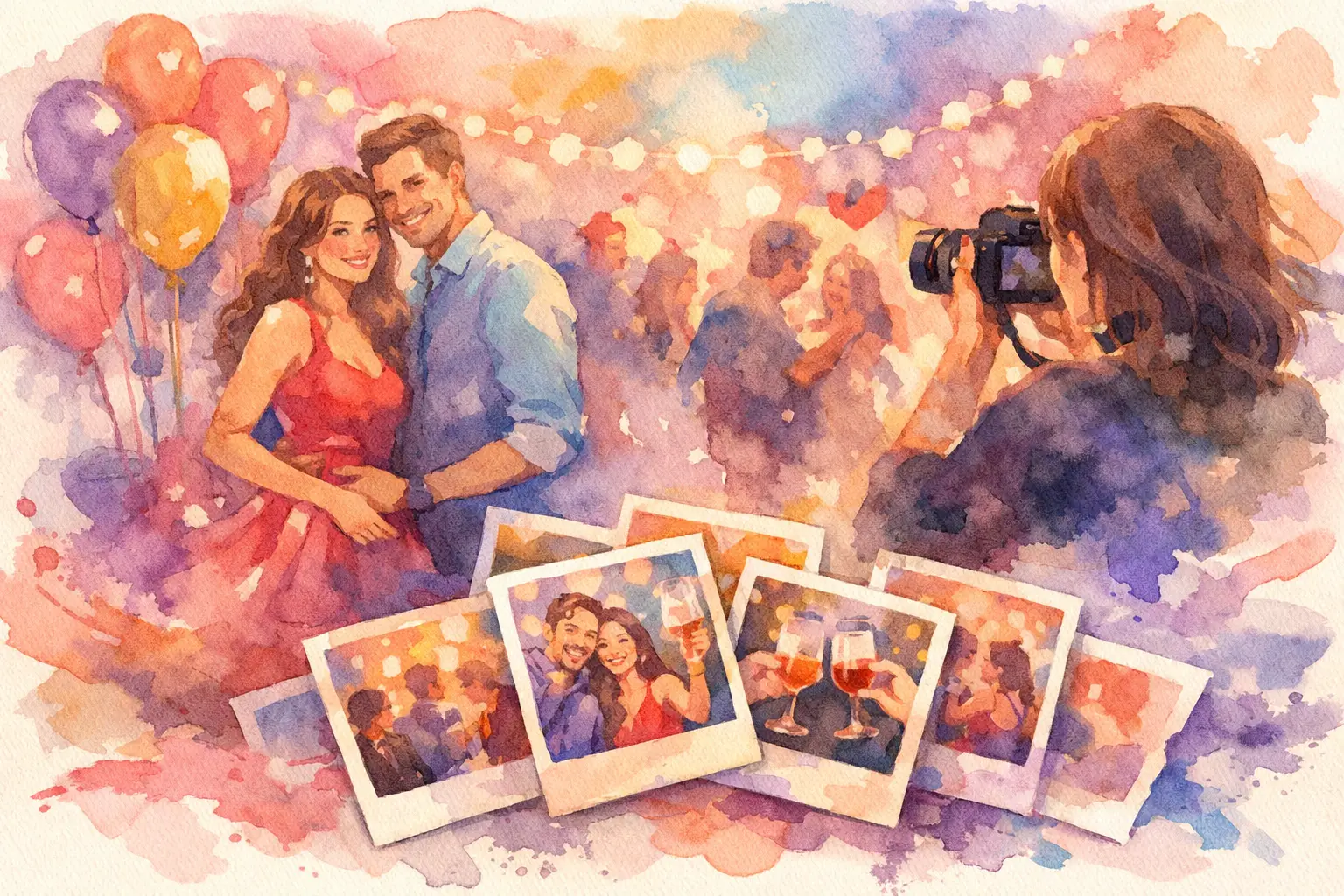
The party ends. The group chat pops off for 48 hours. Three people send blurry selfies, one friend promises to upload "later," and somehow the best photos vanish into six different camera rolls. That exact mess is why good party photo collection tips matter - not after the event, but before anyone walks through the door.
If you want more than a random pile of images, you need a system guests will actually use. Not a folder link they ignore. Not a download they postpone. Not a follow-up text campaign you have to run like a part-time job. The best setup feels instant, low-pressure, and obvious from the first minute.
Why most party photo collection tips fail in real life
A lot of advice sounds good until actual humans get involved. People are busy arriving, finding drinks, greeting friends, fixing outfits, and living their lives. If your photo-sharing plan asks them to stop the fun and do admin, participation drops fast.
That is the core problem. Most hosts think the challenge is reminding people to share. Usually, the challenge is friction. Too many steps. Too much waiting. Too many places where guests can abandon the process.
The better approach is to design for impulse. If someone can join in seconds, take photos immediately, and know the whole group will see them later, they are far more likely to participate. That is the difference between collecting a handful of leftovers and building a full, vivid record of the night.
Party photo collection tips that actually get guest participation
The first move is simple: decide on one collection method before the event starts. One. Not text me your pics, AirDrop if you see me, upload to this folder if you remember, and tag me on Instagram. That sounds flexible, but it creates confusion. Confused guests do nothing.
Pick a single shared destination and make it the default. The fewer choices people have, the more likely they are to follow through. This matters at birthday parties, bachelorette weekends, graduation dinners, and company events alike. People participate when the path is clear.
Just as important, remove any sign-up wall. If guests need to download an app, make an account, verify an email, and figure out a new interface, you have already lost a chunk of them. Even tech-comfortable crowds bounce when the process feels annoying. The best tools feel like scan, snap, done.
A visible entry point helps more than hosts realize. Put the QR code or access instructions where guests naturally pause - near the bar, at the entrance, on tables, or beside the cake. If it lives only in one text message sent hours earlier, many people will miss it. Physical placement turns photo sharing from an afterthought into part of the event experience.
Then give people a reason to contribute now, not someday. Delayed sharing sounds harmless, but "I'll send them later" usually means never. A stronger setup makes capturing photos part of the fun in the moment. That might mean a shared album everyone joins on arrival, or a digital disposable camera format that adds a little scarcity and suspense. When the experience itself is playful, participation climbs.
Set expectations early and make them feel fun
Guests do not need a speech. They need a vibe.
A quick line like "Scan here and add your shots to tonight's gallery" works better than a paragraph of instructions. Short beats smart. Casual beats formal. You are not onboarding them to enterprise software. You are inviting them into the memory-making.
This is where tone matters. If your ask feels stiff, people tune out. If it feels social and easy, they jump in. For consumer events, keep it light. For work events or brand activations, keep it polished but still friction-free. Different rooms, same principle: nobody wants homework at a party.
It also helps to explain the payoff. Guests are more likely to contribute when they know they will get access to everyone else's photos too. That social contract changes the energy. It is no longer "please help me collect content." It becomes "we're building the full story together."
Get better photos, not just more photos
More uploads are great, but quality matters too. The trick is not forcing people into staged content all night. The best party galleries mix posed shots with candid moments, weird little in-between scenes, and perspectives the host would never catch alone.
If you want variety, prompt it gently. A few simple cues around the event can help: your table, your outfit, your plus-one, the dance floor, the most chaotic moment of the night. These work because they give people an idea without making the whole thing feel like an assignment.
Lighting also deserves more attention than most hosts give it. Guests can only capture what they can see. Dim, moody lighting may look good in person but often produces muddy phone photos. You do not need to turn the venue into a studio, but a few brighter zones can massively improve results. Near signage, food, seating areas, and major activity spots, better light usually means better keepsakes.
Timing matters too. Early photos tend to be cleaner and more composed. Mid-event photos usually carry the most energy. Late-night photos can be hilarious, but they are not always the full story. If you want a gallery that feels complete, encourage collection from the start instead of waiting until everyone is fully in the moment.
Build around how people actually use their phones
This is one of the most overlooked party photo collection tips: your system should match guest behavior, not fight it.
People take pictures fast. They move between conversations. Their connection may be spotty. Their battery might already be low. Any collection flow that depends on perfect service, long uploads, or too many screens will lose momentum.
That is why mobile-first matters so much. If guests can open the camera experience instantly from their phone and keep capturing without interruption, you remove the exact friction that usually kills participation. Some platforms, including Revel, are built around this reality - quick access, no app download, and a shared reveal that gives the gallery a little extra anticipation.
There is a trade-off here, though. If you want the most controlled, polished content possible, a photographer or content team may still be part of the plan. But for genuine guest perspective, volume, and personality, an easy group capture system wins almost every time. It depends on the event. Weddings, birthdays, vacations, and casual brand events often benefit from both.
Avoid the classic post-party chase
The worst time to start collecting photos is after the party. Once people are back home, moving on, or recovering, response rates sink. Every extra reminder gets less effective.
If you have ever sent "drop your pics here" the next morning and gotten six responses from a 60-person event, that is not bad luck. That is normal behavior. The event has ended, urgency is gone, and everyone assumes someone else probably got the good shots.
A smarter approach captures contributions during the event itself. That way, the gallery builds while energy is high and people are already reaching for their phones. You do not need to become the annoying host who follows up three times and still ends up with fragments.
This also makes the post-event moment better. Instead of scrambling to piece things together, you get to enjoy the reveal. That emotional payoff matters more than hosts expect. One clean, shared collection feels complete. Scattered images in random threads do not.
Match the setup to the kind of party
Not every event needs the exact same photo strategy. A birthday party might benefit from playful prompts and lots of candid volume. A wedding may need something more elegant and more visible across different parts of the venue. A vacation album works best when access is easy across multiple days, changing locations, and inconsistent service.
For company events, the balance can be trickier. You want participation, but not something that feels childish or chaotic. In that setting, simple instructions, clean visuals, and clear privacy expectations go a long way. For brand activations, speed is everything. If guests can contribute or access photos instantly and with almost no effort, engagement jumps.
The best system is the one your specific crowd will actually use. That sounds obvious, but it is where many hosts miss. They choose based on features instead of behavior.
The real goal is a shared memory, not a file dump
Great party galleries do more than store photos. They make the night feel bigger. More angles. More jokes. More tiny moments the host never saw. That is what people actually want when they say they need help collecting pictures.
So if you are choosing between a complicated setup with impressive features and a simple one guests will use in seconds, choose simple. Every time. Better participation beats theoretical perfection.
The best photos are usually already being taken. Your job is to make sure they end up in one place, with as little friction as possible, while the night is still alive.
A writer interested in connection, memory, and the everyday moments that matter more than we realize.
Tags: Party photos , Party app , Party camera app , Bachelorette party , Birthday party ideas , Grad party photos , Graduation party , Graduation party photo ideas , Graduation party photography , Graduation party photos , House party ideas , Housewarming party , Interactive party ideas , Party , Party planning