Why Photo Reveals Make Every Event Better
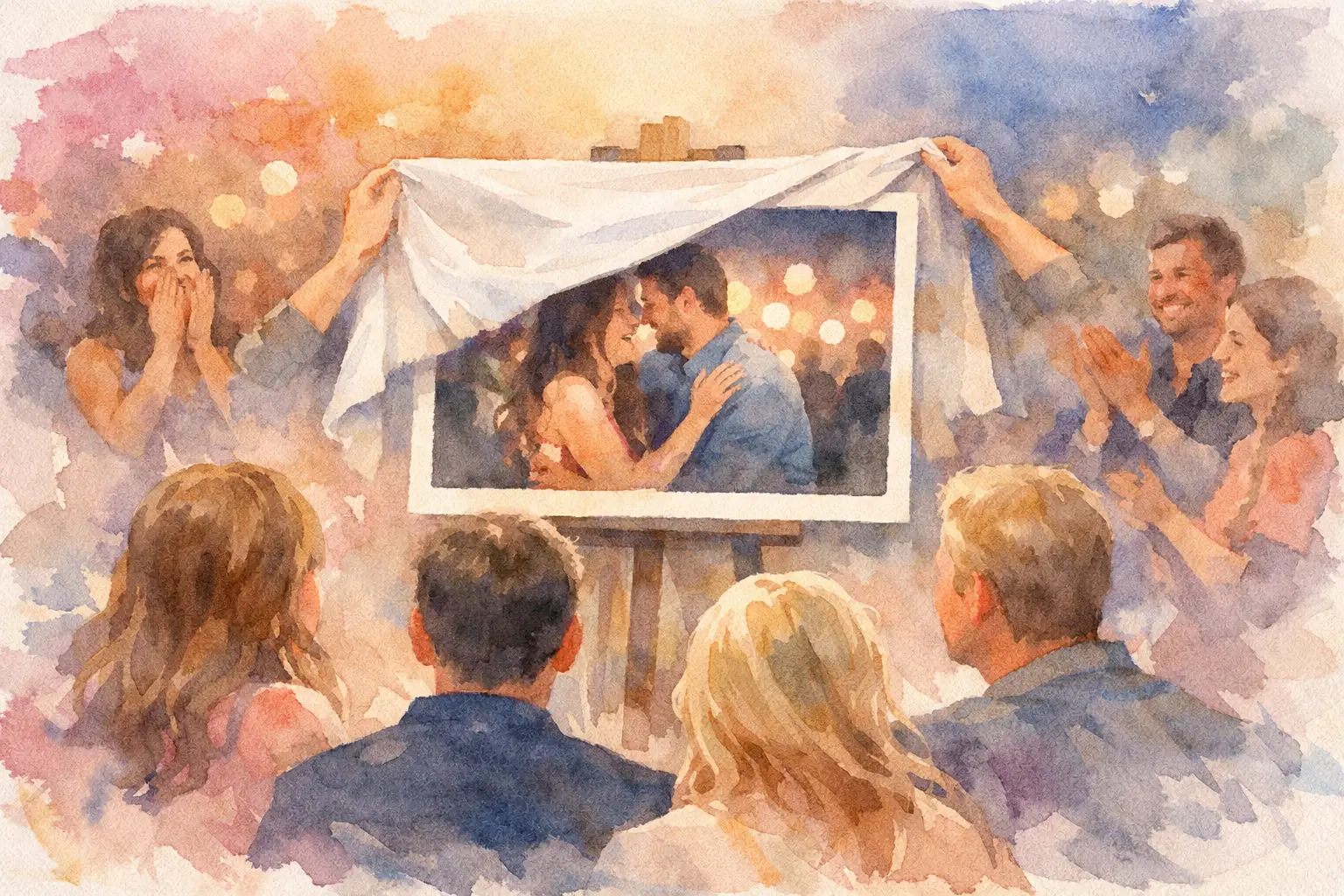
The best photo from your event probably isn’t the one everyone lined up for. It’s the blurry laugh during cocktail hour, the friend who caught the dance-floor chaos, or the quiet hug you didn’t see happen. Photo reveals give those moments the ending they deserve: everyone gets to see them together, not weeks later in a forgotten text thread.
A good event produces more than a camera roll. It creates a tiny universe of inside jokes, unexpected angles, and proof that everyone had a genuinely great time. The problem is that those memories usually leave in 40 different pockets. A timed gallery brings them back into one place, then turns sharing into part of the experience.
What Is a Photo Reveal?
A photo reveal is the moment a private event gallery opens for everyone who contributed. Guests take photos throughout the celebration, but the full collection stays hidden until a chosen time. Then the gallery drops, and suddenly the wedding weekend, birthday dinner, team offsite, or beach trip comes alive from every perspective.
That delay is the magic. If guests can scroll through every upload immediately, the gallery is just another feed competing for attention. When photos stay under wraps, people stay present. They capture what is happening instead of curating what is happening.
Think of it as the digital disposable camera effect, with none of the waiting for film to get developed and none of the mystery stains on your kitchen counter.
Why Instant Sharing Often Falls Flat
Most event photo collection starts with good intentions. Someone creates a group chat. Someone else asks everyone to AirDrop their favorites. A shared folder gets mentioned once, then becomes a lonely place where six people upload the same posed photo.
The friction is small, but it adds up. Guests have to find a link, remember a password, download an app, create an account, choose their best shots, and actually send them. By the next morning, real life has taken over. The photos stay scattered across messages, social posts, and camera rolls.
A photo reveal changes the ask. Instead of requesting that people do admin after the party, you make contribution part of the party itself. Scan a QR code. Take a photo. Keep moving. No sign-up spiral, no awkward follow-up message, no organizer playing detective for three weeks.
For hosts, that means more photos. For guests, it means less effort. For everyone, it means the gallery contains the moments that would otherwise disappear.
The Delay Makes the Moment Better
There is a reason disposable cameras still show up at weddings, birthdays, and dinner parties. They make people shoot differently. Without instant playback, every photo feels a little more spontaneous. People stop overthinking, start noticing, and accept that not every frame needs to be perfect.
A delayed reveal carries that same energy into a phone-first event. Guests can use the devices already in their hands, while limited shots and nostalgic filters give each capture a little weight. They are not making content for the algorithm. They are making memories for the group.
The payoff lands when the gallery opens. A strong photo reveal is part nostalgia, part group chat explosion, part “wait, who took this?” It extends the emotional high of an event without forcing anyone to perform in the moment.
That matters for milestones especially. At a wedding, the couple finally sees what their friends were doing while they were greeting relatives. On a vacation, everyone gets the version of the trip they missed while they were ordering drinks, swimming, or napping. At a company event, the organizer gets candid proof that people actually connected beyond the agenda.
Photo Reveals Turn Guests Into Contributors
The usual event gallery has a participation problem. One or two people document everything. Everyone else assumes somebody else has it covered.
A reveal gives every guest a reason to join in. They know their photos are going somewhere meaningful, and they know they will get access to the full collection later. That simple exchange changes behavior. People notice details. They take photos of the host, the table, the late-night snack run, and the friend whose outfit deserves its own fan club.
The best galleries feel democratic. Not every image needs the polish of a professional photographer. In fact, the imperfect shots often carry the most personality. A pro captures the beautiful wide shot. Your guests capture the toast reaction, the bathroom mirror selfie, and the exact second someone realizes the karaoke lyrics are getting serious.
This is not an either-or choice. Professional photography and guest photos do different jobs. One tells the polished story. The other tells the lived-in one.
Choosing the Right Reveal Timing
The right timing depends on the rhythm of the event. A reveal should build anticipation, not make people wait so long they forget the night happened.
For a one-night birthday or dinner, revealing the gallery the next morning keeps the energy warm. For a wedding, the day after the reception gives guests something fun to revisit while they travel home. For a multi-day trip or festival, opening the gallery at the end of the final day can create a shared closing moment.
There are a few timing choices that work particularly well:
- Next morning: Great for parties, showers, and birthdays when everyone wants the recap immediately.
- End of the event: Best for team events, activations, and conferences where a group reveal can happen on-site.
- After the weekend: A natural fit for destination weddings, reunions, and group trips.
- On a meaningful date: Ideal when you want to bring everyone back together for an anniversary or post-event thank-you.
Avoid treating the delay as a gimmick. If the gallery is locked for too long, anticipation turns into “Oh right, those photos.” Keep the reveal close enough to the event that the feelings are still fresh.
Make Joining Feel Effortless
A photo reveal only works if people actually participate. That starts with visibility. Put the QR code where guests already pause: on table cards, near the bar, at the welcome sign, in the itinerary, or on the final slide before a company social.
Then give people one clear instruction. Something like: “Scan, shoot, and come back tomorrow for the reveal.” That is enough. Guests do not need a technical explanation. They need to know it is quick, private, and worth doing.
Revel is built around this exact behavior: guests can join through a QR code, capture without downloading an app or making an account, and return to a shared gallery when it is time to reveal. The experience works because it respects the event. Nobody wants to spend a celebration troubleshooting photo uploads.
It also helps to set the tone early. Let guests know candid photos are welcome. Encourage weird angles, joyful mess, details, and faces that might not make the official album. The goal is not to create a second formal shoot. It is to collect the version of the event that people actually experienced.
Keep the Gallery Private, Not Precious
Privacy changes how freely people participate. A private gallery gives guests permission to be silly, sentimental, and unfiltered without wondering whether every photo will become public content.
That does not mean every event needs the same rules. A brand activation may want selected images ready for social sharing. A wedding may want the gallery visible only to invited guests. A company event may need clear guidelines around what can be photographed. The setup should match the room.
The key is being explicit. Tell people where photos will live, who can see them, and when they will be available. Clarity makes guests more comfortable contributing and makes organizers less likely to chase permissions later.
The Best Reveal Is More Than a Folder
A shared gallery is useful. A photo reveal is memorable because it gives the gallery a moment.
That distinction matters. Folders collect files. Reveals create a return ticket to the event. They give guests a reason to relive the night together, react to each other’s photos, and remember details that no single person could have seen.
So skip the post-party photo chase. Put a simple way to capture in the room, let everyone add their perspective, and choose a reveal time people will actually look forward to. The party may be over, but one great gallery drop can make it feel like everyone is still there.
A writer interested in connection, memory, and the everyday moments that matter more than we realize.
Tags: Event photo sharing , Event photography , Event photo wall , Event planning , Event QR