QR Capture Review for Better Event Photos
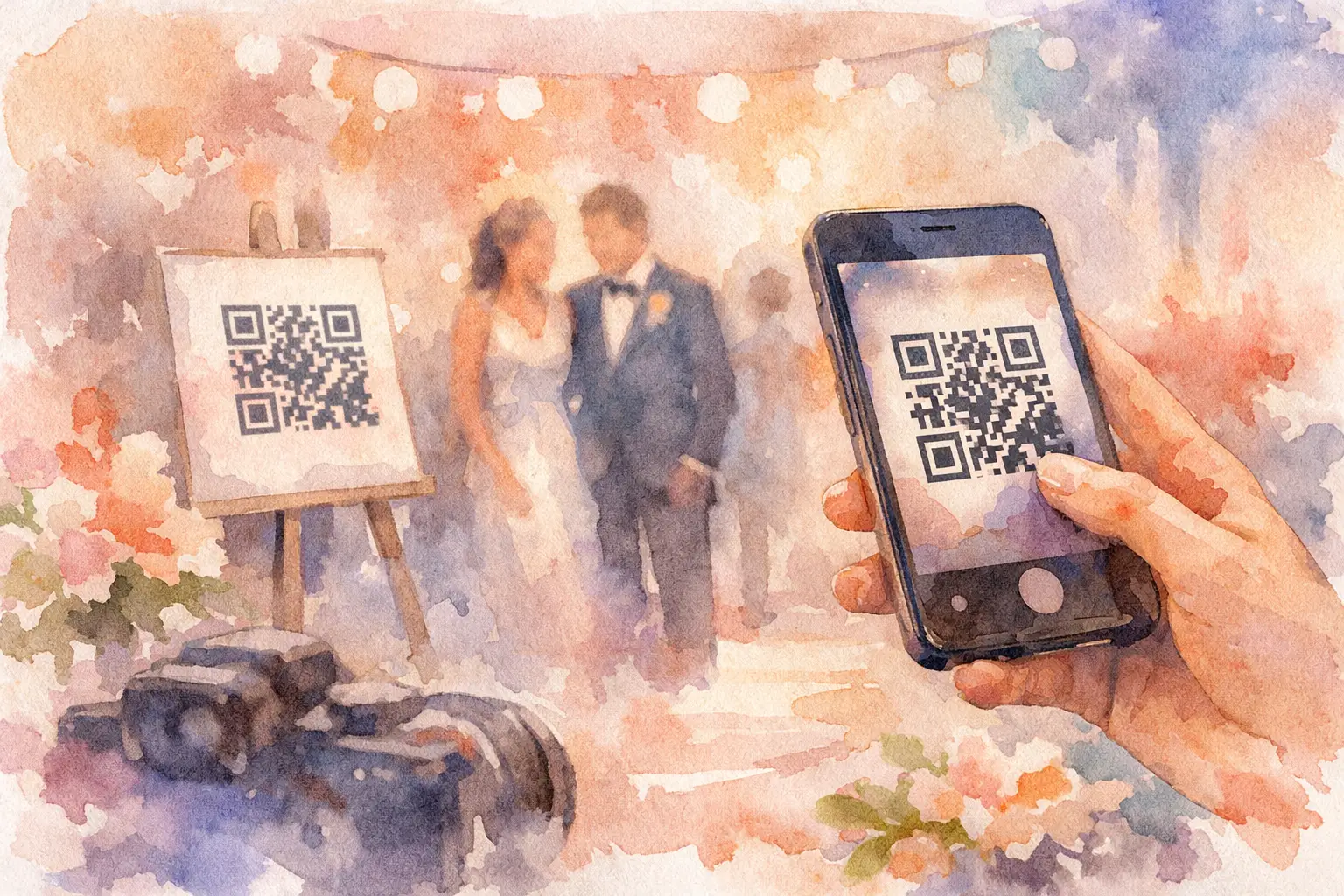
The best photo from your event is rarely the one you took. It is the blurry dance-floor shot from your best friend, the candid your aunt caught during dinner, or the group selfie that somehow includes everyone. This QR capture review looks at whether QR-based event cameras can actually collect those moments before they disappear into camera rolls, text threads, and the social media void.
For weddings, birthdays, trips, team offsites, and brand events, the promise is simple: scan a code, start taking photos, and see the full story later. No app download. No account setup. No organizer spending three weeks asking, “Can you send me that one photo?”
What a QR Capture Experience Actually Does
A QR capture experience turns a shared event gallery into something guests can join in seconds. The host places a QR code where people will see it - on a table card, welcome sign, menu, screen, or invitation. Guests scan it with their phone camera, land in a browser-based camera or gallery, and start contributing.
That sounds like a small change from a shared album. It is not. Traditional albums ask guests to make a choice after the fun is over: find the photos, remember the album link, select the right shots, upload them, and hope the link still works. Most people mean to do it. Most people do not.
QR capture moves that action into the moment. The phone is already in someone’s hand. The code is right there. One scan is easier than a post-event task list.
The strongest versions also borrow the charm of a disposable camera. Guests may get a limited number of shots, playful filters, or a delayed reveal that keeps the gallery hidden until a chosen time. That little bit of structure changes behavior. People slow down, take more intentional photos, and stay curious about what everyone else captured.
QR Capture Review: Where It Wins
The biggest win is participation. A photo-sharing tool can have every feature under the sun, but it fails if only the host and two highly organized friends use it. QR access removes the friction that quietly kills contribution rates.
At a wedding, this means guests can capture cocktail-hour reunions, the getting-ready room, relatives at the photo booth, and late-night dance moves from angles a professional photographer may never see. At a company event, it means attendees can add real floor-level energy instead of leaving organizers with a folder of staged speaker photos. At a birthday or vacation, it means the person who took the photo is no longer the only person who ever sees it.
It also creates a better social rhythm than a standard upload folder. A shared camera gives people something to do together. Scan. Snap. Pass the moment on. When the gallery opens later, everyone gets the payoff at once.
That delayed reveal matters more than it first appears. If every photo is visible immediately, people may start curating, deleting, or checking the gallery instead of staying present. A reveal after the event preserves the surprise. It gives the group a second shared moment, whether that is the morning after a wedding or the Monday after an offsite.
For an organizer, the payoff is even more practical. Instead of chasing photos from 80 different people, there is one destination for the event’s candid visual record. Done well, a QR capture tool collects high-resolution originals, keeps them organized by event, and makes the gallery easy to revisit without sorting through message attachments.
The Features That Make or Break It
Not every QR photo experience is equally useful. The QR code itself is just the front door. What happens after the scan is what determines whether guests actually stay, shoot, and contribute.
No-download access is nonnegotiable
If guests must download an app, create a password, verify an email, or learn a new interface at the event, participation drops. This is especially true for mixed-age gatherings and large events where guests are arriving at different times.
A browser-based flow works because it respects the reality of an event. Nobody wants to troubleshoot a login while holding a drink, finding their table, or heading into a session. The camera should open quickly and make the next move obvious.
The camera needs to feel fun, not corporate
A plain upload portal gets the job done, but it rarely gets people excited. Digital disposable-camera mechanics give guests a reason to participate beyond helping the host. Limited exposures create a small creative challenge. Filters add personality. A shot counter makes each photo feel like part of the experience instead of another item in a storage folder.
There is a trade-off here. Too many effects, settings, or instructions can turn a playful camera into a tiny production studio. The best experience keeps the interface simple enough for a first-time user and distinctive enough that people want to take one more photo.
Photo quality and syncing still matter
Nostalgia should not mean unusable photos. Guests expect pictures that look good on modern phones, especially when the event is a wedding, launch party, or milestone celebration. Look for a platform that preserves high-quality uploads rather than aggressively compressing everything into a blurry feed.
Offline capture is another detail that becomes very real at crowded venues. Hotel ballrooms, festival grounds, conference centers, and remote vacation spots can all have unreliable service. A useful system lets guests capture first and sync when their connection returns. Without that safety net, the camera experience can feel broken exactly when people are most likely to use it.
Privacy needs to match the event
A private wedding gallery and a public-facing brand activation do not need the same settings. For personal events, hosts should be able to control who joins, who sees the gallery, and when it opens. For professional events, teams may need moderation, branding, or clearer participant guidance.
The QR code should be easy to share, but not treated as a magic privacy shield. Anyone who scans it may get access depending on the event setup. If the gathering involves children, sensitive moments, or a guest list that expects discretion, choose settings that match that expectation and communicate them clearly.
When QR Capture Is Not the Right Fit
QR capture is not a replacement for a professional photographer. It is the candid layer around the polished work. A photographer handles portraits, ceremony coverage, lighting, and moments that need consistency. Guests bring personality, chaos, and the view from inside the party. The two work better together than either does alone.
It may also be unnecessary for a very small gathering where everyone already shares photos easily in one thread. If six friends are on the same weekend trip, a group chat can be enough. But once the guest count grows, phones and platforms multiply, or the occasion deserves a proper keepsake, scattered sharing becomes a mess fast.
There is also a participation reality check. A QR code cannot save bad placement. If the code is hidden at one corner of the venue, guests will miss it. Put it where the action happens, mention it in a welcome toast or event announcement, and give people a reason to scan. “Add your photos” is fine. “Your camera has 20 shots. Gallery reveals tomorrow” is better.
Who Gets the Most Value From It
Weddings are an obvious fit because they produce hundreds of moments beyond the official timeline. But QR capture is just as useful for birthday parties, baby showers, graduation dinners, family reunions, ski trips, bachelorette weekends, and group vacations. These are the events where every person sees a slightly different version of the day.
Professional organizers can use the same mechanic for team retreats, conferences, product launches, campus events, and brand activations. The value shifts slightly: more guest-generated content, stronger engagement, and a gallery that proves the event felt alive. A product such as Revel is built around this exact idea, pairing instant QR entry with a shared digital disposable camera and a timed gallery reveal.
The deciding question is not whether your guests can take photos. They can. It is whether you have given those photos somewhere easy, fun, and collective to go.
Put the code where people gather, make the first scan effortless, and let the gallery become the part of the event that keeps unfolding after everyone goes home.

A writer interested in connection, memory, and the everyday moments that matter more than we realize.
Tags: QR code for photos , Cam QR , Event QR