Private Photo Album vs Social Media
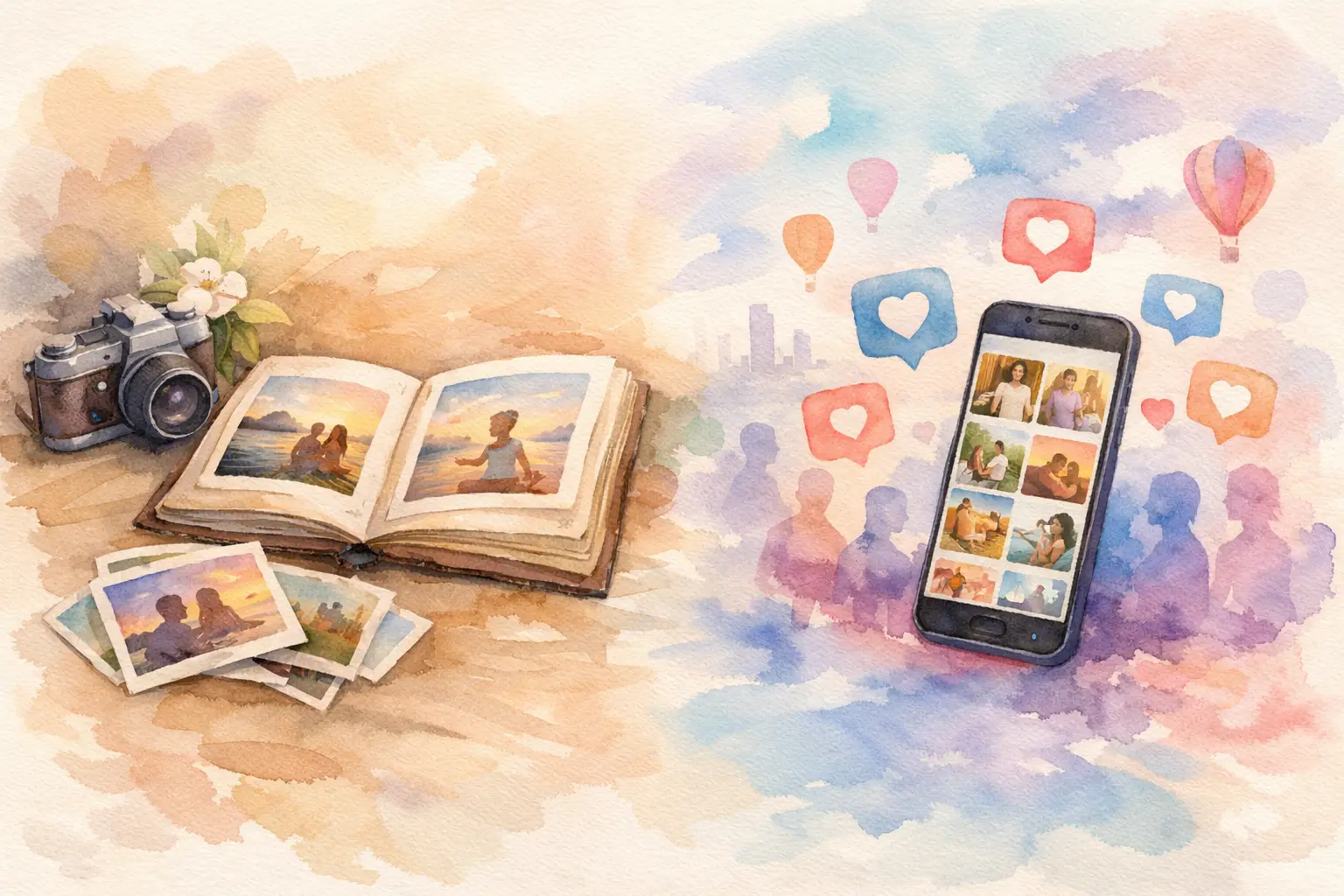
The group chat says, “Drop your pics here,” and then chaos takes over. A few blurry screenshots show up. Someone posts the good ones to Instagram. Three people swear they’ll upload later. Two weeks pass, and half the event lives in random camera rolls forever. That’s the real private photo album vs social media debate - not theory, just whether your memories stay together or scatter on impact.
For birthdays, weddings, vacations, company offsites, and brand events, this choice shapes the whole afterlife of the moment. Social media is fast, public-facing, and built for reaction. A private photo album is different. It’s built for the people who were actually there.
Neither option is automatically better in every case. If your goal is reach, social media wins. If your goal is collecting the full story from everyone’s perspective, private usually wins by a mile. The trick is knowing what kind of event you’re having and what you want the photos to do afterward.
Private photo album vs social media: what changes?
The biggest difference is the audience. Social media turns event photos into content for followers. A private photo album keeps them centered on the guest list, the couple, the team, or the friend group. That sounds simple, but it changes behavior.
On social media, people post selectively. They choose the best selfie, the polished group shot, the clip most likely to get likes. That can be fun, but it’s not the same as documenting the whole event. The in-between moments usually disappear. The weird candids, the table laughs, the dance floor blur, the behind-the-scenes setup - those are often the first things left out.
A private album creates a different kind of participation. People are more willing to share when they’re not performing for an audience. They upload more angles, more casual shots, and more moments that matter to the group even if they’d never make the feed. For events, that’s usually the gold.
Social media is great at visibility, not completeness
Let’s give social media credit where it deserves it. If you want your engagement party to get a little public love, your conference to look active, or your brand event to generate buzz, posting publicly makes sense. Social platforms are designed for speed and attention. They make it easy to highlight a moment and let other people react to it.
But they’re weak as collection tools. Photos get split across stories, DMs, private accounts, close friends lists, and posts you have to hunt down later. Some guests never post at all. Others post compressed versions or crop images to fit the platform. If your goal is to save high-quality memories in one place, social media starts to look less like a photo solution and more like a highlight reel.
That’s the trade-off. More visibility, less completeness.
This matters most when the event is shared by a specific group rather than performed for a wider audience. Weddings are the obvious example. The couple doesn’t just want the four polished posts that made it online. They want the full room. The champagne toast from the back table. The pre-ceremony nerves. The disposable-camera energy without the actual disposable-camera hassle.
A private photo album keeps the event intact
A private photo album works better when the value of the photos comes from context. Everyone is contributing to the same memory, not publishing separate versions of it.
That changes the emotional payoff. Instead of asking, “Who posted what?” the group gets a shared gallery. Instead of chasing people for uploads after the trip, the organizer has one place where everything belongs. Instead of losing half the good shots to dead text threads, the memories stay organized.
There’s also a privacy layer that matters more than people admit. Not everyone wants to end up on a public account, tagged at a party, or visible at a company event. A private album gives guests more room to participate without worrying that every candid could become public content.
For work events, this is even more useful. Teams still want fun, personality, and real moments. They just don’t always want those moments living on public platforms by default. Internal culture and public marketing are not the same thing, and your photo-sharing setup should know the difference.
The friction problem nobody plans for
Most event photo-sharing fails for a boring reason: too many steps.
If guests need to download an app, make an account, remember a password, search their camera roll later, and manually upload photos after the fact, participation drops fast. People mean well. They just don’t do it. That’s why so many “shared albums” end up with six photos from one organized friend and nothing from the 40 other people who were there.
Social media seems easier because people already use it. But easy posting is not the same as easy collecting. Guests post for themselves, on their own timeline, in their own format. You still end up chasing content.
A private photo album only really beats social media if it removes that friction. That’s why the best event photo tools focus on instant joining, no account drama, and simple capture from the phone guests already have in their hand. If people can scan, shoot, and move on, contribution rates go up. A lot.
That’s where a platform like Revel fits naturally. It takes the private album idea and makes it feel social instead of administrative - quick to join, easy to use, and built around the fun of capturing together rather than the chore of uploading later.
The best choice depends on the event
For weddings, birthdays, baby showers, reunions, and group trips, private usually wins because the point is shared memory. These events are about the people in the room. You want candids from every angle, not just whatever three guests felt like posting publicly.
For brand activations and conferences, it depends. If the goal is public proof that the event happened, social media matters. If the goal is collecting usable content from attendees, staff, and guests in one place, a private album is stronger. In many cases, the smartest move is using both, but for different jobs. Let social media handle promotion. Let the private album handle collection.
For company parties and team events, private tends to be the safer call. You get participation without putting pressure on employees to share their personal moments on public platforms. That balance matters.
For vacations, the answer is almost always private first. Nobody wants to spend a month hunting through stories, AirDropped images, and half-sent text attachments just to rebuild the trip.
What people really want after an event
Most hosts think they want photos. What they actually want is closure.
They want to wake up the next day knowing the memories are not gone. They want one gallery, not twelve side quests. They want everyone’s perspective, not just the most online person’s perspective. They want the surprise of seeing moments they missed while they were busy being there.
That’s why private albums feel better after social events. They preserve the event as a collective experience. Social media usually translates it into personal broadcasting.
There’s nothing wrong with posting the best shot on Instagram or TikTok. That’s part of how people celebrate now. But relying on social media as your main photo-sharing system is like using a movie trailer as the archive. You’ll get the polished highlights and miss the actual story.
So which one should you choose?
If your priority is reach, promotion, or public buzz, social media is still the right tool. If your priority is memory, participation, and getting everyone’s photos in one place, choose a private album.
For most real-life events, that answer is less dramatic than people expect. Social media is for showing the moment. A private album is for keeping it.
And if you’ve ever spent days chasing photos after a great night, you already know which one feels better when the party is over.
A writer interested in connection, memory, and the everyday moments that matter more than we realize.
Tags: Private album , Private gallery , Private shared album