QR Code Photo Capture for Better Events
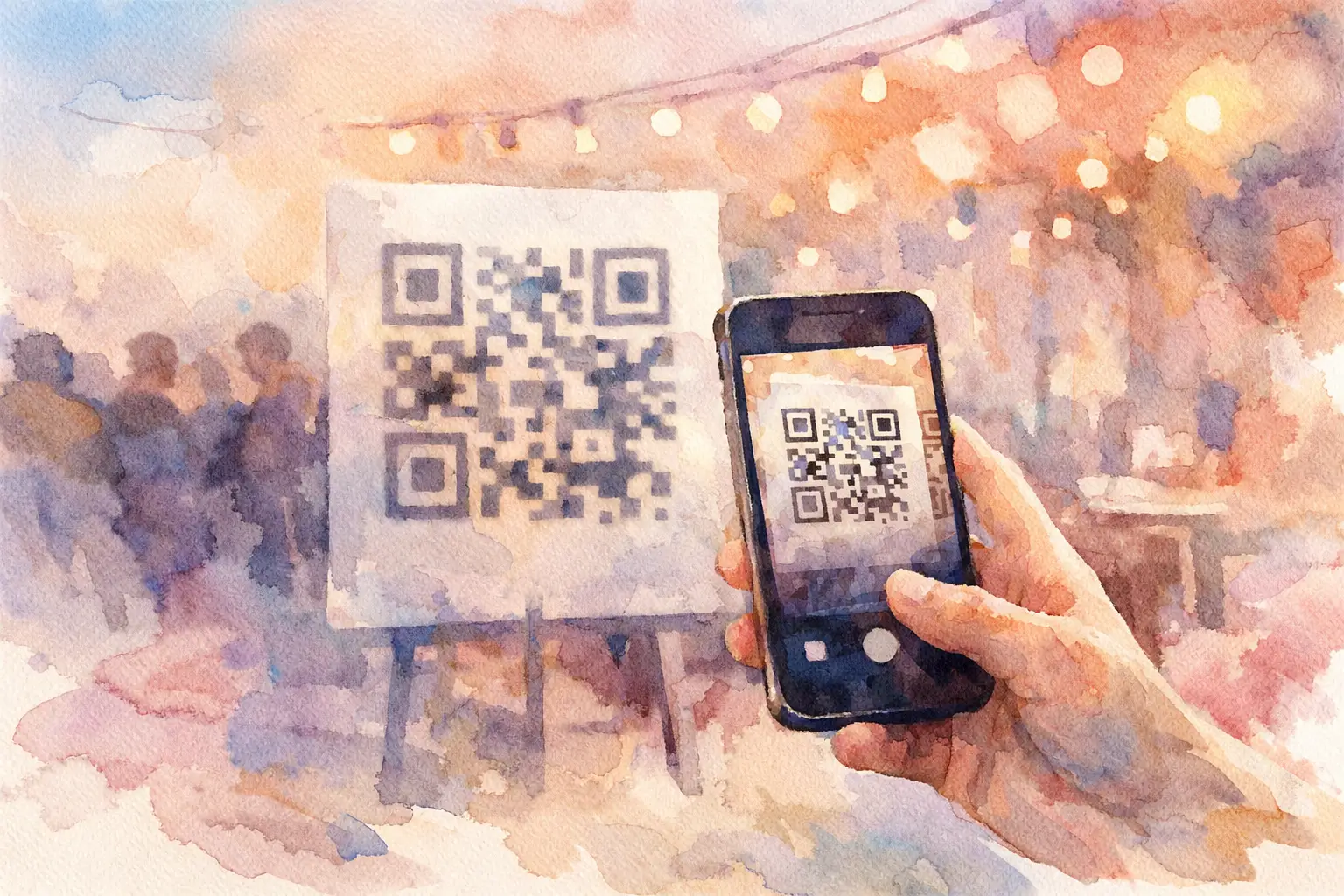
The group chat is full of "send me that pic" messages, and somehow the best photos still never make it into one place. That is exactly why qr code photo capture works so well for events. It turns the moment people arrive into the moment they start contributing, without asking them to download anything, make an account, or remember to upload photos three days later.
For weddings, birthdays, trips, company parties, and brand events, the problem is rarely taking photos. People are already doing that. The real problem is collecting them while the energy is still high. If the process has even a little friction, most guests skip it. A simple scan changes the whole dynamic.
What qr code photo capture actually fixes
Most event photo-sharing tools fail for boring reasons. They ask too much, too late. Guests need a link, then a login, then permission settings, then maybe an app, then maybe they forget. By the next morning, everyone is back to their routine and the photos are spread across camera rolls, Instagram Stories, text threads, and airdrops that only reached half the room.
QR code photo capture solves this at the entrance instead of after the fact. Guests scan once and they are in. That matters more than people think. The easier it is to join, the more likely someone is to participate on the spot, and participation is the whole game.
This is why the best capture systems feel almost invisible. They do not interrupt the event. They blend into it. A sign on the bar, a card on the dinner table, a poster near the dance floor - scan, shoot, done. No tech tutorial. No "I’ll upload later." No organizer becoming the unpaid project manager of everyone else’s camera roll.
Why scanning beats chasing
There is a big difference between asking people to share photos and making photo-sharing part of the event itself. One feels like homework. The other feels natural.
That is the real strength of qr code photo capture. It catches people in the moment they are already ready to participate. They are standing with friends, dressed up, drink in hand, seeing something funny or sweet or chaotic unfold. If sharing is one scan away, they do it. If sharing requires memory and effort later, they usually do not.
For hosts, that means more coverage from more perspectives. You do not just get the polished hero shots. You get the table selfies, the blurry dance floor candids, the pre-ceremony nerves, the weird in-between moments that make an event feel like it actually happened. Those are usually the photos people care about most.
There is also a social effect. Once a few guests start using the system, others follow. Participation becomes visible. The album starts feeling communal instead of transactional, and that changes the energy around it.
QR code photo capture at social events
At personal events, speed and simplicity matter because guests are not there to learn a platform. They are there to celebrate. The tool has to feel lighter than the moment.
At weddings, a QR code can live on welcome signage, reception tables, menus, or even the bar. Guests scan and start contributing throughout the night. Instead of waiting on a dozen people to remember their uploads after the honeymoon, the couple gets a fuller story from the people who lived it with them.
At birthdays and baby showers, the value is even more obvious. These events move fast and often happen in smaller spaces where everyone is capturing different angles at once. One person gets the candles, another gets the reaction, another gets the aftermath. A shared capture flow pulls those fragments together before they disappear into private camera rolls.
Trips and reunions are another perfect fit. Traditional shared albums tend to start strong and then die by day two because people stop bothering. But if scanning leads straight to capturing, the album keeps growing while the trip is still alive. That means fewer missing moments and less work after everyone flies home.
Why it works for brands and teams too
Professional events have the same friction problem, just dressed differently. Conferences, offsites, activations, and launch events all want audience-generated content. Very few get enough of it.
People will absolutely take photos at a branded event. The issue is getting those photos somewhere useful. QR code photo capture gives organizers a direct participation path without slowing anyone down. A guest can scan signage at a booth, a table tent at a dinner, or a screen at check-in, then contribute right away.
For internal events, it helps teams collect culture moments without assigning one person to play photographer all night. For brand activations, it creates a cleaner system for gathering attendee content at scale. For conferences, it gives organizers more than staged panel shots - they also get networking, reactions, and floor-level perspective.
That said, the setup has to match the event. A luxury wedding might want the QR presented subtly and beautifully. A high-energy activation might make it bigger, louder, and impossible to miss. Same mechanic, different presentation.
What makes a good QR code photo capture experience
Not every QR-based setup is good just because it uses a code. The details matter.
First, joining has to be instant. If the scan opens a clunky flow with too many prompts, you lose people. The best systems remove account creation, reduce taps, and get guests to the camera fast.
Second, it needs to work across devices. If half the room is on iPhone and the other half is on Android, nothing can feel second-class. Guests do not care about technical reasons something fails. They just stop trying.
Third, uploads should not punish people for bad reception. Events happen in barns, basements, rooftops, ballrooms, and packed venues where signal can be unpredictable. Offline-friendly capture and syncing later is not a bonus feature. It is the difference between "that was easy" and "it didn’t work."
Fourth, the experience should feel fun, not administrative. This is where digital disposable camera mechanics stand out. Limited shots make people more intentional. Filters make the gallery feel cohesive. A delayed reveal builds anticipation and gives the album a shared payoff instead of turning it into a live dump of random images.
That emotional layer matters. People do not remember that a tool had efficient workflows. They remember that it made the event more interactive and the gallery more exciting.
How to get more scans and more photos
Placement is everything. If guests only see the code once, some will miss it and others will forget. The smartest setups repeat it throughout the event without making the room feel overbranded. Think entry points, tables, restrooms, bars, lounge areas, and anywhere people naturally pause.
Timing matters too. A code shown only at the end misses the best window. The strongest participation starts early, when people are fresh and social. Then it needs little reminders as the event unfolds.
Language matters just as much as placement. "Scan to upload" is fine, but it is not very motivating. People respond better when the prompt makes the payoff clear. Capture the night together. Add your angle. Everyone’s photos, one gallery. Small shift, better response.
And there is always a trade-off between polish and visibility. A tiny, beautifully designed QR card might look great but get ignored. A larger, clearer sign usually performs better. If your goal is contribution, clarity wins.
The bigger shift behind qr code photo capture
This is not just about a smarter way to collect files. It reflects a bigger change in what people want from event photography.
They still want high-quality images, of course. But they also want participation. They want the event to feel shared while it is happening, not just documented afterward by one person with a nice camera. They want the full mix - candid, messy, stylish, emotional, funny, low-stakes, high-resolution, from every angle.
That is why a frictionless system matters so much. It turns guests from passive attendees into active contributors. It makes the album feel like a collective memory instead of a folder someone begged people to fill.
A platform like Revel leans into that shift by making photo capture part of the experience itself. Not extra work. Not post-event cleanup. Part of the fun.
If you are planning any event where the memories matter as much as the logistics, start with the part people usually leave until too late: how the photos actually get collected. A good QR code is not decoration. It is the difference between hoping people share and watching the gallery build itself.
A writer interested in connection, memory, and the everyday moments that matter more than we realize.
Tags: Event photo sharing , Event photo collection , Event photography , Event planning , Shared event photos , Corporate Event Photography , Corporate events