Private Albums vs Group Chats for Photos
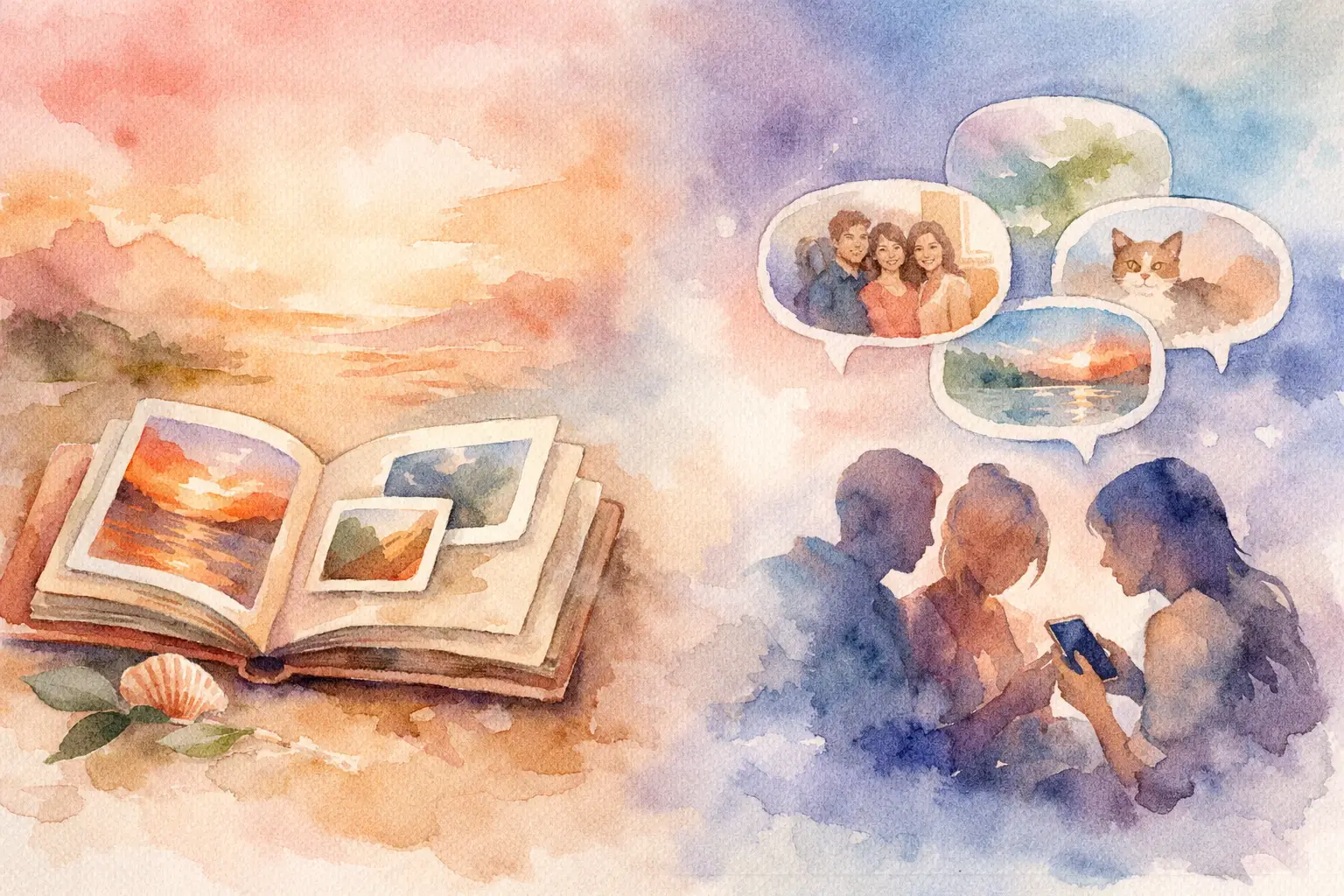
You know the post-event ritual. Someone drops “send pics here” into the group chat, a few people actually do it, one person sends 37 blurry screenshots, and the best photos somehow never make it out of two private camera rolls. That’s why private albums vs group chats is not a small choice. It decides whether your memories live in one place or disappear into message chaos by breakfast.
For casual updates, group chats are great. For collecting photos from a real event, they’re usually a mess. The difference comes down to one thing: chats are built for conversation, while albums are built for keeping.
Private albums vs group chats: what changes after the event?
A group chat feels easy because everyone is already there. No setup, no explanation, no new habit. That convenience is real, and for a dinner reservation or a last-minute outfit check, it works perfectly.
But photo sharing has different rules. Once images start landing in a chat, they compete with jokes, side conversations, voice notes, reaction spam, and the one friend who replies to every photo with “need this.” The pictures are technically shared, but they’re not organized, easy to revisit, or complete.
Private albums do the opposite. They create one dedicated place for the event itself. Every photo belongs to the same moment, everyone can contribute to the same collection, and the gallery still makes sense the next day, next month, and next year.
That matters more than people expect. The goal is not just sending photos. It’s actually collecting them.
Why group chats break down fast
The biggest problem with group chats is that they lower the bar for communication, not contribution. People will react. They will comment. They will absolutely type “post more.” But that does not mean they will upload their own photos in any consistent way.
Some people forget. Some people mean to do it later. Some don’t want to dump 20 images into an active chat and hijack the conversation. Others assume someone else already shared the good ones. So you end up with a partial record of the event, usually from the same two or three people.
Then there’s image quality. Depending on the platform, photos in chats may get compressed, buried, or downloaded and re-shared in ways that make everything look worse. If you’re dealing with a wedding, brand event, birthday trip, or team offsite, that’s not a tiny detail. You want the actual photos, not the low-res versions floating around in a thread full of memes.
Chats also make rediscovery harder. One week later, finding a specific photo means scrolling back through unrelated messages, duplicate uploads, and random tangents. The event stops feeling like a shared gallery and starts feeling like digital clutter.
Where private albums win
Private albums create a simple behavioral shift. Instead of asking people to interrupt a conversation with photo uploads, you give them a clear container with a clear purpose. Add your photos here. View everyone’s photos here. Done.
That clarity changes participation. People are more likely to share when the action feels intentional and low-friction. They do not need to wonder whether they’re spamming the chat, breaking the vibe, or sending the same angle someone already posted. They just add to the collection.
Private albums also make the event feel collective instead of fragmented. You get the party from every pocket, not just from the host’s phone and one friend who never stops documenting. That means more candid shots, more angles, more tiny moments people would have missed otherwise.
And because everything lives together, the gallery has emotional weight. It becomes the actual memory of the event, not a pile of scattered proofs that the event happened.
The trade-off: private feels better, but only if it’s easy
There is one reason group chats keep winning by default: they’re already open.
If a private album adds friction, people drop off fast. Asking guests to download an app, create an account, remember a password, or search for the right folder is enough to kill momentum. That’s the part many photo-sharing tools get wrong. They solve the organization problem but create a participation problem.
So the private albums vs group chats debate is not really about private versus social. It’s about friction versus follow-through.
The best private album setup keeps the barrier almost invisible. Guests should be able to join instantly, contribute in seconds, and understand what’s happening without a tutorial. If it feels like homework, the chat wins. If it feels effortless, the album wins by a mile.
Different events need different tools
Not every gathering needs the same level of structure.
If you’re in a small friend group planning brunch, a chat is enough. A few photos, a few updates, no one cares if one goes missing. The conversation is the point.
But once the event has scale, sentiment, or lots of contributors, chats start showing their limits. Weddings are the obvious example. You do not want guest photos spread across texts, DMs, social posts, and random AirDrops. The same goes for birthdays, bachelorette weekends, baby showers, graduation parties, family reunions, and group trips.
Professional events raise the stakes even more. At company parties, conferences, and brand activations, organizers often need content from many people without chasing them afterward. A group chat can keep attendees talking, but it’s a weak system for actually gathering usable event photography.
This is where a private album earns its spot. It turns passive attendees into active contributors because the path is clear and the destination makes sense.
Private albums vs group chats for participation
Here’s the thing most hosts learn too late: people are much more likely to share in the moment than after it.
A chat does not always help with that. Sometimes it delays it. Guests think, “I’ll send my pics later,” then later disappears. The thread moves on. The energy is gone. So is the follow-up.
Private albums work better when they’re tied to the event experience itself. If guests can join on the spot and upload as they go, contribution becomes part of the night, not another admin task for tomorrow. That is a huge difference.
It also changes how people shoot. When guests know their photos are going into a shared collection, they tend to capture more of the atmosphere, not just content for their own camera roll. The event gets documented from the inside.
That’s part of why disposable-camera-style digital albums have become so appealing. They make participation feel playful, not procedural. The limit on shots, the sense of anticipation, the delayed reveal - those details turn photo sharing into part of the event instead of cleanup after the fact.
What people actually want after a great night
Nobody wakes up the next morning hoping to sort attachments in a message thread.
They want one place where the night lives. They want to see what they missed. They want the table photo someone took before dinner, the dance floor chaos from 10:42, the sweet candid from the corner booth, the blurry but perfect shot that somehow says more than the polished one.
Group chats are good at keeping the night alive while it’s happening. Private albums are better at preserving it once it matters.
That distinction is easy to miss because chats feel immediate. But immediacy is not the same as memory. If you care about the after, the format matters.
So which one should you use?
Use the group chat for logistics, hype, and live banter. Use the private album for the photos you actually want to keep.
It does not have to be either-or in a dramatic sense. In fact, the smartest setup is often both. Let the chat handle the social energy. Let the album handle the collection. One keeps the conversation moving. The other makes sure the memories do not get lost inside it.
If you want the event photos to feel shared, complete, and easy to revisit, private albums are the stronger choice almost every time. That’s especially true when the album removes the usual friction and lets guests join instantly. That’s why tools like Revel feel different - they keep the spontaneity people like about chats, but give the photos a proper home.
The best photo-sharing system is the one people will actually use. The better question is not what sounds good before the event. It’s what still works after everyone goes home.
A writer interested in connection, memory, and the everyday moments that matter more than we realize.
Tags: Private album , Photo sharing , Shared photo gallery