How to Create a Private Event Gallery Fast
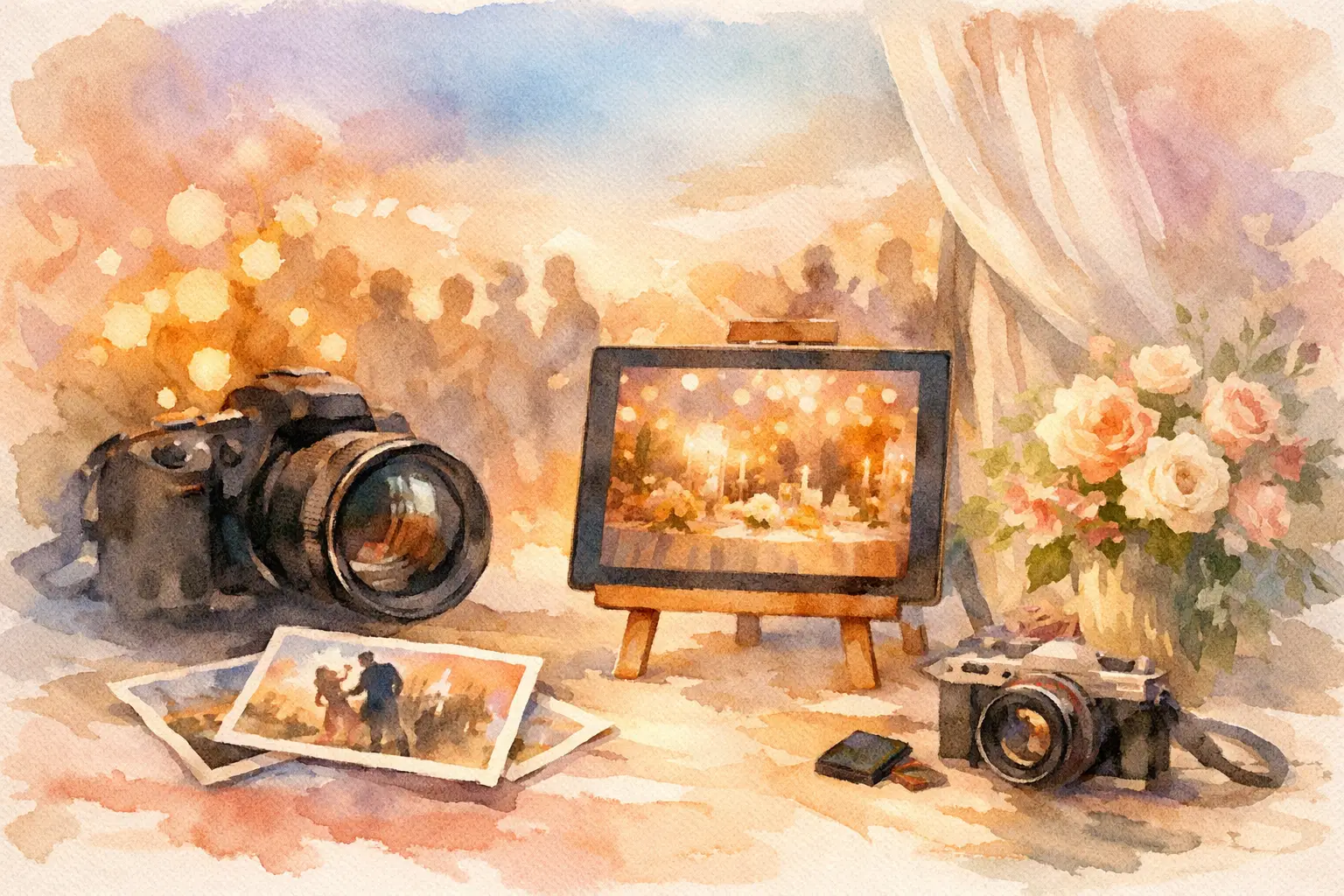
The best photos from your event are probably sitting in 40 different camera rolls right now. One friend caught the dance floor going off. Your cousin got the candle-blowing moment. Someone else has the only photo where everyone looks good. When you create a private event gallery before the party starts, those moments have one place to land - without turning the next week into a group-text scavenger hunt.
A private gallery is more than a folder with a password. Done well, it gives guests an easy reason to contribute, protects the moments you want to keep close, and creates a shared reveal people actually look forward to. Here is how to set one up in a way that feels effortless for your guests and useful for you.
Why a private gallery beats the group chat
Group chats are great for "we made it" messages and blurry selfies sent at 1 a.m. They are terrible archives. Photos get buried under reactions, split across multiple threads, compressed, and forgotten. Asking people to upload later to a shared folder sounds organized, but it usually means you get a handful of photos from the most responsible guests and silence from everyone else.
A private event gallery changes the behavior because the ask happens while the event is alive. Guests can scan a QR code, take or upload photos, and get back to the fun. No account creation. No app-download detour. No awkward follow-up message that starts with, "Hey, can you send me the pictures you took?"
Privacy matters, too. A birthday, wedding weekend, company offsite, or baby shower does not need to become public content just because phones are out. A private gallery gives the people in the room a place to share freely while keeping access in your hands.
How to create a private event gallery guests will use
The setup should take minutes, not a project plan. The goal is simple: make joining obvious, make taking photos fun, and make viewing the finished collection feel worth the wait.
Start with the moment you want to collect
Before choosing settings, decide what you want this gallery to do. A wedding gallery may be about candid guest perspectives that complement the photographer's polished shots. A company event may be about gathering authentic team photos without flooding the marketing team with random email attachments. A vacation gallery may be the one place every traveler can relive the trip.
That purpose shapes the experience. If you want chaos, laughter, and real candids, a digital disposable camera format is a better fit than an open-ended upload request. Limited shots encourage people to notice the moment before tapping. Nostalgic filters give the images a shared visual feel. A delayed reveal keeps guests present instead of scrolling through photos during dinner.
If your priority is documentation over surprise, skip the delay and allow guests to view uploads as they arrive. There is no single right setting. It depends on whether your event needs instant content, a post-event payoff, or both.
Make the QR code impossible to miss
The QR code is the front door to your gallery. Put it where guests naturally pause: at check-in, on the bar, at table settings, beside the guest book, or near the photo booth. For a smaller gathering, a single tabletop sign can be enough. For a wedding or conference, repeat it in several high-traffic spots.
The copy on the sign matters. "Upload photos here" is functional, but it does not create much momentum. Give people a reason to participate. Try a line like: "Your camera roll has the good stuff. Scan to add it." Or: "Take your shots now. Reveal them together later."
Keep instructions to one action. Scan the code. That is it. If guests need to download an app, make a username, or figure out which album is yours, participation drops fast. The best flow works on the phone already in their hand.
Set the privacy rules before guests arrive
Private does not have to mean complicated. Decide who can join, who can view the gallery, and when the gallery opens. For most social events, QR-based access is enough: only guests who see the code can enter. For events with more sensitive content or a larger guest list, consider a passcode or controlled sharing after the event.
Also decide who has control over the final collection. Hosts may want to review photos before sharing them widely. Brand teams may need moderation so the gallery stays on-message. A casual birthday group may prefer a fully open gallery where every ridiculous photo gets its moment.
Tell guests what to expect. A small note such as "Photos are for everyone here - please keep them in the gallery" sets the tone without making the room feel policed. Clear expectations are especially useful at work events, where people may be unsure whether photos will be used internally, socially, or publicly.
Give people a reason to take more than one photo
A gallery with five pictures is technically a gallery. It is not much of a memory. The difference between a thin collection and a great one is participation, and participation comes from making the capture experience feel like part of the event.
Digital disposable cameras work because they add a little constraint and a little mystery. Guests are not trying to create perfect content for an audience. They are catching a friend mid-laugh, the dessert table before it disappears, or the exact second the DJ plays the song everyone knows. Limited shots can make each frame feel more intentional, while filters make the collection feel cohesive even though dozens of people contributed.
For a larger event, prompt the room without overproducing it. A screen slide, cocktail napkin, or quick announcement can nudge guests toward moments they might otherwise miss. Ask for first arrivals, best dressed, dance-floor evidence, behind-the-scenes chaos, or one photo with someone they just met. Prompts work best when they are playful and specific.
Choose a reveal time that fits the energy
The timed reveal is where a private gallery becomes an event after the event. Instead of everyone immediately reviewing what they took, the full collection opens at a moment you choose. That could be the next morning after a birthday, the Monday after a wedding weekend, or the final day of a company retreat.
A delayed reveal is especially good for celebrations where you want guests off their screens. It turns the gallery into a second shared moment: everyone gets to see the night from angles they missed. It also gives late uploads time to sync, which helps when guests had spotty service or spent part of the event offline.
Instant viewing has its place. At a brand activation or conference, a live gallery can build social proof and keep the energy visible. Just remember the trade-off: immediate access can make people more focused on reviewing and posting than participating. For intimate events, delayed usually wins.
Design for real-world guest behavior
Your gallery plan should survive low battery, bad reception, and the friend who scans the code after their third drink. That means choosing a tool that works across common devices, supports high-resolution uploads, and can sync captures once a phone reconnects.
It also means not relying on one person to explain the system. Your signage should stand on its own. The gallery should be easy enough for a guest to join in ten seconds, even if they missed the announcement. And the host should not be stuck troubleshooting during the toast.
Revel is built around that low-friction setup: guests join through a QR code, capture through a browser-based experience, and contribute without creating an account. For hosts, that means less chasing. For guests, it means the photo-sharing part feels like a fun detail, not admin.
Don’t let the gallery end at the reveal
Once the gallery opens, give it a little room to breathe. Send the access details when people are likely to be relaxed and ready to look, not during the commute home. For weddings and milestone parties, the morning-after reveal has a natural pull. For team events, a midweek message can bring back the energy after everyone is back at their desks.
You can keep the gallery private forever, share it with a broader circle later, or pull a few favorites for a recap. The right choice depends on the event and the people in it. Not every candid needs to leave the group, and that is part of what makes private photo sharing feel more honest.
The real win is not just having more pictures. It is seeing the event the way it actually felt from inside the room: messy, funny, sweet, and full of moments the official camera never saw. Put the QR code where the party happens, let people shoot what they notice, and give everyone something good to come back to.
A writer interested in connection, memory, and the everyday moments that matter more than we realize.
Tags: Private album , Private gallery , Private shared album , Event gallery , Event photo sharing , Event photo collection , Event photography