Secure Guest Photo Sharing That People Use
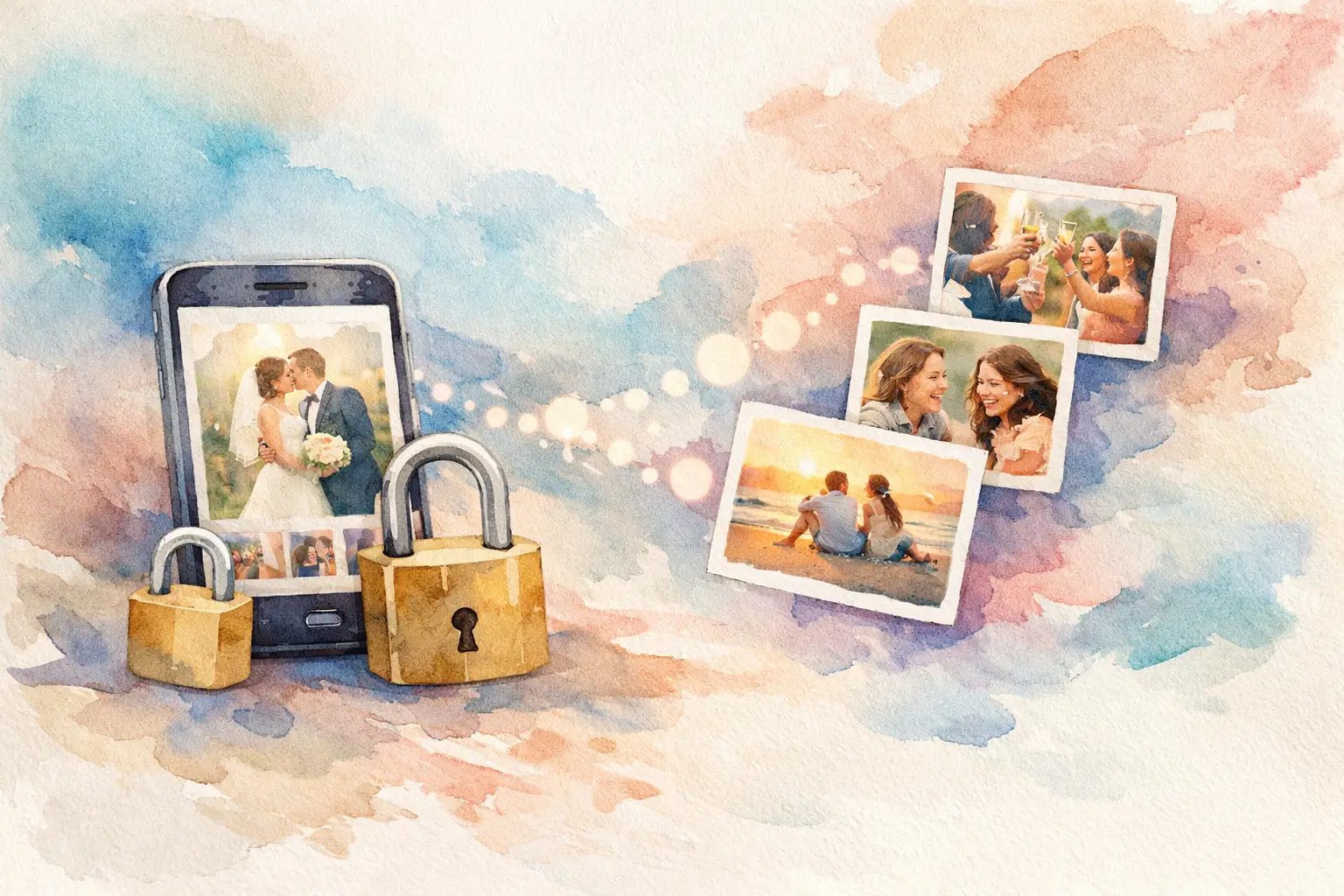
You can plan the playlist, nail the seating chart, and order the cake on time - then still end up with your event photos trapped in six group chats, two AirDrop attempts, and one person’s camera roll forever. Secure guest photo sharing fixes that mess before it starts.
The goal is not just keeping photos private. It’s getting people to actually participate while making sure the gallery stays in the right hands. That matters whether you’re hosting a wedding weekend, a birthday dinner, a company offsite, or a brand event where half the best moments happen away from the hired photographer.
What secure guest photo sharing really means
A lot of photo-sharing tools claim privacy, but the real test is simpler: can guests join fast, upload easily, and trust that the photos won’t end up floating around where they shouldn’t?
That’s where secure guest photo sharing earns its keep. It should protect access to the gallery, keep participation limited to invited people, and avoid the kind of friction that makes everyone give up after one attempt. If the system is technically private but requires an app download, account setup, password reset, and five extra taps, most guests will not bother. Privacy without participation is just an empty album.
The best setup balances both sides. It feels easy in the moment and controlled behind the scenes. Guests scan, snap, and move on. Hosts stay in charge of who joins, when photos are visible, and how the gallery comes together.
Why the usual options fall apart
Most events still rely on methods that feel familiar but break down fast.
Text threads are chaotic. Photos get compressed, buried, and mixed with unrelated messages. Shared cloud folders sound organized, but they often ask guests to sign in, request access, or remember to upload later, which usually means never. Social platforms are even less ideal if the event is personal, private, or meant for a specific group.
Then there’s the classic post-event routine: the host spends a week asking, “Can you send me the pics?” A few people do. Most forget. Some send screenshots instead of originals. One person promises to make an album and disappears.
That’s not a secure system. It’s a scavenger hunt.
The real challenge is guest behavior
Hosts often think the problem is storage or organization. Usually, it’s participation.
People will take photos at your event if it’s effortless and fun. They will not jump through hoops to contribute them afterward. That’s why secure guest photo sharing has to work during the event, not just after it. The closer the upload happens to the moment the photo is taken, the better your chances of actually collecting it.
This is also why QR-based access works so well for live events. It removes the hardest part: asking guests to search for a link, create an account, or remember what they were supposed to do once they got home. You want something that feels instant, because the moment is instant.
What to look for in secure guest photo sharing
Privacy matters, but not as a wall of technical jargon. It matters in ways hosts and guests feel immediately.
Start with controlled access. The gallery should be limited to the people you invite, ideally through a simple join flow that doesn’t require account creation. That keeps random outsiders out without making your actual guests work for entry.
Next, look for private gallery visibility. Not every event photo needs to be public in real time. For weddings, birthday parties, vacations, and team events, a timed reveal can be a better move. It keeps the focus on being there, adds anticipation, and gives everyone the shared payoff later.
Upload quality matters too. Secure guest photo sharing should not mean low-res memories. If people are capturing great candid moments from every angle, you want the originals preserved well enough to revisit, share, and actually enjoy.
Offline capture is another detail that gets overlooked until a venue with weak service ruins the experience. If guests can keep snapping and the photos sync later, participation stays high. If the tool fails the second Wi-Fi gets spotty, people stop trying.
And yes, device compatibility matters. If your tool only behaves nicely on certain phones, you’ve already lost half the room.
Privacy and fun should not compete
There’s a weird assumption in event tech that the more secure something is, the more sterile it becomes. That doesn’t have to be true.
The smartest platforms make privacy feel social, not restrictive. Guests get one clear way in. They know the album is for this group, this event, this memory. That shared boundary actually makes participation feel safer. People are more likely to post the funny dance-floor shot, the blurry late-night toast, or the behind-the-scenes moment if they know it’s not instantly drifting onto a public feed.
That’s especially true for milestone events. Weddings are emotional. Baby showers can be intimate. Company events often mix professional and personal boundaries. Brand activations may need user-generated content collection without turning every guest into a public-facing creator. Different events have different stakes, but they all benefit from a system that feels private by default.
Secure guest photo sharing for different event types
Not every event needs the exact same setup, and that’s where trade-offs come in.
For weddings, privacy and simplicity usually matter most. Couples want guest candids from cocktail hour, the dance floor, and the in-between moments, but they do not want to manage permissions all night. A private gallery with fast guest access is ideal, especially if there’s a delayed reveal that keeps everyone present.
For birthdays, reunions, and vacations, the best system is the one friends will actually use without explanation. The lower the friction, the more chaotic-good photo coverage you get.
For company events, there’s often more sensitivity around who should see what. Internal offsites, holiday parties, and team retreats benefit from secure collection without forcing employees into public posting. At the same time, participation has to feel casual or people will ignore it.
For brand activations and conferences, the balance shifts slightly. Organizers still need secure guest photo sharing, but they may also care about content volume, branded participation, and clean event-wide collection. The right tool should handle scale without making the guest experience feel like work.
Why limited-shot formats work so well
One of the smartest ways to increase participation is to make the experience feel less like uploading and more like play.
That’s why digital disposable camera formats hit differently. Limited shots create just enough structure to make people intentional, while nostalgic filters and a delayed gallery reveal make the whole thing feel like part of the event, not admin. Guests are not being asked to “submit files.” They’re being invited into a shared experience.
That emotional layer matters. People contribute more when the system feels fun, quick, and built for the moment. Security is still there, but it’s not the headline guests are forced to think about. They just know the photos are staying within the group and showing up where they belong.
Revel leans into exactly that sweet spot: private group galleries, instant QR access, no app friction, and a reveal that turns everyone’s candid shots into part of the event story.
The biggest mistake hosts make
They wait too long.
If you start thinking about photo collection after the event, you’re already negotiating with human nature. Attention drops. People get busy. Camera rolls fill up. The energy is gone.
Secure guest photo sharing works best when it’s built into the event itself. Put the join point where people can see it. Make participation obvious. Keep the instructions short. If someone has to ask three questions before taking a photo, the setup is too complicated.
This is one of those rare cases where simpler usually is better. Not basic. Not careless. Just clean enough that guests can join in seconds and get back to having fun.
What good looks like
Good secure guest photo sharing feels nearly invisible while the event is happening. Guests join without friction. They take photos without thinking about file management. The gallery stays private. The host does not spend the next week chasing images across platforms.
Then the payoff hits. You open one gallery and see the whole event from every perspective - the polished shots, the weird candids, the tiny moments you missed while you were busy hosting. That’s the part people actually want.
Because the best event photos are rarely the ones people remember to send later. They’re the ones you made easy to share right when the moment happened.
If you want better memories, don’t settle for a private album nobody uses. Pick a system that protects the gallery and gets the room involved. That’s when photo sharing stops feeling like cleanup and starts becoming part of the event itself.
A writer interested in connection, memory, and the everyday moments that matter more than we realize.
Tags: Photo sharing , Guest photo sharing , Wedding photo sharing , QR photo sharing , Event photo sharing , Corporate photo sharing