Group Album Privacy Settings That Keep It Personal
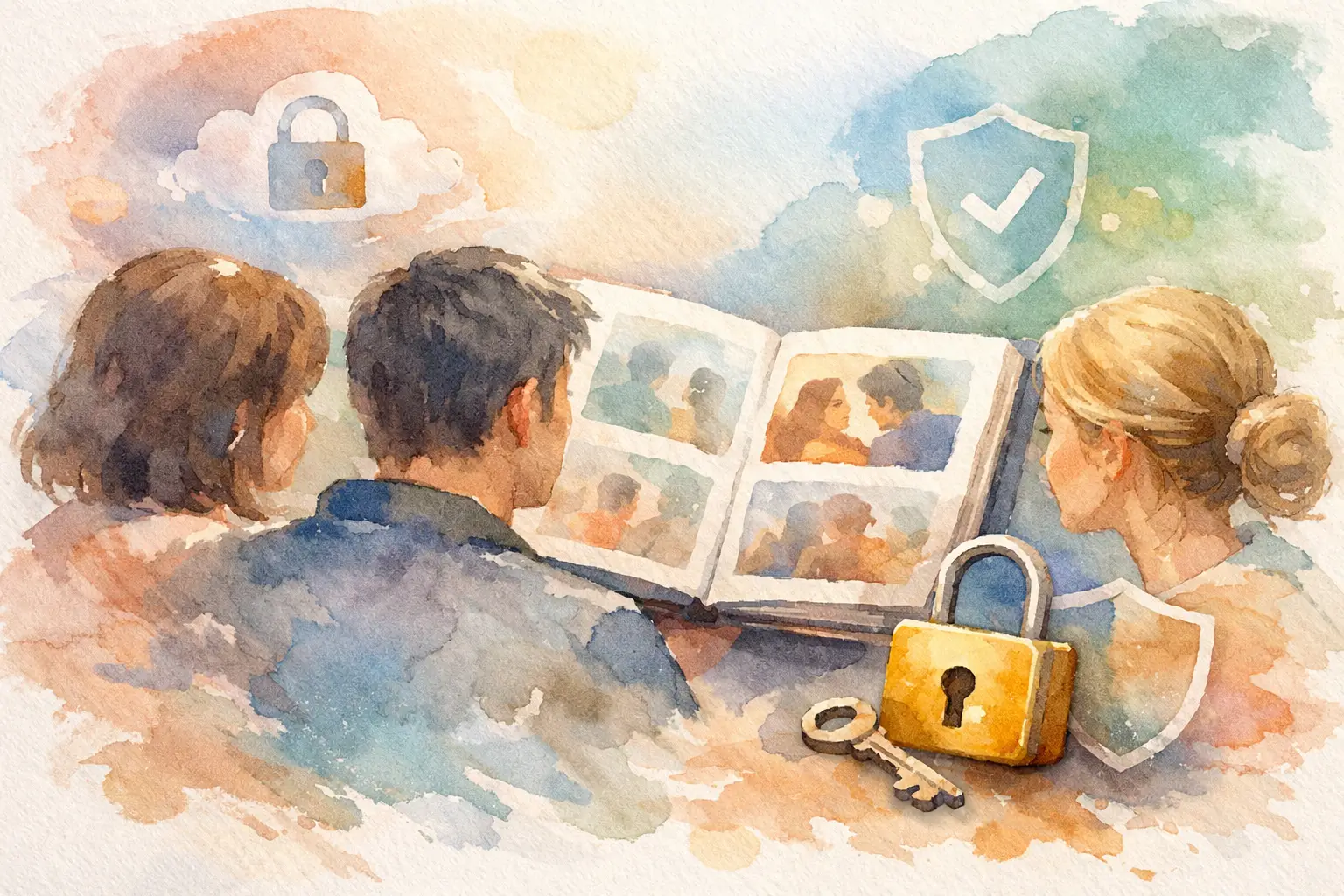
Your best friend catches the first dance from the back of the room. Your cousin gets the birthday candle blowout. Someone captures the exact second the whole group loses it on the dance floor. Those photos belong together, but they do not need to belong to the entire internet.
That is where group album privacy settings earn their place on the party-planning checklist. A shared album should make guests comfortable enough to post the funny, real, slightly blurry stuff - without leaving the host to wonder who can see, save, or forward it later. The goal is not to make sharing complicated. It is to make the room feel safe enough to share more.
Privacy is what gets people to participate
Most people have had the post-event photo chase: a few images in a group text, a handful in someone’s camera roll, and the rest scattered across Instagram, iCloud, and messages that vanish into the scroll. A shared album fixes the collection problem. Smart privacy settings fix the participation problem.
Guests are more likely to contribute when they know what they are joining. Is this a private wedding gallery for the people who were there? A company event album that the marketing team will review? A brand activation where attendees may be photographed in public? The answer changes the right setup.
Privacy is not about making the experience stiff. It is about setting expectations before the first photo lands. When the rules are clear, guests can be spontaneous. That is how you get the candid table selfies, chaotic dance-floor shots, and tiny moments no official photographer could catch.
The group album privacy settings that matter most
Not every event needs the same level of control. A low-key birthday with close friends can stay simple. A wedding, team offsite, or customer-facing event deserves a little more intention. Start with the settings that affect access, sharing, and the life of the album after the event.
Keep entry easy, but not wide open
The best guest experience is usually a private album with a simple join method, such as a QR code shared at the event. Guests scan, join, and start shooting. No app download. No account creation. No hunting for a link in a text thread.
That easy entry should still be tied to the people you invited. Avoid posting a join code publicly if the album is intended for a closed group. Put it on table cards, a welcome sign, a printed itinerary, or a message sent directly to guests. For a wedding, that might mean placing the code at the bar and reception tables rather than on a public social post.
There is a trade-off here. Public access can increase participation at a conference or open activation, but it also makes moderation more important. Private access is better for personal events where guests expect a more intimate space.
Decide who can view and who can upload
Viewing and contributing do not always need to be the same permission. In a family vacation album, everyone may be welcome to do both. In a company event, organizers may want employees to upload while limiting gallery viewing until the event ends. For a brand event, the team might collect attendee shots first, then select what becomes public-facing content later.
Think of it this way: uploading is an invitation to help tell the story. Viewing is access to everyone else’s memories. Those are related, but they are not identical.
If you are hosting a surprise party, consider keeping the gallery hidden from the guest of honor until reveal time. If you are organizing a wedding, you may want guests to contribute throughout the night but wait to see the full collection together. A timed reveal turns privacy into part of the fun. Everyone gets the same first look, and nobody is scrolling through spoilers during dessert.
Set expectations for downloads and resharing
A private group album does not automatically mean every photo should travel beyond the group. Before the event, decide whether guests can download images freely, whether the host will share a final collection, or whether some images are meant to stay in the album.
This matters most when the guest list includes coworkers, children, clients, or people meeting for the first time. A casual photo can feel very different when it is reposted publicly without context. A quick line on the invitation or event sign can prevent awkwardness: “Share in the album, please ask before posting elsewhere.”
You do not need a legal disclaimer for a birthday dinner. You do need a shared understanding. The clearer the vibe, the fewer surprises after the party.
Give hosts a moderation lane
Even the friendliest guest list can produce an accidental duplicate, an unflattering photo, or a shot someone would rather not keep. Host controls for reviewing, removing, or managing content are not about policing the party. They are a safety net.
For personal events, make sure guests know whom to contact if they want an image removed. For professional events, decide in advance who owns that job. It may be an event coordinator, a social lead, or the person running the photo experience.
The key is speed. If someone wants a photo taken down, they should not have to send three follow-ups and wait until Monday. Respectful moderation protects trust, and trust keeps people participating.
Match privacy to the kind of event
The right privacy setup depends on what people are sharing and why they are there.
For weddings, showers, graduations, and milestone birthdays, private access plus a shared reveal usually hits the sweet spot. Guests can contribute freely, the host gets photos from every angle, and the album stays with the people who made the memory.
For vacations and friend trips, the focus is convenience. Use a private, easy-to-join album that stays open long enough for everyone to upload their camera roll favorites after the flight home. The group will thank you when nobody has to ask, “Can you send me that one from dinner?”
For company events, privacy often needs more structure. Clarify whether the album is internal, whether leadership can use photos later, and whether employees should avoid posting sensitive materials, badges, or screens. The point is not to drain the fun out of the event. It is to keep the fun from creating a preventable problem.
For brand activations and conferences, it depends on the experience. A public-facing campaign may benefit from broad sharing, while a VIP dinner or client retreat should feel more protected. If photos could be used in marketing, say so plainly. People are much more comfortable participating when they understand the context.
Build privacy into the guest experience
The biggest mistake is treating privacy as a settings screen only the host sees. Guests need the basics in the moment, when they scan the code and decide whether to join.
Keep the language human. Tell them the album is for attendees. Let them know when it will reveal. If there are sharing boundaries, put them in one clear sentence. Do not bury the important part in a wall of tiny text nobody reads between cocktails and cake.
Revel is built around that low-friction exchange: guests scan a QR code, capture from their own phones, and contribute without downloading an app or making an account. Add limited shots, nostalgic filters, and a delayed reveal, and the gallery feels less like another folder and more like a shared event moment. The privacy plan gives that moment its boundaries.
A good setup also accounts for guests who do not want to be photographed. Encourage people to check before posting close-ups of someone else, especially at more personal gatherings. You can make this feel casual: “Catch the moment, respect the people in it.” Simple. Clear. Not a mood killer.
A quick host check before guests arrive
Before you print the QR code or send the invite, make sure you can answer four questions: Who can join? Who can see the gallery? When will photos become visible? What happens if someone wants a photo removed?
If those answers match the event, you are ready. If they feel fuzzy, tighten them now, not after a photo has already been shared. The best photo-sharing experience is almost invisible to guests - they scan, shoot, laugh, and later relive the night together.
Set the boundaries, put the camera in everyone’s hands, and let the memories stay where they belong: with the people who were there.
A writer interested in connection, memory, and the everyday moments that matter more than we realize.
Tags: Group album , Bachelorette group photos , Group activities , Group travel , Group wedding photos , Vaction group photos