Event Photo Sharing Trends Worth Watching
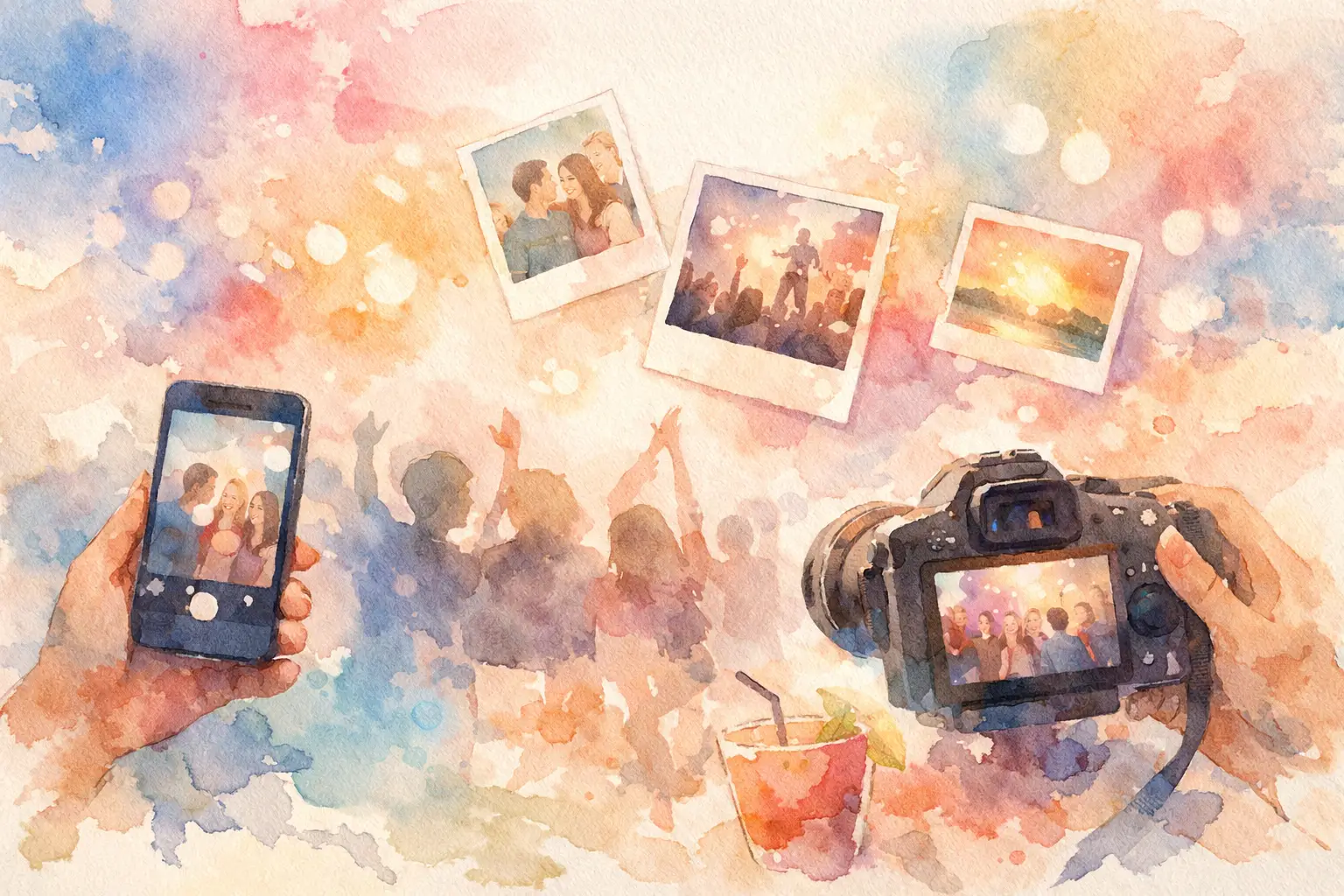
The group chat has 47 photos. Someone’s Instagram has 12 more. Your aunt took the best candid of the night, but it is still sitting in her camera roll three weeks later. That mess is exactly why event photo sharing trends are changing. Hosts no longer want a folder full of late, duplicate uploads. They want the whole room to help capture the moment, then experience the memories together.
For weddings, birthday weekends, company offsites, and brand events, the winning photo experience is becoming less about one person documenting everything and more about making participation feel effortless. Less chasing. More collecting.
Event Photo Sharing Trends Are Getting More Social
The old model was simple: take photos, promise to send them later, forget. It failed because it made sharing a chore after the fun was over. By then, guests are back in their routines, photos are buried in camera rolls, and the organizer is left sending reminder texts that nobody loves receiving.
The new expectation is participation in the moment. Guests want to contribute without downloading another app, creating an account, or figuring out which album link they are supposed to use. A QR code at the bar, on the table, or in the welcome signage gives people an immediate way in. Scan, shoot, share. That is the entire assignment.
This matters because the best event photos are rarely the official ones alone. They are the blurry dance-floor grin, the behind-the-scenes toast prep, the friend group squeezing into a booth, the unexpected speech reaction from across the room. Those moments happen everywhere at once. A shared gallery turns the crowd into the camera crew.
Private beats public for the memories that matter
Not every event needs to become content. One of the clearest shifts is toward private galleries that give guests room to be present without wondering whether every photo will appear on a public feed.
For a wedding, that may mean guests can share joyful, unfiltered moments without posting before the couple does. For a company event, it can mean collecting culture-building photos without mixing them into personal social accounts. For a birthday, it means the silly pictures stay with the people who were actually there.
Privacy does not mean hiding the fun. It means giving the right people a better place to enjoy it. The trade-off is that public posts can extend an event’s reach, especially for a brand activation or conference. The smart move is to separate the two: create a private shared gallery for attendees, then invite approved public posts where visibility is part of the goal.
The disposable camera feel is back, with better logistics
Polished photos have their place. So do flash-on, imperfect, wildly alive photos that feel like they came from a friend’s pocket. Disposable-camera aesthetics have returned because they give people permission to stop trying so hard.
Nostalgic filters, limited shots, and a little unpredictability can shift behavior fast. When guests know they cannot take 40 versions of the same selfie, they choose the moment more carefully. When a photo does not need to look professionally edited, more people are willing to take one.
The appeal is not just visual. It is emotional. Disposable-camera style brings back the anticipation of waiting to see what happened. Modern event tools can keep that feeling while skipping the actual downside of disposable cameras: buying film, developing it, losing it, and discovering half the roll is dark.
The Delayed Reveal Changes the Energy
Instant sharing is useful, but it is not always the most fun option. A timed gallery reveal is becoming a favorite for events where anticipation is part of the experience.
Think about a wedding reception. Instead of guests scrolling through every upload while they are still at the table, the gallery opens the next morning or after the weekend. Suddenly, the event gets an encore. Everyone returns to relive it at the same time, compare perspectives, and find the photos they missed.
That shared reveal can be especially powerful for vacations, retreats, and milestone birthdays. It extends the emotional life of the event without requiring anyone to do extra work afterward. Capture together. Reveal together.
There is a practical consideration here. A delayed reveal is great for social events and internal celebrations, but less ideal when people need event photos immediately for press, social coverage, or live marketing. In those cases, a hybrid setup works well: give organizers or a social team early access while keeping the wider guest gallery on a scheduled reveal.
Fewer barriers create more photos
The biggest trend is not really a filter, a QR code, or a gallery design. It is friction reduction.
Every extra step loses contributors. Asking guests to download an app loses some. Requiring an account loses more. Making them search for a link later loses nearly everyone. The best photo-sharing experiences meet people where they already are: on their phones, in the room, ready to scan something and move on.
That is why browser-based capture matters. It works across devices, lets guests join fast, and avoids the awkward moment where someone says, “I’ll upload mine later.” Later is where photos disappear.
Offline capture is another quiet but meaningful upgrade. Outdoor weddings, remote trips, crowded venues, and convention halls can all have spotty service. If guests can keep taking photos and have them sync once they reconnect, the system supports the party instead of becoming another thing to troubleshoot.
What Hosts Should Build Into Their Photo Plan
A great shared gallery does not need a complicated rollout, but it does need a visible invitation. Put the QR code where people naturally pause: at check-in, on cocktail napkins, beside the guest book, at dinner tables, or near the photo booth. A single sign at the entrance is easy to miss once the room gets moving.
The message should be direct and a little playful. “Add your point of view.” “Take the messy ones.” “We want the dance-floor evidence.” Specific prompts make people feel invited to contribute, not instructed to complete admin.
For larger events, give the gallery a role in the experience. At a wedding, frame it as the guests’ disposable camera. At an offsite, make it the place for candid team moments rather than another polished corporate archive. At a brand activation, ask attendees to capture a detail, a reaction, or a new product in action. The more concrete the prompt, the more varied the final gallery becomes.
It also helps to decide who owns the post-event moment. A gallery full of photos is valuable, but a host who shares the reveal timing, celebrates a few standout shots, or sends a simple thank-you keeps the energy going. This is not about turning memories into a marketing campaign. It is about making contributors feel like their photos mattered.
From Photo Collection to Shared Memory
The next phase of event photo sharing is not bigger folders or more notifications. It is a better social ritual. Guests arrive, join in seconds, capture the parts the host cannot see, and return to a gallery that feels like the event from every angle.
Tools like Revel are built around that shift: QR-code entry, no app requirement, disposable-camera energy, and a reveal that gives the photos their own moment. The technology stays in the background. The people stay at the center.
The best event gallery should feel less like a file transfer and more like one last round of the party. Put the camera in everyone’s hands, make sharing easy enough to happen now, and give the memories a reason to come back later.
A writer interested in connection, memory, and the everyday moments that matter more than we realize.
Tags: Event photo sharing , Event photo wall , Event photo collection , Event photography , Event gallery , Event planning , Corporate Event Photography , Event QR , Team events , Offline event photo uploads