Event Memory Capture Guide for Photos Everyone Shares
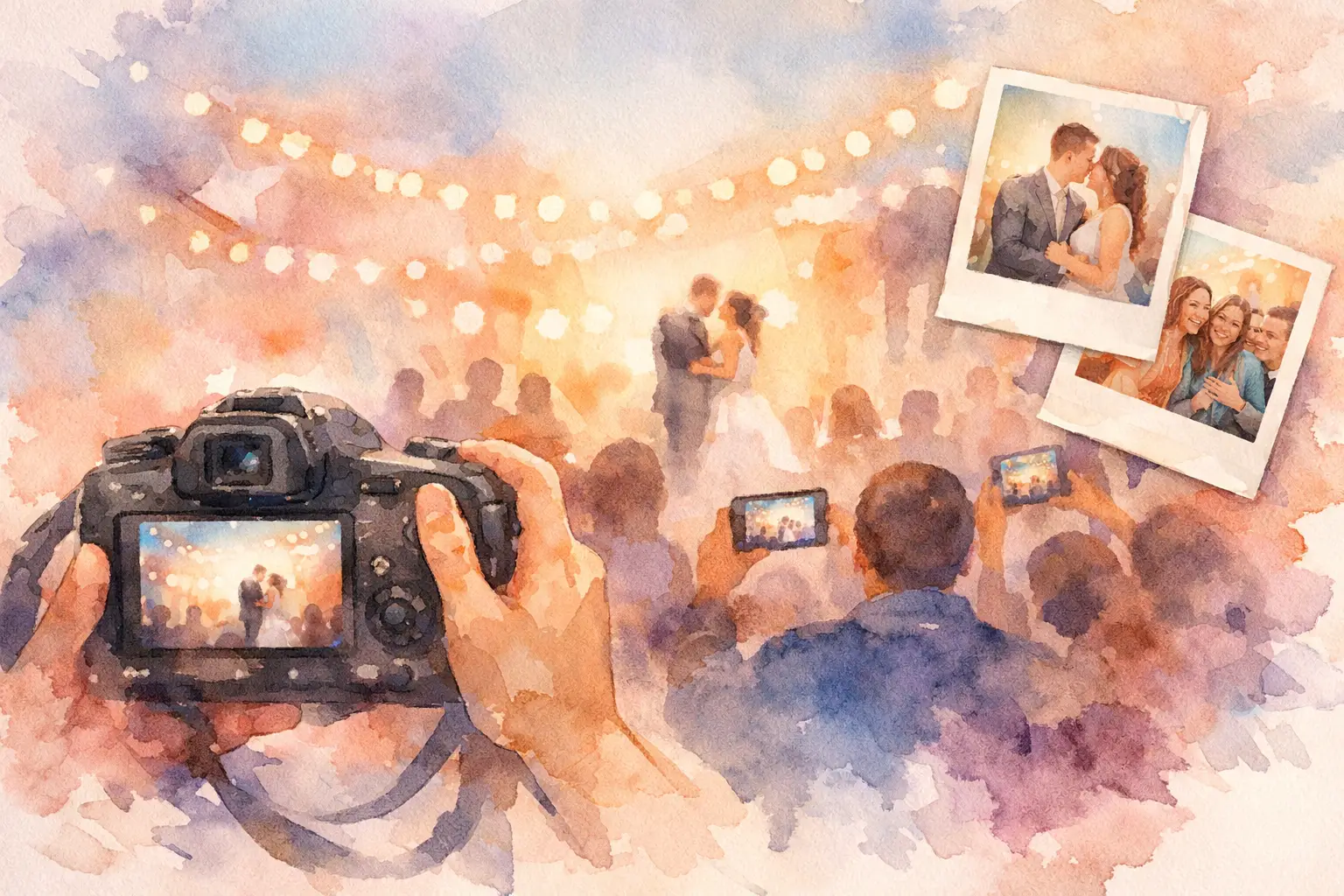
The best photo from your event is probably not the one you took. It is the blurry-laughing-at-dinner shot from your cousin, the dance-floor chaos your friend caught at 11:47 p.m., or the quiet behind-the-scenes moment no one thought to stage. This event memory capture guide is about getting those photos before they disappear into camera rolls, text threads, and the great unanswered question: “Wait, can everyone send me what they got?”
A good event gallery should feel like the event did: full of people, personality, and little moments you missed while hosting. The trick is not asking guests to do more. It is making participation so easy that they actually do it.
Start with the real goal: more perspectives
Most hosts plan photo sharing backward. They throw up a shared folder after the party, send a link, and hope people remember to upload. By then, guests are home, distracted, and already sorting through 300 photos they may never revisit. The collection rate drops fast.
Instead, decide how you want memories to be captured while the event is happening. Are you trying to document a wedding weekend from every angle? Give a birthday party a disposable-camera feel? Collect content from a company offsite without making it feel like homework? The answer shapes the experience.
For intimate celebrations, candid volume usually matters more than perfect composition. For a brand activation or conference, you may also need recognizable moments, crowd energy, and usable event content. Either way, the strongest galleries have one thing in common: guests understand exactly what to do in seconds.
Make joining easier than ignoring it
Every extra step loses people. Downloading an app, making an account, finding an invitation email, remembering a password - that is a lot to ask from someone holding a drink, looking for their table, or heading to the dance floor.
Use one obvious entry point. A QR code at check-in, on table cards, near the bar, or in the event signage gives guests a simple move: scan, join, shoot. No scavenger hunt. No “I’ll do it later.”
Placement matters more than organizers think. One sign by the entrance is easy to miss. Put the code where people naturally pause, especially at moments when they are already taking photos. Weddings benefit from a sign near cocktail hour and another by the dance floor. For a vacation, send the code before the trip and keep it handy during the first group meal. At a company event, add it to the welcome slide and any printed agenda.
The message should be just as clear as the code. “Add your photos here” works. “Capture together. Reveal together.” works even better because it tells guests this is part of the event, not another admin task.
Give people a reason to take the photo now
A shared album is useful. A shared activity is magnetic.
If guests can take unlimited photos that show up immediately, the experience may feel like any other camera roll. That is fine for some events, especially when speed matters. But for celebrations, a little structure can turn photo-taking into a game.
Digital disposable camera mechanics work because they bring back a feeling people already understand: shots are limited, so choose the moment. Filters add personality. A delayed reveal keeps the room curious. Suddenly, guests are not just documenting the event. They are contributing to a collective time capsule.
The trade-off is control. A limited-shot format can produce more intentional, surprising images, but it is not ideal if your priority is complete documentation of a large conference or a client-facing activation. In those cases, open capture may be the smarter choice. Match the setup to the stakes.
Build prompts into the event, not a speech
You do not need to announce “Please take candid photos” three times over a microphone. People respond better to small, specific invitations that feel native to the moment.
At a wedding, a table card might ask guests to capture “the happiest person at your table” or “a photo of something the couple will miss.” At a birthday, try “your best proof this party happened.” For a team retreat, prompt people to catch the funniest whiteboard, the best snack, or a coworker in their natural habitat.
Specific prompts beat vague ones because they give guests permission to be playful. They also create a better mix of images. Without prompts, you tend to get posed group photos and a lot of drinks held up to the camera. With them, you get the tiny stories.
Keep it light. Two or three prompts across signage or screens is plenty. Too many rules can make the whole thing feel like a branded assignment, which is exactly the mood you are trying to avoid.
Plan for the moments that matter most
Not every part of an event needs the same capture strategy. Think about the rhythm of the day.
Early on, guests need a gentle nudge and a visible way to join. During peak moments - vows, speeches, a surprise entrance, a product reveal - they need a reason to look up, not just down at their screens. Save the active-photo push for the social windows around those moments: cocktail hour, mingling, dinner transitions, dance-floor energy, breakout sessions, or the ride home.
For weddings, ask a few trusted friends to be unofficial memory captains. They are not photographers. They are simply the people who will remember to scan, take a few honest photos, and encourage their table to do the same. For corporate events, assign this role to ambassadors or event staff who are already circulating.
This is also where offline capture matters. Weak venue Wi-Fi should not decide whether a memory gets saved. Choose a setup that lets guests keep shooting and sync later, so a spotty ballroom, outdoor venue, or packed conference hall does not kill momentum.
Let the reveal do some of the work
The post-event gallery should not feel like a file dump. A reveal gives the memories a second moment.
For a party or wedding, opening the gallery the next morning can recreate a little of the anticipation that made disposable cameras fun. Everyone gets to see the night from angles they did not experience firsthand. The host stops chasing photos, and guests have a natural reason to revisit the celebration together.
For professional events, timing depends on your goal. A fast reveal can keep an activation buzzing while the event is still fresh. A next-day release can create a clean follow-up moment for attendees and internal teams. If the event includes sensitive content or private guests, make sure access is appropriately limited from the start.
Revel is built around this kind of shared reveal: guests can join by QR code, capture without creating an account, and return to one private gallery when it is time. The product detail matters because it removes the awkward part of photo collection - asking people to do work after the fun is over.
Protect the vibe and the privacy
More participation should not mean less thoughtfulness. Tell guests whether the gallery is private, who can view it, and when it will open. At a workplace event, set expectations around what is appropriate to photograph and share. At weddings and family events, consider whether any guests prefer not to appear online or in public-facing content.
This does not require a legal disclaimer taped to every table. A simple note is usually enough: “This is a private gallery for guests,” or “Please keep photos inside the group.” Clear boundaries make people more comfortable contributing.
If you are hosting a brand event, separate guest-generated memories from any content you plan to repurpose publicly. The best candid photo may be emotionally perfect for the attendees and not suitable for a campaign. That is normal. Capture generously, then curate with care.
What to do after the gallery opens
When the photos arrive, resist the urge to treat them like a chore. Browse them with the people who were there. Call out the unexpected favorites. Save the image that explains the whole weekend better than any posed portrait could.
For organizers, the gallery is also useful feedback. Which moments made people reach for their phones? Did the QR code placement work? Did one prompt produce a flood of great photos while another got ignored? Those answers make the next event better without making it more complicated.
The goal is not to manufacture nostalgia. It is to leave enough room for it to happen. Put a camera in more hands, make sharing feel effortless, and let the people in the room tell the story you were too busy living to see.
A writer interested in connection, memory, and the everyday moments that matter more than we realize.
Tags: Event planning , Event photo sharing , Event photo collection , Event gallery , Corporate events , Corporate Event Photography , Event photo wall , Event photography , Event QR , Offline event photo uploads , Private event , Shared event photos , Team events