Disposable Camera Versus Smartphone: Which Wins?
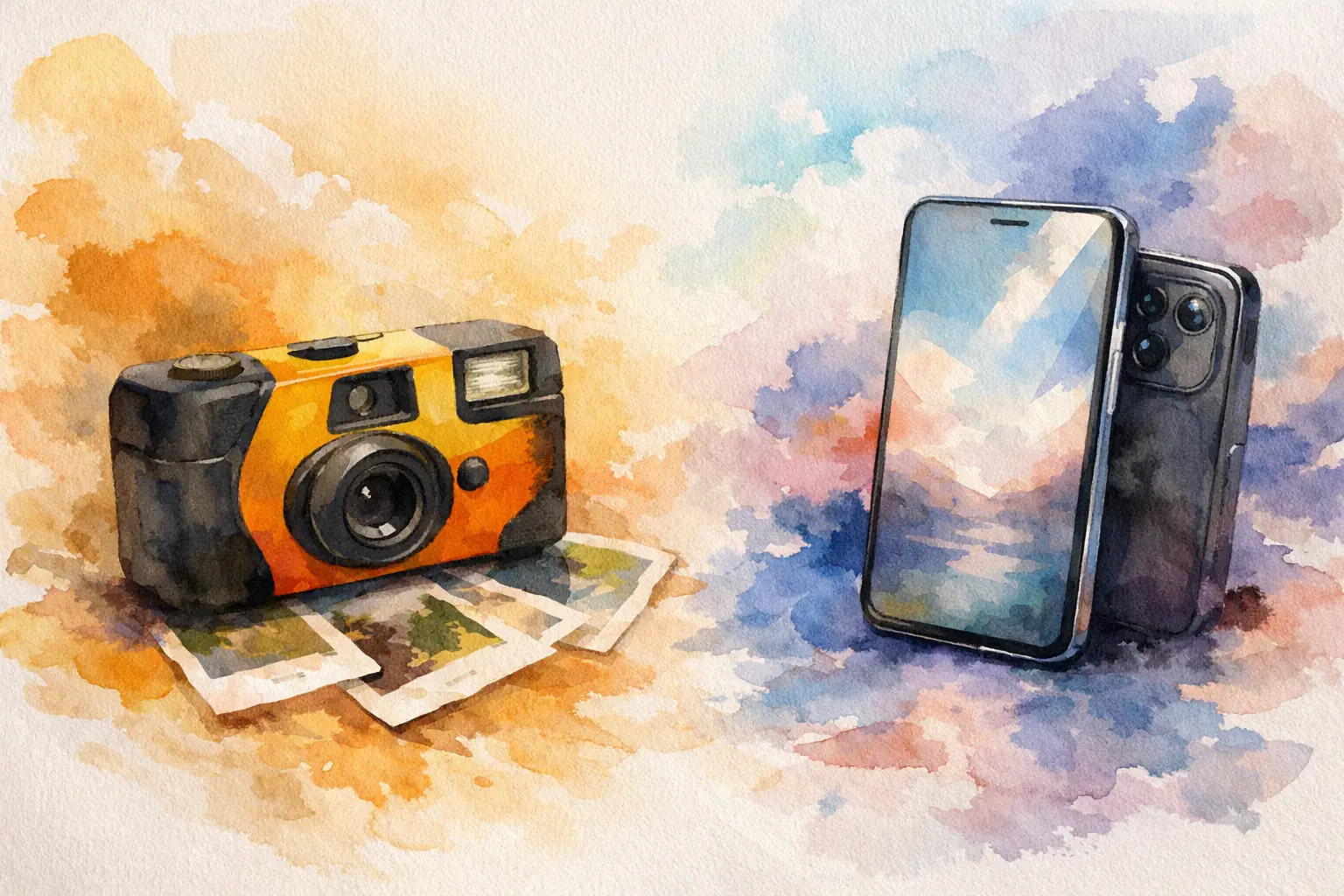
At a wedding reception, a birthday dinner, or a weekend away, the disposable camera versus smartphone debate is not really about megapixels. It is about what people do when a camera is in their hand. One invites a little chaos, surprise, and one-shot confidence. The other is already in every guest’s pocket, ready for the group selfie, the dance-floor video, and the photo someone catches at exactly the right second.
Both can make an event more memorable. But they create very different experiences - especially when the goal is not just taking photos, but actually getting everyone’s photos into one place.
Disposable Camera Versus Smartphone: The Real Difference
A physical disposable camera changes the room. It is visible, passable, and a little bit mysterious. Guests pick it up, take a flash-heavy photo, then hand it to the next person without checking whether they looked good. That lack of control is the point. It can pull people out of perfection mode and into the moment.
A smartphone does the opposite, in a good way. It gives every guest a familiar camera with better low-light performance, multiple lenses, fast focus, and nearly unlimited attempts. Someone can capture the toast from across the room, switch to video when the best man starts crying, and send the shot immediately. For a big event, that coverage matters.
The catch: smartphone photos are often scattered the second they are taken. Some land in text threads. Some get posted to Stories and disappear. Some sit in camera rolls forever, waiting for the host to ask, “Can you send me those pictures?” three weeks later.
So the better choice depends on the memory you want to create and the collecting problem you need to solve.
What a Disposable Camera Gets Right
Physical disposable cameras deliver a specific look and behavior that no camera spec can fully replicate. The flash is bold. The framing is imperfect. The photos can be grainy, overexposed, underexposed, or weirdly perfect. They feel less like content and more like evidence that a fun night happened.
They also create a shared object. Put a few cameras around a reception or birthday party, and people understand the assignment without a speech. Snap something. Pass it on. Do not overthink it.
That simplicity can help shy guests participate. Not everyone wants to pose for a polished iPhone portrait or be the person recording a video. A disposable camera gives them a playful, low-pressure role. One click, one moment, done.
There is also a delayed gratification factor. You do not see the photos right away. You wait for the film to be developed, then relive the night through whatever everyone happened to capture. For a couple, a birthday person, or a close group of friends, that reveal can feel genuinely special.
The trade-offs of film
Nostalgia has logistics. A physical camera has a limited number of exposures, so it can run out before the best part of the night. Film and processing add cost, and development takes time. Photos can be lost if a camera goes missing, and there is no easy way to know whether guests actually used the cameras placed around the room.
Image quality is part of the charm, but it is not always charming. Dark venues, fast movement, and accidental finger-over-the-lens shots can leave you with a lot of unusable frames. If you need reliable event coverage for a brand activation, a company event, or a once-in-a-lifetime ceremony, relying on film alone is a gamble.
Why Smartphones Usually Win on Coverage
Your guests already know how to use their phones. No instructions. No film to load. No camera to find. When something spontaneous happens, phones are out in seconds.
That means a smartphone-first setup usually produces more photos, more angles, and more of the moments that move too quickly for a shared physical camera. Think grandparents dancing at a wedding, friends arriving at a vacation rental, a toddler making a break for the cake, or a team celebrating after an awards announcement. The people closest to the moment can capture it immediately.
Smartphones also make accessibility easier. Guests can zoom, use portrait mode, take a quick burst of photos, or adjust for a dim room. Modern phone cameras are remarkably good in conditions that would leave a disposable camera struggling.
For organizers, the biggest advantage is speed. With the right photo-sharing experience, guests can contribute as they go and the full collection can be ready without collecting film, chasing down cameras, or sending follow-up reminders.
The smartphone problem is not the camera
The issue with phones is not photo quality. It is participation and follow-through.
If you simply tell guests to “send us your pictures,” most will mean to. A few will. The rest will get distracted by work, travel, laundry, and the next thing on their calendar. By the time the host asks again, people have forgotten which photos they took.
Phones also encourage editing, retaking, and private saving. That is great when someone wants their best angle. It is less great when the event album ends up with 12 nearly identical posed photos and none of the candid moments happening just outside the frame.
The answer is not asking guests to use less technology. It is giving their phones the fun constraints and collective energy people love about disposable cameras.
The Sweet Spot: Disposable Energy, Smartphone Convenience
For most events, the best answer is not choosing film or phones in a fight to the death. It is using the phone everyone already has while designing the experience like a disposable camera.
A digital disposable camera setup can limit the number of shots, add a nostalgic filter, and keep the gallery hidden until a chosen reveal time. Suddenly, guests are not dumping polished photos into another folder. They are playing along. Every photo feels more intentional because there are only so many chances to take one.
That format preserves the best part of disposables: the anticipation. It removes the frustrating part: film processing, lost cameras, and waiting weeks to discover that the reception was too dark for half the roll.
Revel is built around that middle ground. Guests scan a QR code, join without downloading an app or creating an account, and start capturing from their own phones. They get the playful limits of a disposable camera, while the host gets high-resolution contributions gathered in one private place. Capture together. Reveal together.
Which Option Fits Your Event?
Choose physical disposable cameras when the object itself is part of the aesthetic. They are especially good for a small dinner party, a retro-themed celebration, or a wedding where film photography is already central to the day. Just budget for enough cameras, film processing, and the chance that a few rolls will be more abstract than expected.
Choose smartphones when you need broad coverage, fast access, and photos from every corner of the event. This is usually the practical choice for large weddings, conferences, company parties, group trips, and brand activations. The key is making contribution feel immediate and fun, not like homework.
Choose a digital disposable camera experience when you want both. It works particularly well when you want guests to be present instead of reviewing every shot, but you still want a complete gallery that is easy to access and share afterward.
One more factor: your crowd. A group of close friends may happily pass around a single film camera all night. A room of 150 wedding guests needs more cameras or a system that lets everyone participate at once. A marketing team collecting user-generated content needs consistency, permission awareness, and a gallery that does not depend on someone remembering to AirDrop files the next morning.
Make the Camera Part of the Party
The disposable camera versus smartphone question gets more interesting once you stop treating the camera as just a tool. A good event camera changes behavior. It gives guests permission to notice each other, take candid shots, and contribute to a memory that belongs to the whole room.
Film can do that. Phones can do that, too, when the experience has a clear invitation, a little creative constraint, and a reason for everyone to come back for the reveal. The best photos are rarely the ones you plan. Make it easy for people to catch the rest.

A writer interested in connection, memory, and the everyday moments that matter more than we realize.
Tags: Disposable camera , Digital disposable camera , Disposable camera app , Wedding disposable camera