Brand Activation UGC Capture Guide That Works
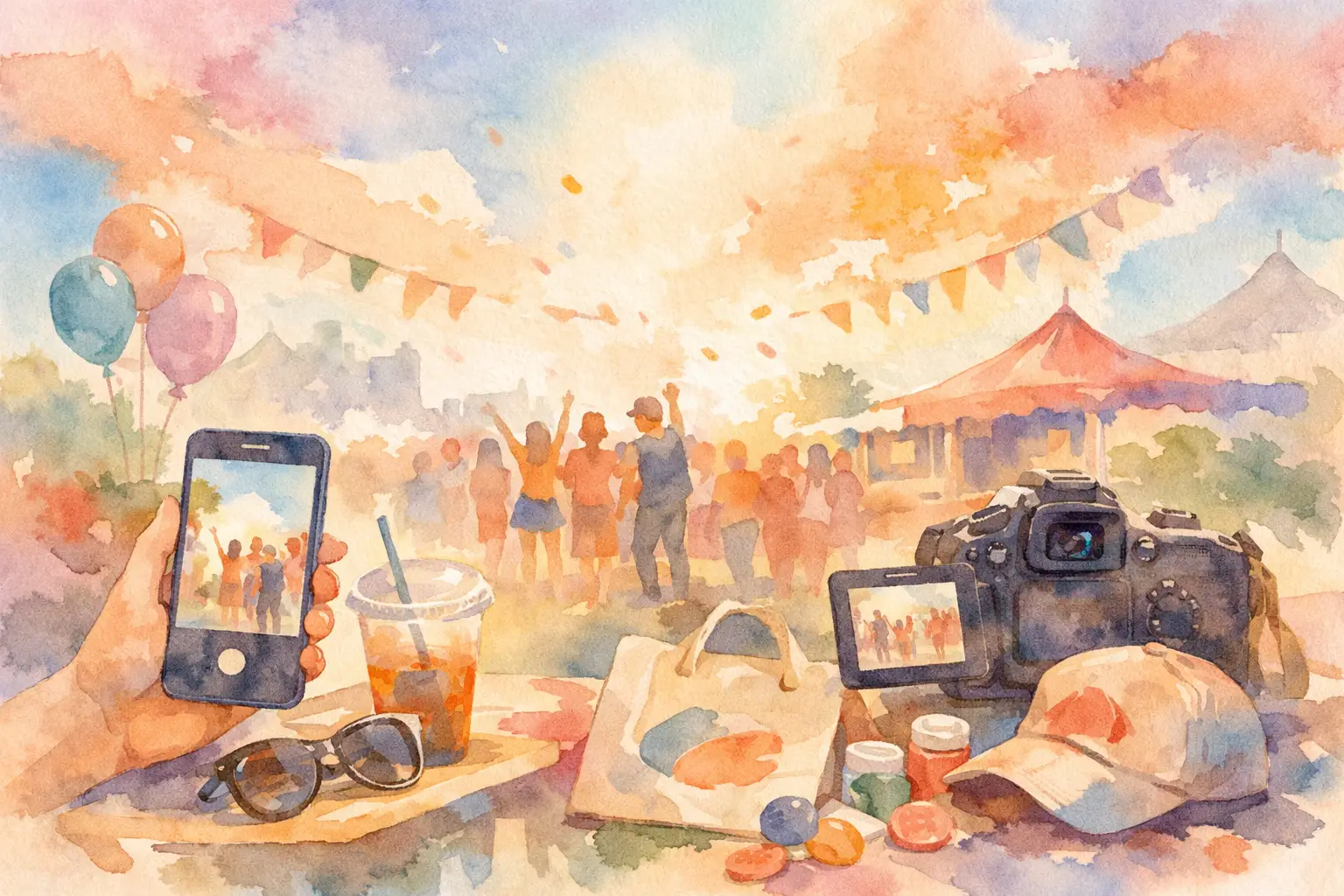
A great activation can have a packed line, a gorgeous build, and a product people genuinely want to try - then leave behind almost no usable content. This brand activation UGC capture guide is about fixing that gap. Stop hoping attendees will tag you later. Give them a reason, a moment, and a dead-simple way to capture together.
The best user-generated content does not feel like a marketing assignment. It feels like part of the experience: the friend-group photo before they enter, the blurry victory shot after the challenge, the unexpected reaction at the sampling bar. Your job is to make those moments easy to catch and worth sharing.
Start With the Moment, Not the Hashtag
A hashtag is a filing cabinet, not a capture strategy. It can help organize posts that already exist, but it does not solve the real problem: people are busy talking, moving, eating, and trying not to miss the fun. Asking them to open an app, find their best photo, write a caption, and post publicly is a lot.
Build your UGC plan around one or two moments attendees will naturally want to document. For a beauty launch, that might be a reveal mirror or a quick before-and-after. For a sports pop-up, it could be the reaction when someone beats the challenge. For a conference booth, it may be the split second a team sees their personalized result on screen.
The question is not, “How do we get content?” Ask, “What will people already want to show their friends?” Once you have that answer, place the capture prompt directly inside that moment.
Make the Capture Path Ridiculously Short
Every extra step costs participation. QR codes work because they meet people where they already are: on their phones. A scan should take someone straight into the experience, not to an app-store download, account creation screen, or form that asks for their life story.
For most activations, the strongest flow is simple: scan the code, open the camera, take a photo or video, and see a clear confirmation that it landed in the shared gallery. If the activation has a high volume of foot traffic, put the QR code in more than one place. One sign at the entrance is easy to miss. Add it to the photo moment, counter cards, staff lanyards, take-home packaging, or a screen near the exit.
The physical prompt matters just as much as the technology. “Scan to upload” is functional, but forgettable. Try language that tells people what they get: “Add your angle to tonight’s gallery,” “Take your shot,” or “Your camera roll called. It wants in.” Keep it short enough to read while walking by.
Give people a creative cue
An open-ended camera can be intimidating. A tiny prompt changes that. Invite attendees to capture “the best reaction,” “your fit check,” “the flavor you picked,” or “your crew’s post-challenge face.” The prompt should fit the brand world without forcing a scripted ad.
This is where limited-shot digital disposable camera mechanics can be especially effective. A small number of photos makes each shot feel intentional, not disposable. Nostalgic filters can make content feel like part of a shared visual world, rather than another batch of random phone images. It depends on the audience, of course. A polished luxury event may want clean, unfiltered uploads, while a music festival can lean into the chaos.
Design for Private Participation First
Public posting is valuable, but it should not be the only way people can participate. Many attendees will happily contribute a photo to a private event gallery and still never post it to social media. That is not a failure. It is a fuller picture of the event.
A private, branded gallery gives your team a cleaner pool of content to review, repurpose with permission, and use to understand what drew people in. It also makes participation more comfortable for attendees who do not want their face, family, or location broadcast immediately.
Be clear about what happens to uploads. A short notice near the QR code should explain whether photos are private to participants, displayed live onsite, reviewed by the brand, or potentially considered for future marketing. If you plan to use a guest’s image outside the event gallery, get the appropriate consent. The faster the capture flow, the more important it is that your permissions are clear and respectful.
Use the Reveal to Keep the Event Alive
The event should not end when the last tote bag leaves the venue. A timed gallery reveal gives guests a reason to come back after the moment, relive it, and share the photos they missed.
This works especially well when the gallery includes content from many perspectives. Guests get their own shots, plus the candid photo their friend took during the DJ set, the crowd energy from the product demo, and the silly group picture they did not know existed. That collective payoff is more compelling than a single branded asset delivered by email three days later.
A delayed reveal also creates a useful trade-off. You lose some instant social posting, but gain anticipation and a more complete gallery. If real-time amplification is the main goal, display a moderated selection live on screens and keep the full gallery reveal for later. If the activation is built around exclusivity or a surprise, hold everything until the next morning.
Revel can support this kind of flow with QR-based access, no required download, offline capture syncing, and a timed gallery opening. The point is not to turn guests into content interns. It is to make contributing feel like part of the fun.
Staff the Experience, Even When It Is Self-Serve
A QR code is not a host. At high-energy events, a friendly team member can dramatically increase capture volume by showing people the first step, suggesting a prompt, and reminding them that the gallery opens later.
Do not turn brand ambassadors into hallway traffic cops. Give them a natural line that matches the activation: “Want to add that to the group gallery?” or “You get five shots - make them count.” They should be able to explain the value in one sentence and move on.
Staff can also spot friction before it becomes a reporting problem. Is the code blocked by a crowd? Are people trying to scan a tiny sign from six feet away? Is cell service weak inside the venue? Solve what you can on-site. If connectivity is unpredictable, use a capture tool that can save photos and sync when a connection returns.
Measure More Than Posts
A campaign can generate fewer public tags than expected and still produce exceptional results. Measure the whole participation funnel: scans, camera opens, completed uploads, unique contributors, average uploads per contributor, gallery return visits, and permissioned assets you can actually use.
Those numbers tell a better story than a raw photo count. If scans are high but uploads are low, the capture page may be too slow or unclear. If uploads are strong but gallery returns are weak, the reveal message may not have landed. If one location produces twice as many contributions as another, look at its placement, staff presence, and the moment people were asked to capture.
Quality deserves its own review. Are people photographing the product, the environment, their friends, or nothing you can use? There is no universally correct answer. A community-first activation may value the candid crowd photos most. A product launch may need a higher percentage of product-in-hand content. Set that expectation before the build, then create prompts that naturally lead there.
Common UGC Capture Mistakes
The biggest mistake is treating content collection as an add-on. If the photo moment is poorly lit, hidden behind a queue, or introduced only after guests have finished the experience, no clever platform will rescue it.
Another is over-directing people. A tightly scripted pose can create consistent assets, but it often produces the same photo 400 times. Leave room for real personality. Give attendees a frame, a challenge, or a visual cue, then let their version of the moment happen.
Finally, do not make the gallery feel like a dead-end. Tell people when it opens. Make the return experience feel worth it. The best activation galleries do not just prove an event happened. They let everyone see the version of it they did not get to witness.
Capture together. Reveal together. When attendees feel like co-creators instead of a media plan, the content has a much better chance of being the kind people keep, send, and talk about after the lights go down.
A writer interested in connection, memory, and the everyday moments that matter more than we realize.
Tags: Brand activation , UGC