Are Event Photos Private? What Hosts Control
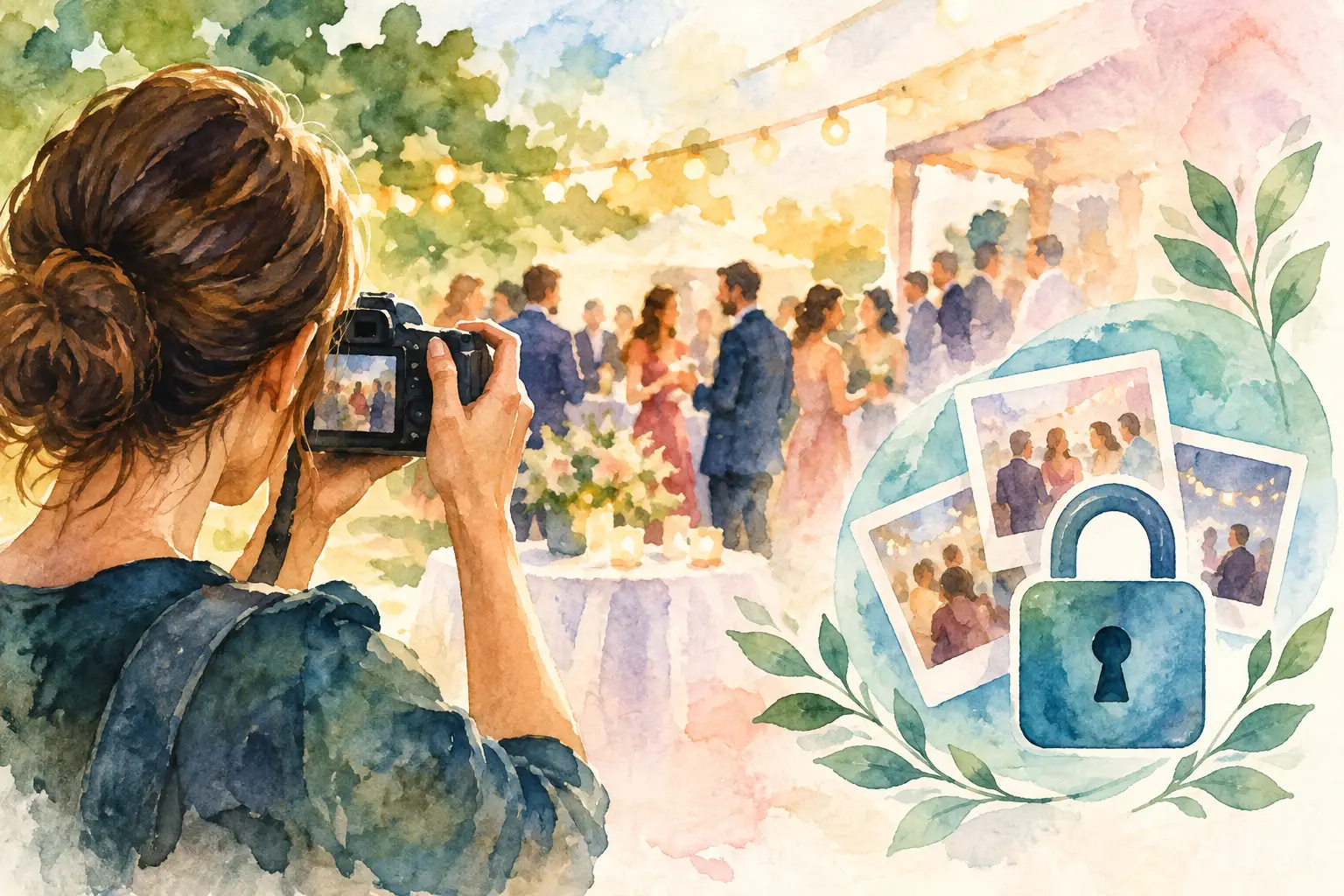
The short answer to “are event photos private” is: they can be, but privacy is not automatic. A photo taken at a wedding, birthday, company offsite, or brand party is only as private as the gallery rules, sharing method, and guest expectations behind it.
That matters because event photos are rarely just photos. They are someone’s bad dance moves, a child’s face, a colleague after two cocktails, a surprise announcement, or a moment people want to remember without broadcasting. The best event galleries make it easy for everyone to join the fun while making it clear who gets to see what.
What “private” means for event photos
A private event gallery usually means it is not searchable on the open web and cannot be viewed by people who have not been given access. That access might come through a QR code, a direct invite, a password, an email link, or an account-based guest list.
But private does not always mean impossible to share. If guests can view photos on their phones, they may be able to save, screenshot, or forward them. That is not necessarily a problem. For many celebrations, downloading the full gallery is the point. It just means hosts should think of privacy as a set of choices, not a single on-off switch.
A genuinely thoughtful setup answers a few practical questions before the first photo is taken: Who can join? Who can view the gallery? Can people upload photos anonymously? Can guests download images? How long will the gallery stay available? And what happens if someone wants a photo removed?
Private gallery, public moment
There is a useful distinction between the event itself and the photo collection.
If you host a party in a public venue, people may take photos in the background. If you invite people to a company event, they may post their own pictures to social media. A private photo gallery cannot control every camera in the room or every guest’s personal account.
What it can control is the shared collection you create. Instead of leaving everyone to trade blurry duplicates in group texts, the host can create one intentional home for the night’s photos. That gives guests a clearer path: contribute here, view here, and follow these expectations.
For a wedding or intimate celebration, that might mean a QR code placed beside the guest book, with a note that the gallery is for invited guests only. For a corporate event, it could mean a gallery shared exclusively with attendees after the event. For a brand activation, privacy might be lighter because the goal is often social sharing, but participants should still know whether their images could be used by the brand.
Are event photos private when a QR code is involved?
A QR code is convenient, not magical. It removes the annoying steps that stop people from participating: downloading an app, creating a password, hunting through a text thread, and remembering to upload later. Guests scan, shoot, and get back to the party.
The trade-off is straightforward. A QR code can be photographed, forwarded, or shared with someone who was not at the event. If the code is displayed in a highly visible place or posted publicly, access may be broader than you intended.
That does not make QR-based photo sharing a bad privacy choice. It means the host should match the access method to the event. At a small dinner or wedding, keep the code inside the venue and share it directly with guests. At a larger conference, place it in attendee-only spaces and pair it with clear instructions. If the event is especially sensitive, choose a platform that offers stronger guest controls or private invitations.
The friction question matters here, too. Requiring every guest to make an account can feel more secure, but it often crushes participation. The right balance is the one that protects the room without making people give up before they take their first photo.
The privacy settings worth deciding before guests arrive
Privacy works best when it is designed before the confetti cannon goes off. Start with access. Decide whether anyone with the QR code can enter, whether the code will be shared only in person, and whether late additions can still join after the event.
Next, decide who can see the photos and when. A delayed reveal can be a great fit for parties, trips, and weddings. It creates that disposable-camera anticipation while preventing guests from scrolling through unfinished uploads all night. Capture together. Reveal together.
Then consider downloading and sharing. Some hosts want every guest to leave with the whole gallery. Others want guests to enjoy the photos but ask before posting selected moments publicly. Neither approach is overly precious. It is simply about setting the social rules before a funny, personal, or work-related image starts traveling.
Finally, make room for moderation. The host or organizer should be able to remove accidental uploads, duplicates, or images that make someone uncomfortable. At a company event or brand activation, this is especially useful. One unflattering photo should not become the unofficial event recap because nobody had a way to take it down.
Set expectations without making it weird
You do not need a legal memo taped to the bar. A simple, friendly line does more work than a wall of fine print.
For a wedding, try: “Scan to add your photos to our private gallery. Please keep the ceremony offline until we share our favorites.”
For a birthday or vacation: “Add your best shots. This gallery is for the group, so ask before posting someone else’s photo.”
For a workplace event: “Photos are for attendees only. Please avoid sharing client information, badges, or anything confidential.”
For a brand event: “By joining, you may be photographed. Check the event terms if you have questions about how images may be used.”
These messages are short because people are at an event, not preparing for an exam. They also make guests feel considered. When people know the boundary, they are more likely to participate freely instead of wondering where their face might end up.
Different events need different privacy levels
A graduation party and a product launch should not have the same photo policy. The stakes are different.
At personal celebrations, the focus is usually intimacy. Guests want the candid pictures from the dance floor, the dinner-table chaos, and the moments the official photographer missed. A private shared gallery with a clear no-public-posting request may be exactly right.
At company events, privacy often includes more than faces. Slides, name tags, whiteboards, customer details, and internal products can all show up in the background. Let attendees know what areas are off-limits for photos, and make sure organizers can review the gallery if needed.
At conferences and brand activations, attendees may expect more visibility. There may be social hashtags, creator content, and promotional photography happening at once. In that case, separate the private attendee gallery from the content intended for public channels. People should not have to guess which is which.
When children are involved, be more careful. Parents and guardians may have strong preferences about their child appearing in a gallery or on social media. Ask upfront, avoid assuming, and honor removal requests quickly.
Privacy also depends on the platform
Before choosing an event photo-sharing tool, look past the word “private.” Ask what it means in practice. Is the gallery indexed by search engines? Can anyone with a link access it? Are uploads visible immediately? Can the host remove images? Does the gallery expire? Are photos stored in their original quality? Is there a clear policy for deleting event content?
These are not boring technical details. They shape the experience. A gallery that is easy to join but hard to control can create stress after the party. A gallery that is locked down so tightly that nobody contributes leaves you with the same old problem: 400 photos scattered across 12 phones.
Revel is built around that middle ground: easy QR-code participation, a shared event space, and a timed gallery reveal that keeps the experience feeling collective rather than instantly broadcast. The goal is not to turn every gathering into content. It is to collect the memories that would otherwise disappear into camera rolls.
The real rule: private needs a plan
No tool can replace good judgment. If a guest asks not to be photographed, respect it. If someone wants an image removed, handle it without making them defend the request. If the event includes confidential work, minors, or vulnerable guests, use tighter access and clearer communication.
For everyone else, do not let fear of oversharing send you back to the group-chat scramble. Set the boundary, make joining easy, and give your people one place to put the photos that made the night what it was. The best gallery feels like an after-party for the memory, not a public feed waiting to happen.
A writer interested in connection, memory, and the everyday moments that matter more than we realize.