Digital Disposable Camera Wedding Ideas
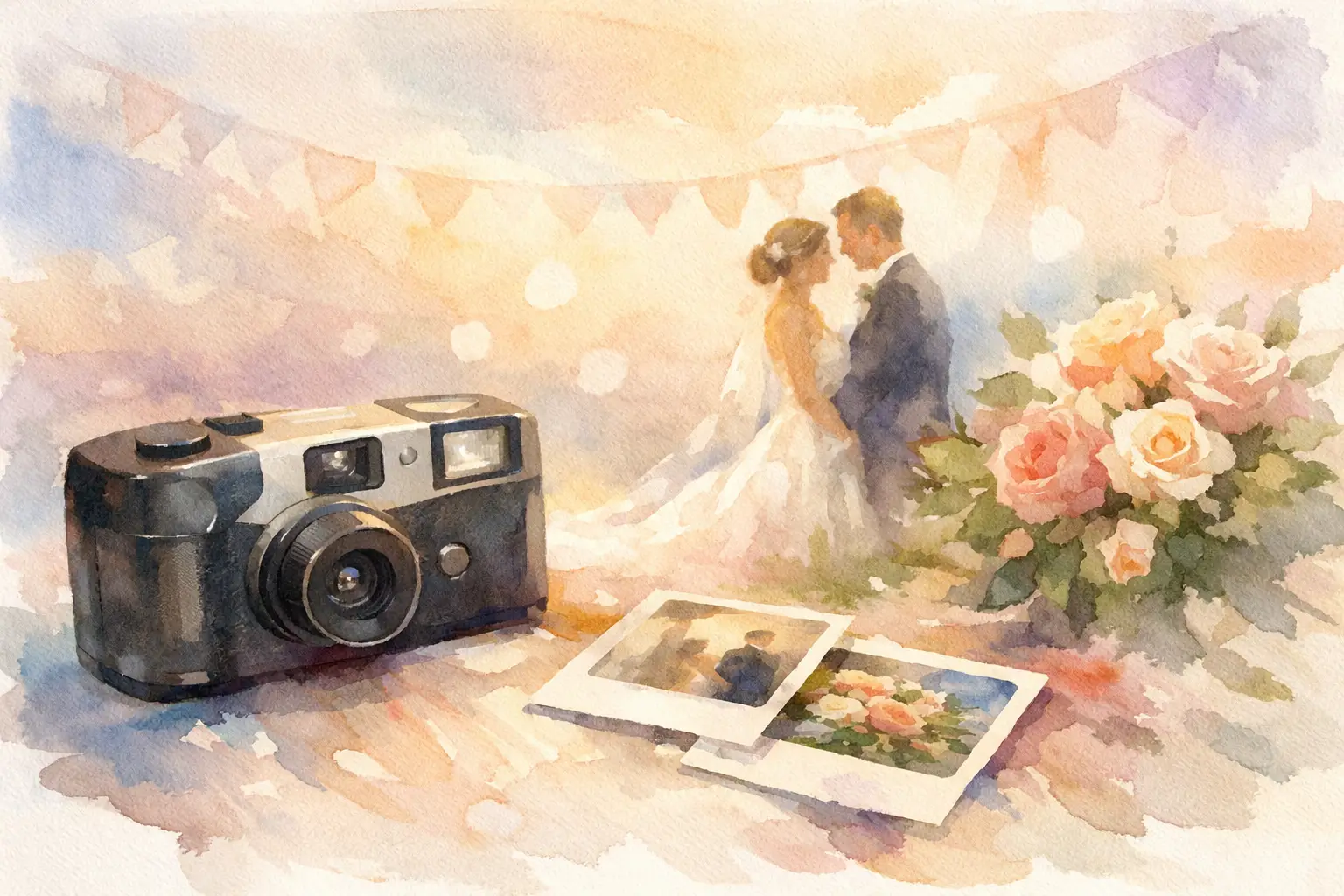
The best wedding photos usually are not the ones anyone posed for. They are the blurry dance floor spins, the teary hug before the ceremony, the cousin sneaking extra cake, the one perfect table selfie at 10:47 p.m. That is exactly why a digital disposable camera wedding works so well. It keeps the energy of old-school disposables, but skips the dead batteries, film costs, and week-later surprises.
For couples who want more than a polished highlight reel, this setup hits a sweet spot. You still get your professional photos. You also get the guest-eye view - spontaneous, funny, intimate, and weird in the best way. The trick is making it easy enough that people actually participate.
What a digital disposable camera wedding actually is
A digital disposable camera wedding is a guest photo experience built to feel simple and nostalgic, without using physical disposable cameras. Guests scan a QR code, join instantly, and start taking photos on their phones. Depending on the setup, they may have a limited number of shots, disposable-style filters, and a delayed gallery reveal that keeps the experience feeling playful and event-specific.
That last part matters. If guests can just snap endlessly and post everything in real time, it starts feeling like every other camera roll dump. A digital disposable format adds just enough structure to make people more intentional. Fewer shots. Better moments. More anticipation.
It also solves the biggest problem with wedding guest photos: nobody wants homework. If collecting pictures means downloading an app, making an account, remembering a password, and uploading later, most people will not do it. They mean well. Then the night happens, and the photos disappear into private camera rolls forever.
Why couples are replacing physical disposables
Physical disposable cameras had a good run. They looked cute on reception tables, and the concept still has charm. But the trade-offs are real.
The image quality is inconsistent, and not in a chic way. Flash can be harsh, indoor shots often come out muddy, and half the roll might be accidental photos of the floor. Then there is the cost of buying cameras, developing film, and finding out later that one table used all 27 shots before dinner.
A digital disposable camera wedding keeps the nostalgia while fixing the logistics. Guests already know how to use their phones. Photos are uploaded in high resolution. There is no film to develop, no devices to collect at the end of the night, and no guessing whether anyone actually used them.
You also get better coverage. Physical disposables tend to stay put on tables. Digital ones move with people. That means ceremony candids, cocktail hour chaos, dance floor drama, after-party gems - all the parts of the wedding that usually slip through the cracks.
The real win is participation
This is where a lot of wedding photo-sharing ideas fall apart. They sound good on paper, then barely anyone joins.
Guests will absolutely take photos at your wedding. The question is whether they will take them in a way that ends up somewhere useful. If the process feels annoying, they default to texting a few favorites to friends and forgetting the rest.
A good digital disposable setup removes that friction. Scan. Shoot. Done. No app. No account. No chasing people the next day with "please upload your pics" messages.
That simplicity changes the outcome. More guests contribute. More moments get captured. And instead of getting photos from the same three organized people, you get perspectives from the whole room.
For weddings especially, that matters. The couple misses a lot while the day is moving. Guest photos fill in the emotional side angles - what your friends saw during the vows, what your parents were laughing at during dinner, what the bridal party was doing five minutes before the ceremony.
How to set up a digital disposable camera wedding without making it a project
The best version of this is low effort for you and obvious for guests. If it needs a full explanation, it is already too complicated.
Keep the join process instant
Use one clear entry point, usually a QR code placed where people naturally pause - welcome sign, bar, tables, photo booth area, or ceremony program. The wording should be short and direct. Think less "please contribute to our shared memory archive" and more "Scan to take wedding pics."
People decide in seconds whether something feels easy. If they scan and can start immediately, you win. If they hit a sign-up screen, you lose a big chunk of them.
Give it disposable-style rules
This is the fun part. The limited-shot format is not just a gimmick. It changes behavior.
When guests know they only get a certain number of photos, they stop machine-gunning random duplicates. They wait for moments. They frame things. They choose. That little bit of scarcity gives the whole experience more personality.
Filters can help too, especially if they nod to film tones without making everything look overly fake. You want nostalgic, not novelty app from 2014.
Delay the gallery reveal
Instant access sounds convenient, but delayed access is often better for weddings. It gives the gallery a sense of occasion.
Guests contribute during the event, then everyone gets to relive it later together. That post-wedding reveal can be part of the fun - especially when people forgot what they took or want to see the night from everyone else's angle.
It also keeps the focus on the event itself instead of turning the whole thing into a live content feed.
Where it fits best during the wedding
A digital disposable camera wedding can cover the whole day, but some moments naturally get the best returns.
Cocktail hour is a strong one. People are moving around, seeing each other for the first time, and still relatively composed. Reception tables work well too, especially once dinner loosens people up. And the dance floor is obvious - chaotic, joyful, and impossible to fully capture with a single hired photographer.
Getting-ready rooms can be great if your group is into detail shots and behind-the-scenes energy. The after-party is even better if your crowd has stamina and poor impulse control in the most photogenic way.
Ceremonies are more nuanced. Some couples want an unplugged ceremony and should absolutely keep it that way. Others are fine with a few guest photos, but only if it does not turn into a wall of phones. It depends on your priorities. A digital option should support the vibe, not hijack it.
What to look for in a platform
Not every wedding photo-sharing tool is built for actual guest behavior. Some are technically functional but socially awkward.
The best setup feels invisible. Guests should not need instructions beyond a scan. High-resolution uploads matter because wedding photos have a long life after the event. Offline capture syncing matters too, because venues, barns, rooftops, and country clubs are notorious for weak service exactly where people are having the most fun.
Private galleries are another big one. Weddings are personal. Most couples do not want their guest photos floating around publicly by default.
If you want the disposable-camera feel, look for shot limits, timed reveals, and styling that makes the experience feel designed for celebration rather than generic file collection. Revel is one example that leans into that experience and keeps the process light for guests.
A few trade-offs worth knowing
A digital disposable camera wedding is not a replacement for a professional photographer. It is a different layer of coverage.
Professional photography gives you consistency, lighting control, portraits, family formals, and the must-have shots you will frame forever. Guest-driven digital disposable photos give you energy, volume, personality, and moments no shot list could predict. The best weddings usually benefit from both.
There is also the question of guest demographics. If your crowd skews older or less phone-friendly, participation may be slower at first. That does not mean it will flop. It usually just means your signage needs to be extra clear, and one or two enthusiastic early users can help show everyone else how easy it is.
And yes, some photos will be messy. That is part of the appeal. If you want every image to be polished, this may not be your thing. If you want your wedding to feel lived in, it probably is.
Why this trend has staying power
Couples are getting smarter about what they actually want to keep from a wedding. Not just the perfect hero images. The atmosphere. The side conversations. The little proofs that everyone was really there, having a real time.
That is why the digital disposable camera wedding format keeps catching on. It meets people where they already are - on their phones - but gives the experience shape. It turns scattered guest photos into one shared story instead of a dozen forgotten text threads.
And maybe that is the whole point. Weddings are collective memories. The photos should feel collective too.
If you are planning your setup, keep it simple, make it fun, and let people participate without friction. The best guest photos do not need much encouragement. They just need somewhere easy to land.

A writer interested in connection, memory, and the everyday moments that matter more than we realize.
Tags: Digital disposable camera , Disposable camera app , Wedding disposable camera , Wedding photography