12 Brand Activation Ideas People Want to Join
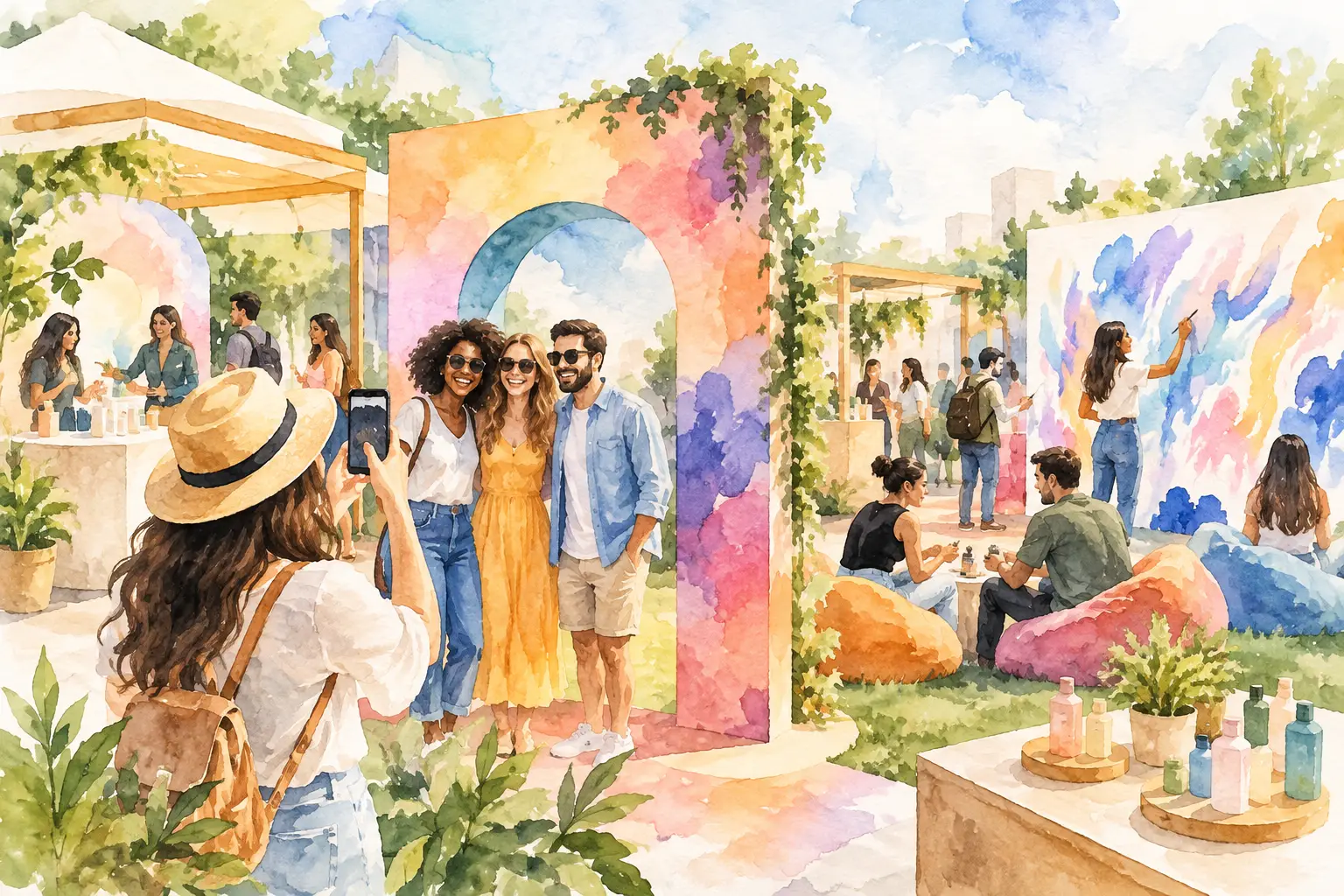
A branded tote bag is fine. A tote bag people customize, photograph, and compare with friends is a reason to stop. The best brand activation ideas do not ask people to stand near your logo. They give them a small story to enter, a role to play, and something worth remembering after the event is over.
That is the difference between foot traffic and actual participation. Whether you are planning a festival booth, campus pop-up, product launch, or conference moment, the goal is simple: make the experience easy to join and hard to forget.
What Makes Brand Activation Ideas Work?
A strong activation has a clear exchange. Your audience gives attention, creativity, feedback, or content. In return, they get delight, access, personalization, social currency, or a genuinely good memory. If the reward takes too long to reach or the instructions need a staff briefing, participation drops fast.
Start with one behavior you want to create. Maybe you want attendees to sample a new flavor, test a feature, meet one another, or share their perspective. Then build an experience around that behavior, not around a vague request to “engage with the brand.”
The ideas below work because they make people active participants. Pick the ones that fit your audience, venue, budget, and the way your product naturally shows up in real life.
12 Brand Activation Ideas That Create Real Participation
1. Build a choose-your-own ending
Give guests a short prompt and let their decisions change what happens next. A beauty brand can create a personalized routine path. A beverage brand can let guests vote on the final ingredient in a limited-time drink. A travel company can stage a mini itinerary where every choice reveals a different destination mood.
The key is visible consequence. People should see that their choice mattered, even if the experience lasts only two minutes. It turns a passive display into a personal story.
2. Turn product education into a game people can win
Nobody walks into a busy venue hoping for a product demo. They may, however, take a 60-second challenge that happens to show them why the product is useful.
Create a task with a satisfying finish line: pack the fastest carry-on, identify a scent from memory, build the ideal playlist, or solve a problem using your product. Keep the rules obvious and the prize immediate. The product should be the tool that helps them succeed, not a logo awkwardly taped onto the game.
3. Create a live before-and-after moment
Transformation is naturally shareable. Think quick styling sessions, custom engravings, taste tests, personalized color matching, or a side-by-side test that makes a product benefit visible.
This works especially well for products with a tangible result. Let guests walk away with proof of the change, whether that is a new look, a customized item, or a useful comparison they can feel for themselves. Just make sure the line moves. A beautiful activation is not beautiful when attendees spend 40 minutes waiting for it.
4. Make the audience part of the installation
Interactive installations can be more than a photo wall. Build something that changes as people contribute: a mosaic made from visitor portraits, a light display powered by collective votes, a giant map marked with guest stories, or a soundscape assembled from short recordings.
This format gives people a reason to look twice. Early visitors see the beginning; later visitors see the crowd’s cumulative impact. It also gives your team a natural reason to invite people back before the event ends.
5. Host a low-pressure creative studio
Put people in maker mode. Offer patches, stickers, stamps, charms, markers, or digital design tools that let guests create a one-of-one item. The branded element should be a starting point, not a restriction.
Customization works because it offers ownership. Someone may not post a generic giveaway, but they may happily show off the hat, phone charm, or mini print they made themselves. Use quality materials. Cheap supplies can make an otherwise smart idea feel disposable in the wrong way.
6. Design a social challenge with a real reason to join
A challenge does not need to be loud, athletic, or embarrassing. It can be a group trivia showdown, a speed puzzle, a collaborative scavenger hunt, or a “settle the debate” voting station tied to your category.
Build for spectators as well as players. A crowd makes the moment feel alive and lowers the pressure for the next person to join. Avoid making social posting a requirement. People are more likely to share when the moment is actually good, not when a sign tells them to.
7. Use a secret menu or hidden reward
A little discovery goes a long way. Hide clues around the space, release a password at a certain time, or give returning visitors access to an unexpected add-on. This creates momentum without requiring a huge production budget.
The trade-off is clarity. If the mystery is too confusing, people will simply walk past it. Give guests one obvious first clue, then let the fun build from there.
8. Capture the event from every perspective
Brand teams often leave an activation with polished photographer shots and very little sense of what attendees actually experienced. Invite the crowd to document it too.
A shared event camera experience can turn guests into contributors without turning the activation into a content assignment. With Revel, attendees can scan a QR code, take a limited number of nostalgic disposable-camera-style photos, and see the gallery together at a timed reveal. It is a simple way to collect candid, high-quality moments from the people inside the experience, not just the people running it.
9. Give people a way to leave their mark
Invite opinions, predictions, confessions, or recommendations that relate naturally to your campaign. A fitness brand might ask, “What are you training for?” A food brand could collect hot takes. A career platform might create a wall for the best workplace advice guests have received.
The prompt matters. Skip generic questions like “What does our brand mean to you?” Ask something people already have an answer to. The resulting responses can become live content, post-event creative, or a useful read on audience sentiment.
10. Create a scheduled reveal
Anticipation turns a booth visit into an event. Schedule a reveal every hour: a new flavor, a surprise guest, a limited merch drop, a crowd-selected result, or the opening of a collective photo gallery.
This is especially useful at large events where guests are constantly being pulled in different directions. Give them a specific reason to return. Keep the promise small enough to deliver every time and interesting enough to earn a calendar reminder.
11. Pair the activation with a useful service
The most beloved brand moments often solve a real event problem. Offer phone charging, bag personalization, festival-ready hair touch-ups, shade, water refills, luggage tagging, or a quiet reset zone. Then add a brand interaction that feels appropriate to the service.
Utility earns goodwill, but it cannot carry everything. If the experience is only a charging station with a logo, it may generate traffic but not recall. Add a small moment of personality, choice, or surprise while people are already there.
12. Give attendees a post-event payoff
Do not let the experience disappear when the doors close. A good follow-up can be a gallery reveal, a personalized recap, the winning crowd vote, a recipe, a playlist, or early access tied to what guests experienced.
Keep the opt-in simple and explain the value upfront. “Get updates” is weak. “See the photos everyone took tonight at 9 p.m.” is specific, timely, and connected to the moment people just had.
Plan for Participation, Not Just Impressions
Before you approve the build, pressure-test the experience from the guest’s point of view. Can someone understand it in five seconds? Can they join without downloading an app, creating an account, or handing over too much information? Is there something satisfying at the end?
Then decide what success actually looks like. Foot traffic may matter, but participation rate, repeat visits, content contributions, email opt-ins, product trials, and post-event sharing often tell a more useful story. A smaller activation with a packed, happy line can outperform a massive footprint that people only photograph from a distance.
The best activation is not the one with the most moving parts. It is the one people retell on the ride home. Give them an easy way in, a moment that feels like theirs, and a reason to keep the memory moving after the crowd is gone.

A writer interested in connection, memory, and the everyday moments that matter more than we realize.
Tags: Corporate events , Brand activation , Experiential marketing , Event planning , Corporate Event Photography , Guest photo uploads