A Brand Event UGC Capture Example That Works
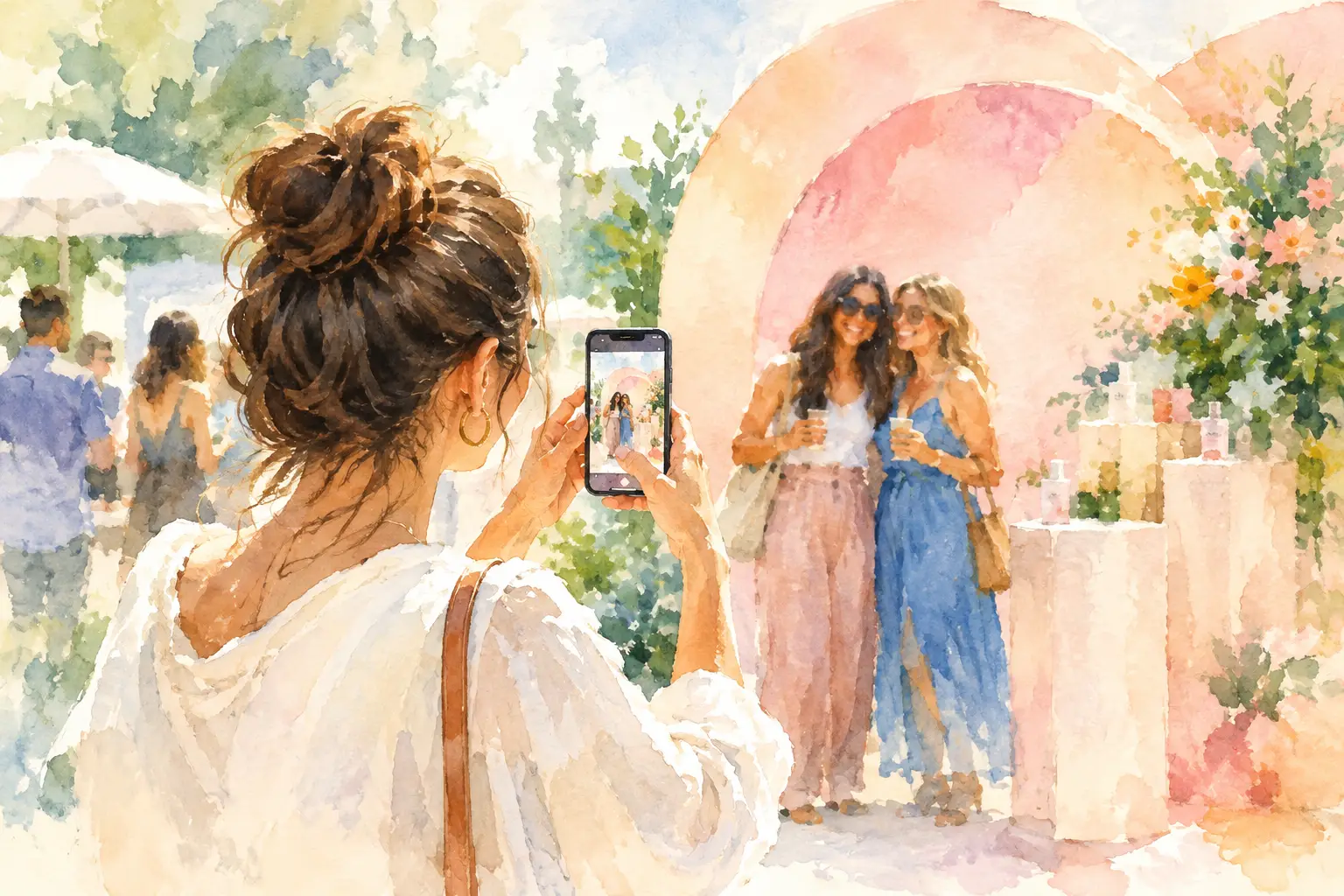
Your event is full of people filming, snapping, and posting. Yet when the booth comes down, the content usually disappears into personal camera rolls, half-finished Stories, and a group chat nobody can search. This brand event UGC capture example fixes that gap by making contribution feel like part of the experience, not a homework assignment after it.
Picture a sneaker brand launching a limited-edition colorway at a pop-up in Los Angeles. The room has a customization bar, a DJ, a try-on station, and a wall built for photos. Great. But a photo wall alone does not create a usable UGC strategy. The goal is to give guests a reason to capture real moments, a ridiculously easy way to submit them, and a reveal that makes everyone want to see what the room created together.
That is how a one-night activation becomes a content engine with a little more soul.
The Brand Event UGC Capture Example: A Sneaker Launch
At check-in, each guest receives a small card with a QR code and a simple line: 20 shots. Make them count. Gallery drops tomorrow.
They scan the code, open a browser-based disposable camera, and start shooting. No app download. No account. No awkward upload form. The camera gives them a limited number of captures, a choice of on-brand filters, and a shared gallery that stays locked until the next day.
The limited-shot mechanic is doing more work than it looks. When guests know they have 20 shots instead of unlimited storage, they stop documenting every surface and start looking for the good stuff: the first look at the shoes, a friend laughing at the customization table, the DJ catching the crowd at the exact right second. It creates intentional spontaneity.
The next afternoon, the gallery opens. Every guest gets the same message: the party is back. They can see their own photos alongside hundreds of perspectives from the room. The brand has a private, organized collection of attendee-created content rather than a handful of tagged posts and a vague hope that someone sends the good videos later.
That is the core play. Capture together. Reveal together.
Why This Format Gets More Than Pretty Photos
Most brand activations already ask people to do too much. Follow this account. Tag that hashtag. Post before you leave. Enter your email. The result is predictable: a few enthusiastic creators participate, while everyone else keeps moving.
A QR-led capture experience lowers the ask to one familiar action: scan and shoot. It meets guests where they already are, on their phones, without turning them into a production crew. The value exchange is clear, too. Guests are not just giving content to a brand. They are joining a shared album they will actually want to revisit.
The delayed reveal adds a second moment of engagement after the event. Instead of a quick post that gets buried in a feed, the gallery gives people a reason to return. For a launch, that return can line up with a product drop, recap email, local retail moment, or next-city announcement.
There is a trade-off. A timed reveal is perfect when anticipation is part of the fun, but it may not fit an event built around real-time social coverage. If your main objective is immediate posting from a red carpet or press event, let guests access selected photos right away while saving the full attendee gallery for later.
Build the Capture Into the Event, Not Around It
The QR code cannot live only on a sign near the exit. By then, people are tired, distracted, and halfway to dinner. Make the camera a natural part of the event flow.
At the sneaker launch, the first scan happens at check-in. Staff can say, “You have 20 shots for the gallery. Get your fit, your friends, and whatever feels like the night.” That is more inviting than “Please create user-generated content.” Nobody talks like that at a party.
Then place gentle reminders where the moments happen: at the product reveal, beside the customization station, and near the DJ booth. Keep the copy short and specific. “Save a shot for the final reveal.” “Your camera roll called. It wants more chaos.” “The gallery opens tomorrow.”
The best prompts point guests toward a moment without scripting them into brand robots. Ask people to capture their first reaction, their friend’s custom design, or the best look in the room. Avoid asking for a stiff product pose at every turn. You need some clean product shots, sure, but the candid frames are often what make the recap feel alive.
Give the Brand a Visual Role Without Taking Over
UGC performs best when it still feels like it belongs to the person who made it. Over-brand the experience and you get a gallery of ads. Under-brand it and the content could have come from any party.
For this event, the disposable camera interface uses the launch color palette and one subtle campaign filter. The physical cards match the event invitation. The set design creates recognizable cues: a signature shoe wall, colorful laces, and lighting that makes faces look good. The brand is present in the environment, not stamped over every photo.
This matters for usability after the event. A marketer can pull a candid group photo where the new sneaker appears naturally, use it in a recap deck, and still have something that feels credible. A creator can share the same shot because it does not feel like a forced ad.
Before using attendee content beyond the shared event gallery, make your permissions clear. Explain what guests are agreeing to when they join, what the brand may use, and where questions can go. If the activation involves minors, sensitive locations, or paid creator partnerships, get more specific. Easy participation should never mean fuzzy consent.
What the Team Collects After the Reveal
A strong UGC capture plan does not measure success by raw photo count alone. One thousand blurry ceiling shots are technically a gallery. They are not a campaign asset.
Look at participation rate first: how many attendees scanned and contributed at least one capture? Then look at contribution depth, meaning the average number of photos per participant. Those two metrics tell you whether the experience got attention and whether it held attention.
Next, review content mix. Did guests capture the product, the space, their friends, the programming, and the brand details? A healthy gallery contains all of it. Product-only content can feel sterile. Party-only content may not support the campaign. The useful middle is where real people and the reason they came are in the same frame.
Finally, track what happens after the gallery opens. How many guests return? How many download, share, or revisit? That second wave is proof that the activation created a memory, not just a momentary task.
With a platform such as Revel, organizers can make that collection feel like a digital disposable camera experience instead of another file request. Guests capture from their own devices, uploads stay together, and the gallery gives the whole crowd a reason to come back.
Make the Example Your Own
The sneaker launch is only one version of the idea. At a beauty pop-up, give guests a limited set of shots to capture shade matches, mirror moments, and their finished look. At a conference, prompt them to document surprising sessions, new connections, and the booth they keep returning to. At a food festival, ask for the first bite, the messiest bite, and the dish they would come back for.
The formula stays simple: one easy entry point, a capture mechanic that feels fun, prompts tied to real moments, and a reason to revisit after everyone goes home. Skip the scavenger hunt energy unless it genuinely suits the crowd. A polished luxury launch may need fewer, quieter prompts. A campus tour can go louder and weirder.
Your guests are already holding the cameras. Give them a reason to use them, a place for the photos to land, and a reveal worth checking tomorrow. The best event content does not feel collected. It feels remembered.
A writer interested in connection, memory, and the everyday moments that matter more than we realize.
Tags: Brand activation , Brand event , UGC , UGC Capture , Corporate events