Who Owns Event Photos? What Hosts Need to Know
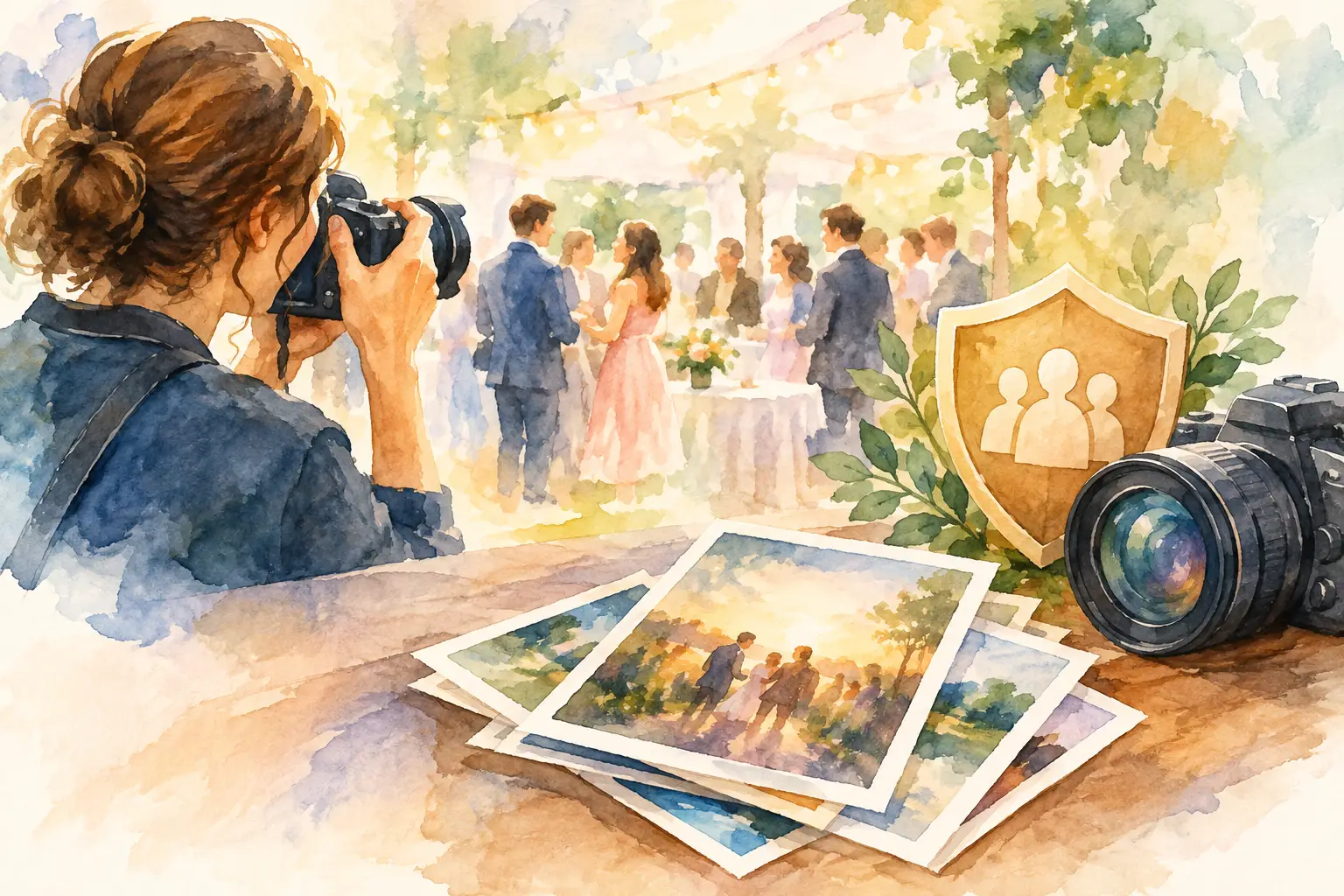
The confetti is swept up. The cake is gone. Then comes the part nobody planned for: 47 great photos are trapped in three group chats, someone’s Instagram Story, and a guest’s camera roll. Before you start collecting them, ask the less glamorous question: who owns event photos?
The short answer is rarely “the person who planned the event.” In the US, ownership usually starts with the person who took the photo. But copyright, privacy, contracts, workplace rules, and a little common sense can change what everyone is allowed to do next.
That distinction matters whether you’re planning a wedding, organizing a company offsite, hosting a birthday, or running a brand activation. You want the memories in one place. You also want to avoid treating a shared gallery like a free-for-all.
Who owns event photos under copyright law?
As a general rule, the person who presses the shutter owns the copyright to the image they create. That applies whether they use a professional camera, a phone, or a digital disposable camera experience at the event.
Copyright gives the photographer control over how an image is copied, posted, edited, sold, or licensed. So if a wedding guest takes a hilarious dance-floor photo, that guest generally owns the photo - even if you paid for the venue, planned the playlist, and appeared in the frame.
That can feel counterintuitive. Hosts often think, “It was my event, so they’re my photos.” Emotionally, fair. Legally, not always.
There are two major exceptions. First, a contract can assign ownership or grant broad usage rights. Second, photos created by an employee within the scope of their job may belong to the employer under work-for-hire rules. Both come up constantly with professional event photography and corporate events.
Copyright ownership is also different from possession. A guest can send you the file, add it to a shared album, or give you access to download it. That does not automatically transfer their copyright. You may have the image, but not unlimited rights to reuse it.
The photographer, the host, and the people in the frame
Event-photo rights work best when you separate three roles: the creator, the organizer, and the subjects.
The creator usually owns the image
A hired photographer typically keeps copyright unless the agreement says otherwise. Most photographers license images to clients instead of transferring ownership outright. That license might let you print photos, share them with friends and family, and post them on personal social accounts. It may not let you sell the images, run them in an ad, apply heavy edits, or submit them to a publication.
Read the contract before you assume “full gallery delivery” means “do anything I want.” It usually means you can access and enjoy the images under the stated license.
The host may have permission without ownership
If guests upload photos to an event gallery, the host may be allowed to view, download, and share those contributions within the group. The exact rights depend on the platform’s terms and any event rules the host communicates.
For private celebrations, people usually expect photos to be shared among the people who were there. That social expectation is real, but it is not the same thing as a commercial-use license. Posting a guest’s photo in the event recap is one thing. Using it to promote a paid business, venue, or product is another.
Being in a photo does not usually make you the owner
A person pictured in an image generally does not own its copyright just because it is their face, outfit, or spectacularly committed karaoke performance. But they may have privacy or publicity rights that affect how the photo can be used, especially in advertising.
That is why a photo can be technically owned by the photographer yet still be risky to use in a brand campaign without the subject’s permission. Ownership and permission are related, but they are not twins.
Why commercial events need clearer rules
At a private birthday, the default is usually simple: share generously, don’t be weird about it. At a company party, conference, fundraiser, or brand activation, the stakes change.
Businesses often want attendee photos for social posts, recruiting pages, recaps, sales decks, or future promotion. Those uses can require more than a friendly “say cheese.” Depending on the context and state law, organizers may need a photo release, clear event signage, or a registration-term agreement that explains how images may be used.
The same goes for employees. A company may own photos taken by an in-house event marketer during work hours, but that does not automatically mean every employee or attendee has agreed to appear in paid advertising. A well-run event separates internal memory-sharing from marketing use.
If you are organizing an event for a brand, make the policy visible before the first photo is taken. Say whether photography is happening, where images may appear, and how guests can opt out if practical. Nobody wants to find out their conference badge selfie became a billboard-adjacent LinkedIn post.
The contract is the real camera roll rulebook
For professional photographers, vendors, agencies, and corporate events, the written agreement carries more weight than assumptions. A useful photo agreement should answer a few plain-language questions:
- Who owns the copyright after the event?
- What can the host do with the images?
- Can the photographer use images in their portfolio or social media?
- Can the images be edited, cropped, or passed to sponsors?
- Is commercial use included, or does it require a separate license?
- Are there restrictions around children, confidential spaces, or sensitive guests?
You do not need a 20-page legal drama for every birthday brunch. But when money, marketing, client work, or public-facing content is involved, vague terms create avoidable awkwardness.
For weddings and personal celebrations, a simple conversation helps too. If you want an unplugged ceremony, say so. If you are happy for everyone to post but want to see the photos first, tell guests. If you would rather keep the gallery private, make that part of the invitation or event page.
Shared galleries make sharing easier, not ownership disappear
A shared gallery solves the photo-chasing problem. It does not erase the rights attached to every image inside it.
That is actually a reason to choose a gallery designed around the event, not a scattered mix of texts, air-drops, and public social posts. A private space gives guests a clearer understanding of where their photos are going and who will see them. It also gives organizers a natural moment to set expectations.
For example, a host can say: “Add your photos to the private event album so everyone can enjoy them after the reveal. Please ask before using someone else’s image for business or promotional posts.” Clear, friendly, done.
Tools like Revel make that social agreement feel natural. Guests join with a QR code, contribute from their phones, and discover the gallery together later. The point is not to turn a birthday into a legal department. It is to collect the candid, unrepeatable stuff without forcing everyone to hand over their camera roll or post publicly.
A timed reveal can help, too. It shifts the energy away from instant performance and toward collective memory. More photos get taken. Fewer get lost. And everyone gets the same joyful “wait, you got that?” moment.
A practical photo policy for your next event
The best policy depends on the event. A friend group on vacation needs less formality than a sponsored launch party. Still, a few habits travel well.
Start by deciding whether the gallery is private, shareable, or intended for promotion. Tell people before they contribute. If you hire a photographer, confirm exactly what your package allows you to post, print, and reuse. If guests will appear in marketing, get consent that fits the use rather than burying it in tiny text.
Be extra thoughtful around kids, schools, medical settings, workplace conflicts, and events where attendees may not want their location or identity shared. A private album may be the right answer. In other cases, a no-photo zone or opt-out indicator can keep participation comfortable.
And when a guest asks for a photo to be removed, treat that request like a relationship decision, not a courtroom debate. You may have a legal argument. You probably do not need one.
The better question: what do you want photos to do?
“Who owns event photos?” is a useful question because it forces clarity. But for most hosts, the real goal is bigger than ownership. You want the photos to come back to the people who made the event matter.
Set expectations early. Keep the sharing space intentional. Give people an easy way to contribute without downloading another app, making another account, or hunting through old messages the next morning.
The best event photos are not just content. They are proof that everyone was there, fully in it, from their own angle. Collect them with care, share them with permission, and let the memories stay with the group.
A writer interested in connection, memory, and the everyday moments that matter more than we realize.
Tags: Event photography , Event photo sharing , Shared event photos , Guest photo sharing , Event planning