Wedding Table QR Photo Cards That Guests Use
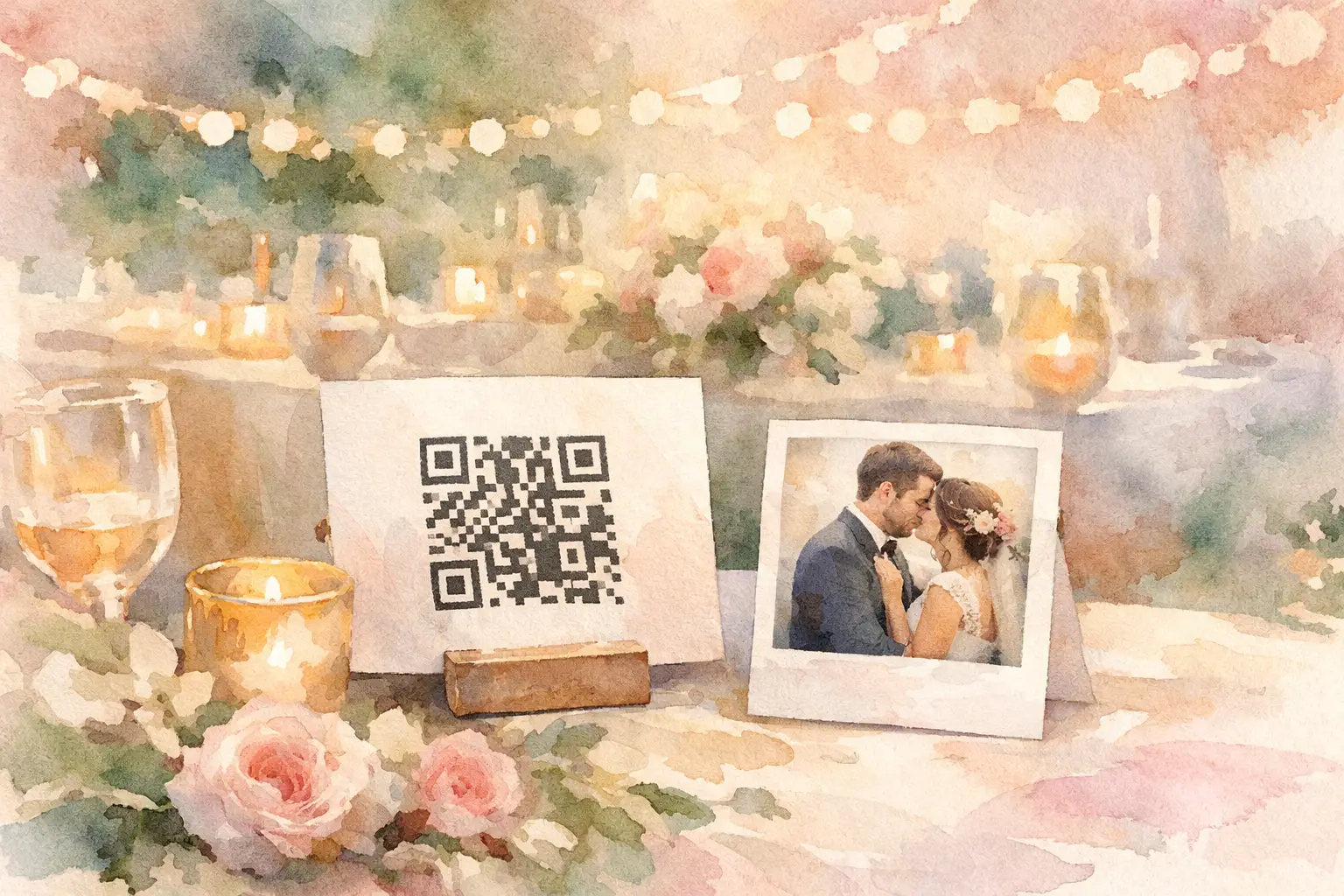
The fastest way to lose great wedding photos is to leave them trapped in everyone else’s camera roll. Wedding table QR photo cards fix that in the most guest-friendly way possible: one quick scan at the table, and people are in. No app. No account. No awkward “can you send me that later?” text three weeks after the wedding.
That matters more than couples expect. At a wedding, people are already in a sharing mood. They’re dressed up, sentimental, a little chaotic, and constantly catching moments the photographer can’t be everywhere for - your college friends during cocktail hour, your grandma laughing at dessert, your flower girl under the table with a bread roll. If the path to sharing those photos has any friction, most of them never make it back to you.
Why wedding table QR photo cards work so well
Placement does a lot of heavy lifting. When the QR code lives on each table, guests don’t have to remember a sign near the entrance, search for a link in a group chat, or ask someone what they’re supposed to do. They sit down, notice the card, scan it, and they’re ready when the fun starts.
That tiny shift changes participation. A single welcome sign can work, but it depends on timing. Guests are arriving, greeting people, finding seats, and trying not to miss the ceremony. Table cards catch them when they actually have a second to engage. That’s why wedding table QR photo cards tend to collect more candid photos throughout dinner, speeches, and dancing.
They also feel more natural. A table card blends into the reception environment. It can sit next to the menu, name card, or centerpiece without feeling overly “tech.” Done right, it reads less like a tool and more like an invitation: add your perspective to the day.
What makes a good table photo card
The best cards are obvious at a glance. Guests should instantly understand two things: what the QR code does and why they should care. “Scan to add your photos” beats vague wording every time. If you want more energy, make it social and direct: “See it. Snap it. Add it here.”
Design matters, but clarity matters more. Couples sometimes over-style QR cards until the code is too small, the contrast is too low, or the instructions disappear into the decor. Pretty is great. Scannable is non-negotiable.
Card size depends on your tablescape, but visibility is the real goal. If the card gets buried under florals or hidden behind glassware, participation drops. If it stands up cleanly and guests can spot it while seated, you’re in business.
The copy should be simple
Most guests will not read a paragraph. They’ll read a headline, glance at one line of instruction, and decide in about two seconds whether to scan. Keep the wording short, specific, and easy to act on.
A strong card usually includes a short call to action, the QR code, and a reassurance that there’s no app download or signup required. That last part removes hesitation fast.
The design should match the wedding, not fight it
Minimal black-and-white works for formal weddings. Soft neutrals fit romantic garden setups. Bolder cards can work for modern or playful receptions. The style can flex, but the code still needs enough contrast to scan in dim reception lighting.
This is one of those places where it depends. If your wedding is heavily editorial and detail-driven, you may want a more refined card stock and custom typography. If your priority is maximum sharing, lean simpler and more legible.
Where to place wedding table QR photo cards
Reception tables are the obvious choice, but they don’t have to work alone. The smartest setup usually uses table cards as the main touchpoint and supports them with one or two other placements.
Cocktail tables can help because guests are often milling around with phones already in hand. Bar signage can also work, especially later in the night when people are taking more informal group shots. A small restroom mirror sign sounds extra, but it gets seen. A lot.
Still, the dining table is the anchor. That’s where guests pause. That’s where they notice details. That’s where wedding table QR photo cards quietly keep doing their job without anyone needing instructions from the DJ.
What guests actually want from the experience
They want instant access and zero hassle. That’s the whole game.
If scanning the code opens a clean camera or upload flow right away, guests participate. If they have to download something, create a password, confirm an email, or figure out where their photos go, many won’t bother. Weddings move quickly, and attention spans are not getting longer.
There’s also a social layer here. Guests are more likely to contribute when it feels collective rather than administrative. A shared wedding album is fun. A file-request chore is not.
That’s why a digital disposable camera style experience can work so well. It makes photo-taking feel like part of the event, not post-event cleanup. Limited shots, nostalgic filters, and a delayed gallery reveal add a little anticipation. Instead of dumping everything into a folder instantly, you create a moment everyone looks forward to later.
The trade-offs couples should think about
More guest photos does not automatically mean better guest photos. You’ll get amazing candids, but you’ll also get blurry dance floor chaos, half-finished cocktail shots, and at least one accidental ceiling photo. That’s normal. Honestly, it’s part of the charm.
There’s also the phone question. Some couples worry QR photo cards will pull people onto their phones too much. Fair concern. If you want a very unplugged ceremony, keep the photo-sharing prompts focused on the reception instead. You can still use table cards without inviting screens into the vows.
Another trade-off is aesthetic control. A fully customized printed card can look more elevated, but simpler cards are often easier to read and cheaper to replace if your guest count changes. If you’re balancing budget, style, and function, function should win first.
How to get more scans without being pushy
You do not need to turn this into a campaign. A few smart cues are enough.
Start with wording that feels fun, not formal. Guests respond better to a light prompt than a command. “Help us see the day through your eyes” lands better than “Upload your images here.” Same ask, better energy.
Timing helps too. A quick mention from the DJ or planner after guests are seated can drive a second wave of scans. So can a reminder before the dance floor opens. Once people know where to send photos, they tend to keep using it all night.
If the platform makes participation effortless, the table card does the rest. That’s the point. Stop chasing photos. Start collecting them.
What this looks like after the wedding
This is where the payoff hits.
Instead of hunting through text threads, DMs, AirDrops, and vague promises from friends who “totally have more,” you get one shared destination for the memories your guests captured in real time. Different angles. Different personalities. The moments between the moments.
That’s especially valuable because professional photography and guest photography do different jobs. Your photographer captures the wedding beautifully. Your guests capture what it felt like to be there. You want both.
A platform like Revel makes that collection process feel current instead of clunky. Guests scan, shoot, upload, and move on with the party. Later, everyone gets to relive the full gallery together, which turns the photos into part of the event story instead of a scattered digital afterthought.
Should every wedding use wedding table QR photo cards?
Not every wedding needs them, but most can benefit from them.
If you’re planning a tiny dinner with ten people who already share everything in a group chat, you may not need a dedicated system. If you’re hosting a larger wedding, multiple friend groups, lots of travel, or a big dance-heavy reception, table QR cards make much more sense. The more moving parts you have, the more useful a simple capture system becomes.
They’re especially smart for couples who care about candids, want less admin after the wedding, and know their guests are phone-native. Which is to say: most modern weddings.
The best version of wedding photo sharing doesn’t ask people to remember one more task. It meets them right where they are - at the table, in the moment, ready to take the photo anyway. Give them a quick scan and a clear reason, and they’ll help you build the version of the day no one else could capture.

A writer interested in connection, memory, and the everyday moments that matter more than we realize.
Tags: Wedding QR , Wedding QR code , QR code camera , QR code for photos , QR photo sharing , QR Tags