Shared Album or Event Gallery? Pick the Better One
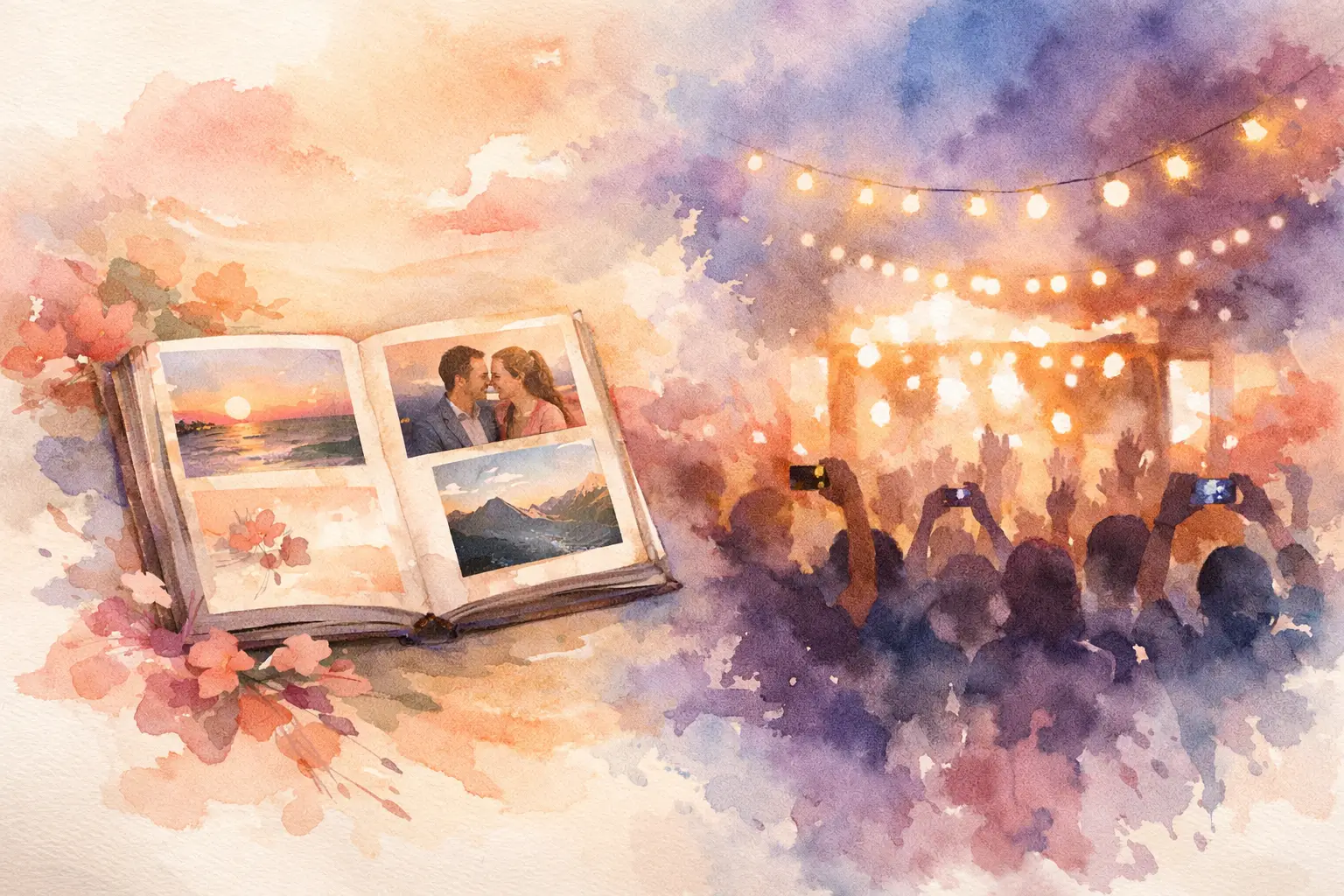
Your group chat is not a photo archive. Neither is the blurry mix of Stories, AirDrops, forgotten camera rolls, and “I’ll send those later” promises that follows almost every great event. When you’re deciding between a shared album or event gallery, the real question is simple: do you want a place to store photos, or a reason for everyone to actually take and share them?
Those are not the same thing.
A shared album can be perfectly fine for a quiet family trip or a small group that already shares everything. But for weddings, birthdays, company parties, brand activations, and any gathering where the guest list gets bigger than your closest five people, an event gallery usually creates a better experience. It gives the photos a home, gives guests a clear way in, and turns collecting memories into part of the party instead of an administrative task afterward.
What a shared album does well
A shared album is familiar. Someone creates one in the photo app they already use, sends an invite, and participants can add their pictures over time. For a small group with the same phone ecosystem and plenty of patience, that is often enough.
It works best when the goal is basic storage. Maybe four friends are documenting a weekend away. Maybe your family wants one place for holiday snapshots. If everyone has access, knows how to upload, and remembers to do it, a shared album keeps images out of separate text threads.
But those “ifs” are doing a lot of work.
At a real event, people arrive with different devices, different comfort levels, and different attention spans. Some never see the invitation. Some see it and plan to upload later. Some take incredible photos that never leave their camera roll. By the time you follow up, the moment has cooled off and the best candid content is buried under three weeks of screenshots and grocery lists.
A shared album is a container. It does not automatically create participation.
Why an event gallery changes the energy
An event gallery is built around the gathering itself. Guests join through a simple entry point, usually a QR code placed where people can see it: on a welcome sign, table card, bar menu, badge, or projector screen. They take photos, upload them, and contribute to the same private collection without needing to hunt for an invite or download another app.
That difference sounds small until you watch it happen.
At a wedding reception, a QR code near the dance floor catches the unplanned moments the photographer cannot be everywhere for: the flower girl owning the dance circle, cousins squeezing into the photo booth, the best man practicing his toast in a corner. At a company offsite, it captures team energy without forcing someone to play designated content wrangler. At a birthday, it gives everyone a tiny mission beyond standing around with a drink.
The best event galleries make contribution feel immediate and social. Guests do not need instructions that read like software documentation. Scan. Shoot. Add to the night.
That is why a gallery often produces more than a bigger pile of photos. It produces more points of view.
Shared album or event gallery: the differences that matter
The choice is less about whether photos can be shared. Both options can do that. It is about what happens before, during, and after the event.
Guest friction
With a shared album, guests may need the right account, the right app, the right permissions, and the motivation to upload later. Even when the process is technically simple, every extra step loses people.
An event gallery is designed for the room you are in. A QR code creates a fast on-ramp, and browser-based access means guests can participate without turning your party into an app download campaign. This matters most for mixed crowds: grandparents and college friends, clients and coworkers, wedding guests from both families, or activation attendees who have never met the host.
Photo volume and variety
Shared albums tend to collect the people who were already likely to share. An event gallery invites the whole room to contribute in the moment, which changes the volume and range of images you get.
That does not mean every photo will be frame-worthy. It means you get the stuff that makes the event feel real: half-finished cake, chaotic dance moves, inside jokes, outfit close-ups, and the faces you missed while you were busy hosting. Professional photos give you polish. Guest photos give you texture. You want both.
The reveal factor
Most shared albums are always open. Photos appear one by one, often while the event is still happening. That can be useful for a trip where people want to trade images immediately.
For a celebration, though, an event gallery with a timed reveal can be more fun. Guests shoot throughout the night, then everyone gets to revisit the full collection together later. It brings back a little disposable-camera anticipation: no constant checking, no pressure to post in real time, just a gallery full of surprises waiting after the confetti settles.
This is where platforms such as Revel create a different kind of participation. Limited digital “shots,” nostalgic filters, offline capture syncing, and a delayed reveal give guests a playful prompt while keeping the experience easy on any phone.
Privacy and control
A public social post is not the same as a private event memory. Shared albums can be private, but settings and access rules vary by platform. Guests may also be unsure whether the album is visible to everyone or only a few people.
A private event gallery sets a clearer expectation: these photos belong to this group. For weddings, workplace events, and client-facing activations, that clarity matters. Hosts should still communicate the basics, especially if photos may be used for marketing or shared outside the original guest list. A great gallery feels low-pressure, not sneaky.
Organization after the event
The post-event scramble is where shared albums often lose their charm. The host becomes a polite detective: texting people individually, requesting uploads, sorting duplicates, and wondering whether anyone got a photo of the grandparents together.
An event gallery centralizes the collection from the start. The gallery is already the destination, so the work is not waiting for you the next morning. You can spend less time chasing files and more time reliving the night.
When a shared album is still the right call
Not every occasion needs a dedicated event gallery. If your group is tiny, already uses the same photo service, and wants photos visible instantly, a shared album is the simpler choice. It is also useful for ongoing collections, like a baby’s first year or a recurring friend group trip, where there is no single big reveal moment.
Choose a shared album when convenience means “everyone already knows this system.” Choose an event gallery when convenience means “nobody should need to know anything before they arrive.”
That distinction saves a lot of well-meaning setup that guests never use.
How to get guests to actually contribute
The tool matters, but the invitation matters too. People are much more likely to participate when the photo-sharing moment is visible, quick, and a little bit fun.
Put the QR code in high-traffic spots, not hidden in a corner. Give it one clear line of copy: “Add your POV” or “Take a pic. See it at the reveal.” Mention it once during a toast, welcome speech, or kickoff. Then let the experience do the rest.
For high-energy events, build it into the atmosphere. Place a small sign near the dance floor. Add it to table cards. Create a prompt like “Capture the best-dressed guest” or “Get a photo with someone you just met.” The goal is not to turn guests into unpaid photographers. It is to give them permission to notice the fun happening around them.
Also, do not overcomplicate the rules. If you want candid photos, say so. If you want everyone to wait for the gallery reveal, make that part of the excitement. If you need a polished brand-safe collection, provide a simple prompt and keep the gallery private. The right setup depends on the event, but clarity always wins.
Pick the experience, not just the folder
A shared album is useful when your group is already organized. An event gallery is better when you want to bring a roomful of people into the memory-making, including the guests who would never upload photos on their own.
Your event only happens once. Make the photo collection feel like part of it, not a chore someone inherits afterward. Put up the code, invite every perspective, and give everyone something good to look forward to when the gallery opens.
A writer interested in connection, memory, and the everyday moments that matter more than we realize.
Tags: Private shared album , Private album , Shared album , Shared photo album