How to Create Shared Event Album That Works
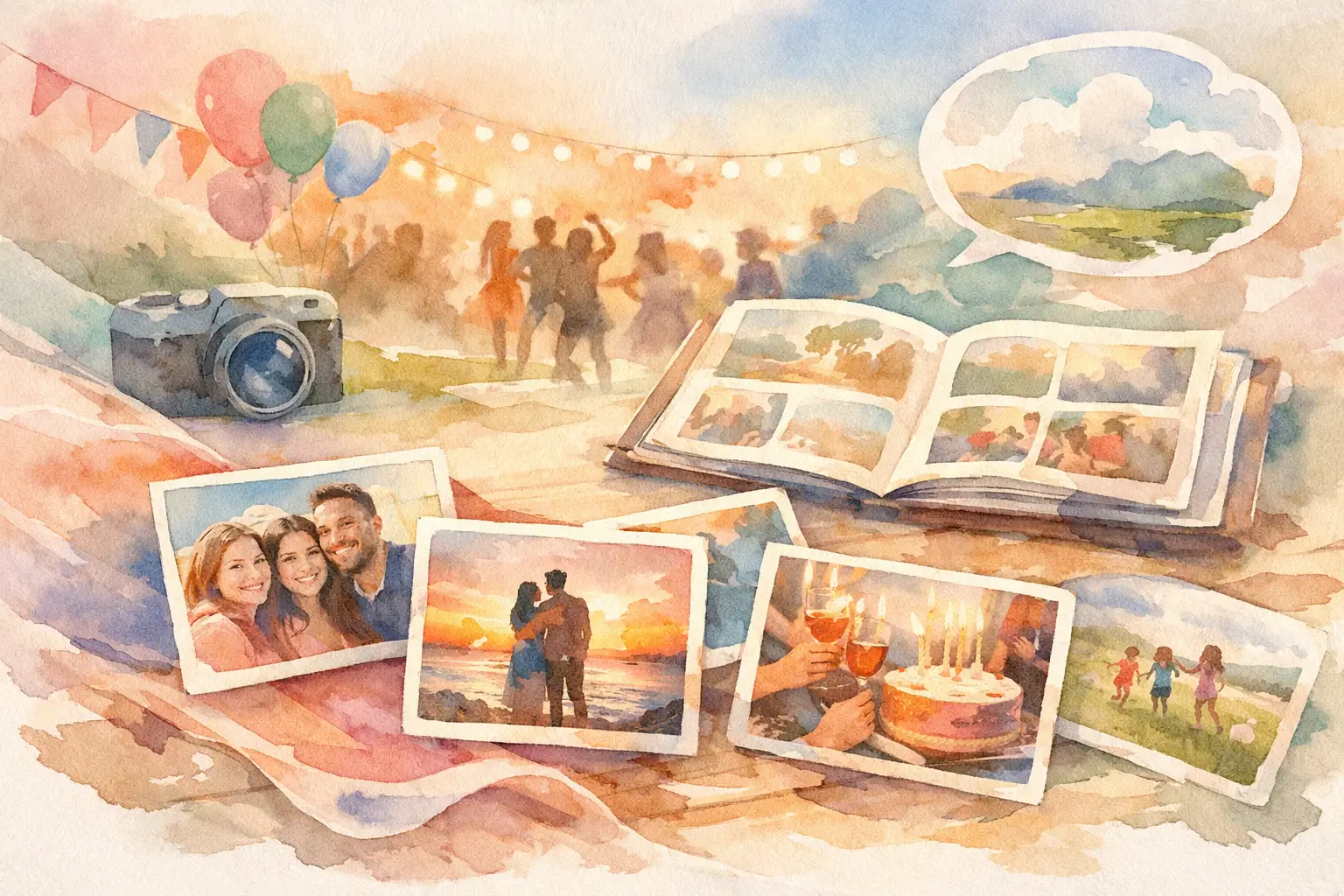
You know the pattern. The event was great, everyone took photos, and then the memories got buried in six group chats, three AirDrop attempts, and one friend who swears they’ll upload everything later. If you’re figuring out how to create shared event album access that people will actually use, the real job is not making an album. It’s making participation feel effortless.
That’s where most event photo sharing falls apart. Not because people don’t care, but because every extra step gives them a reason to skip it. Download this app. Make an account. Request access. Upload later. Suddenly the album is half empty, and the best photos are stuck on someone’s camera roll forever.
A good shared event album fixes that. A great one feels invisible while the event is happening, then gives everyone a satisfying way to relive it after. Whether you’re planning a wedding weekend, birthday dinner, baby shower, brand activation, or company offsite, the setup matters more than you think.
How to create shared event album access people actually use
Start with the guest experience, not the folder.
That sounds small, but it changes everything. Most people begin by picking a storage tool and assuming guests will adapt. In reality, guests do what’s easiest in the moment. If joining the album takes more than a few seconds, contribution drops. If uploading has to happen after the event, contribution drops again. If the platform feels clunky on mobile, you’ll get a handful of uploads from your most organized friends and silence from everyone else.
So the first decision is simple: do you want a place to store photos, or a system that gets people to contribute while the event is alive? Those are not the same thing.
For smaller, low-stakes hangouts, a basic shared album might be enough. If it’s a dinner party or a weekend trip with close friends, people may already be comfortable adding photos manually. But for weddings, birthdays, reunions, conferences, and branded events, you need less friction and more momentum. The bigger the group, the more your album needs a clear, instant entry point.
That usually means using a join method guests can understand at a glance. QR codes work well because they fit the moment. People scan, open, shoot, and move on. No app store detour. No account setup. No awkward “wait, how do I get in?” conversation during cocktail hour.
Pick a format that matches the event
Before you create anything, think about what kind of memory you want to build.
Some events need a live communal feed where photos show up right away. Others are better with a delayed reveal. That choice changes the vibe. A live gallery is fun for casual parties, team outings, and activations where instant energy matters. A timed reveal creates more anticipation and usually feels more special for weddings, showers, milestone birthdays, and trips where you want everyone to experience the full gallery together.
There’s also the question of volume. If you expect 20 people, almost any tool can technically hold the photos. If you expect 150 guests, you need something built for scale. That means reliable uploads, mobile-first design, and a setup that doesn’t rely on guests remembering to do admin work after the fact.
Then there’s style. If your event has a playful, nostalgic feel, a digital disposable camera format can change behavior in a good way. Limited shots make people more intentional. Filters make the gallery feel cohesive. A reveal later on adds payoff. Instead of random dumps from everyone’s camera roll, you get a shared artifact with personality.
Set up the album before the event, not during it
This is where smart hosts save themselves a headache.
If you’re learning how to create shared event album flow that feels polished, do the setup while you still have brain space. Name the event clearly. Use something guests will instantly recognize, like “Sam and Jordan’s Wedding Weekend” or “Maya’s 30th.” If it’s a professional event, keep it obvious and searchable, like “Spring Brand Launch NYC” or “Sales Kickoff 2026.”
Next, decide who can join and what privacy level makes sense. Private access is usually the safer choice for personal events because it keeps the gallery contained to the people who were actually there. Public galleries may be useful for certain brand or community events, but they come with less control. If your event includes kids, internal company moments, or private venues, tighter access matters.
After that, test the join flow on a phone that isn’t yours. This step gets skipped all the time, and it’s why hosts discover broken links and confusing permissions in the middle of the event. Scan the code. Open the album. Take a test photo. Upload it. If anything feels slow or unclear, your guests will feel it too.
Make joining feel like part of the event
The best shared albums don’t feel like a chore. They feel like an invitation.
That means placement matters. If you’re using a QR code, put it where people naturally pause: welcome signage, bar areas, reception tables, bathroom mirrors, hotel welcome bags, check-in desks, or event programs. One tiny sign in a corner is easy to miss. Repetition wins.
Your wording matters too. “Add your photos here” is fine, but it’s not very motivating. Give people a reason. Try language with energy: capture the night from every angle, add your shots to the group album, or reveal the whole gallery together tomorrow. Short, clear, social.
This is also where a disposable-camera-style setup can outperform traditional shared albums. Guests understand the assignment faster. It feels less like file management and more like part of the experience. Scan. Snap. Keep the good chaos coming.
If you want one product mention, this is the lane: Revel was built for exactly this moment, where collecting photos should feel as easy as taking them.
Reduce the friction that kills uploads
People are willing to participate. They’re just not willing to work for it.
That’s the rule.
If your album requires an app download, some percentage of guests is gone immediately. If they need to create an account, you’ll lose more. If uploads only happen well after the event, you’re counting on memory, motivation, and battery life all at once. Bad bet.
The strongest setup removes all three barriers. Guests should be able to join in seconds, contribute from the same device they already have in hand, and keep moving. Offline capture support helps too, especially for weddings, remote venues, travel events, and crowded conference spaces where service gets spotty. People should be able to take the photo now and trust that it will sync when the connection returns.
Device compatibility matters more than hosts expect. Your guests are bringing a mix of iPhones, Androids, older phones, newer phones, and varying storage situations. If your album only works well for one slice of that group, participation will be uneven.
Think about contribution, not just collection
A shared event album is only valuable if people add to it.
So create little prompts that nudge participation during the event. Ask guests to capture one candid, one table photo, and one dance floor moment. For a vacation, prompt everyone to add their best food shot, funniest mishap, and favorite view. For a corporate event, ask teams to capture behind-the-scenes moments, speaker highlights, and candid interactions.
You’re not scripting the gallery. You’re giving people a reason to notice what’s happening.
This is especially useful when you want more than posed photos. Group galleries get better when guests understand that blurry, funny, real-life moments are welcome. That’s often the difference between a stiff archive and a memory people actually revisit.
Decide when the gallery should open
This choice shapes the emotional payoff.
An instant gallery works when the event itself benefits from live momentum. Think birthdays, college parties, activations, and team events where seeing photos in real time adds energy. A delayed reveal works when anticipation is part of the fun. Weddings are the obvious example, but it also works for vacations, reunion weekends, and milestone celebrations.
A timed reveal has another advantage: it keeps people present. If the gallery isn’t immediately open, guests spend less time refreshing and more time actually being there. Then later, everyone gets the same moment of seeing the full story unfold together.
That trade-off is worth thinking about. Real-time access creates buzz. Delayed access creates suspense. Neither is universally better. It depends on the kind of experience you want.
After the event, keep the album easy to revisit
The post-event moment matters because this is when scattered photos usually disappear.
Make sure guests can access the final gallery without another round of friction. If people enjoyed contributing during the event but can’t easily come back to the photos later, the experience feels unfinished. High-resolution images matter here too. No one wants a gallery full of compressed memories that look great on a phone and disappointing anywhere else.
A strong shared album should feel complete. Multiple perspectives. Easy browsing. Private when it should be private. Fun enough that people actually open it again.
That’s really the answer to how to create shared event album success. Don’t just set up a place for photos to live. Build a flow that makes people want to join, contribute, and come back.
Because the best event photos were never sitting with one person. They were always spread across the room, waiting for a better way to come together.
A writer interested in connection, memory, and the everyday moments that matter more than we realize.
Tags: Shared album , Private shared album , Shared photo album , Shared photo gallery