How to Create a Digital Disposable Camera
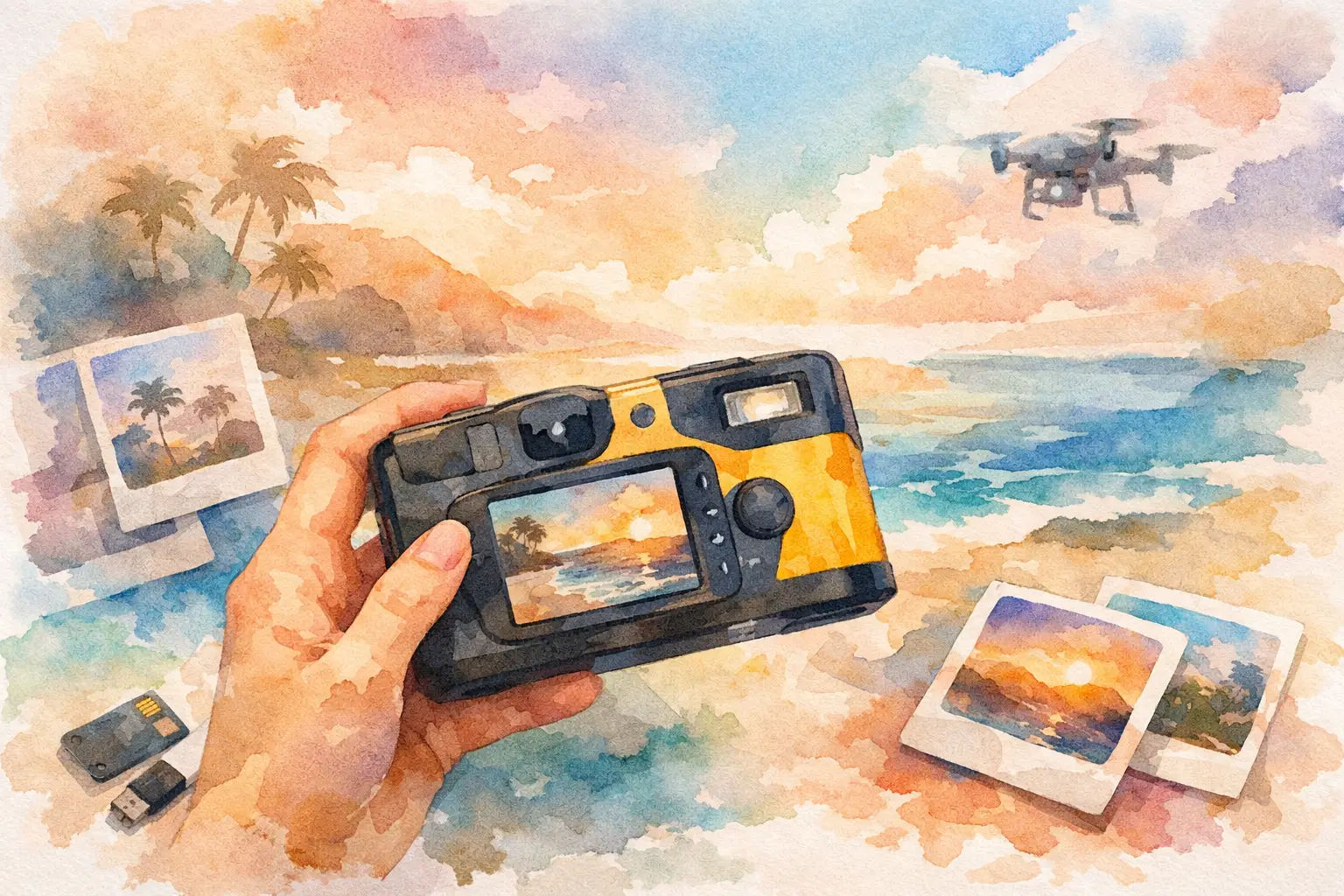
The best photos from a party are rarely the ones the host takes. They are the blurry dance-floor shots, the candid table selfies, the tiny behind-the-scenes moments you never saw. Learning how to create a digital disposable camera gives every guest a reason to capture those moments - without turning your event into a group-text scavenger hunt the next day.
A digital disposable camera brings the charm of a one-time-use film camera to the phones already in everyone’s pockets. Guests get a limited number of photos. They shoot in the moment. The gallery stays hidden until a chosen reveal time. Then everyone gets to see the event through everyone else’s eyes.
It is simple by design. That is exactly why it works.
What Makes a Digital Disposable Camera Feel Real?
A regular shared album is useful, but it does not change guest behavior. Most people mean to add photos later. Then later becomes never, and the best shots remain trapped in camera rolls, text threads, and private Stories.
A digital disposable camera creates a small, playful constraint. Each person gets a set number of shots, often somewhere between 10 and 27. That limit makes every tap feel more intentional. It also keeps people from firing off 400 nearly identical photos of the cake.
The other essential ingredient is delayed gratification. Instead of checking the gallery all night, guests shoot first and see the full collection later. That keeps attention on the room, not on who posted what. Think less endless feed, more the thrill of picking up developed photos.
For most events, a great digital disposable camera has five parts: quick guest entry, limited photos, a camera-style visual treatment, a private shared gallery, and a timed reveal. Miss one and it can start to feel like another album link.
How to Create a Digital Disposable Camera for an Event
Start with the moment you want people to remember
Before choosing settings, decide what kind of photos you want to invite. A wedding reception calls for guest perspectives, dance-floor chaos, quiet family moments, and the after-party. A birthday might lean into funny candids and group shots. A company offsite may need an easy way to collect team energy without chasing every attendee for uploads.
This matters because the camera should fit the event, not compete with it. If the gathering is short and high-energy, use a smaller shot limit to make it feel like a game. For a weekend trip or multi-day wedding, give guests more room to document the full experience.
Your prompt should be equally clear. “Capture the moments we miss” works better than “Upload photos here.” The first asks people to participate. The second feels like homework.
Set a photo limit that encourages better shots
The shot limit is the disposable-camera magic. It gives guests permission to be spontaneous while adding just enough scarcity to make photos feel worth taking.
For a dinner, shower, or small birthday, 10 to 15 shots per guest is usually plenty. For weddings, large parties, or longer events, 20 to 27 shots leaves room for the ceremony, cocktails, reception, and late-night highlights. For a brand activation, the right number depends on whether you want quick participation or a deeper event diary.
There is a trade-off. Too few shots can make people overly cautious, especially if they arrive late. Too many can dilute the concept and create a giant gallery full of duplicates. When in doubt, choose a limit that matches the length of the event, then make it obvious that every photo counts.
Make joining nearly effortless with a QR code
If participation requires an app download, account creation, password hunt, or an invite buried in email, you will lose people. Not because they do not care. Because they are at an event.
A QR code solves the handoff in one scan. Put it where guests naturally pause: on the welcome sign, at table settings, near the bar, on a photo backdrop, or in the event program. For a wedding, use a small sign at the entrance and another near the dance floor. For a conference, add it to session slides and signage around the activation.
The goal is simple: scan, open camera, start shooting. No tutorial required.
You can also build anticipation with a short line beside the code: “You have 20 shots. Make them count.” Or: “Capture together. Reveal together.” A clear invitation turns a piece of signage into a participation cue.
Choose a look that feels nostalgic, not fake
Filters help establish the mood, but restraint wins. The point is not to bury every image under so much grain that Grandma looks like a 1970s detective film. Choose a treatment that adds warmth, flash, date-stamp energy, or slight imperfections while keeping faces and details visible.
A classic disposable-camera look works especially well for weddings, vacations, birthdays, and reunions because it softens the pressure to make everything polished. People are more likely to contribute when the aesthetic says candid is the point.
For a brand event, adapt the visual style to the experience. A bright, playful launch can handle flash and grain. A premium dinner may call for a cleaner look with subtle color treatment. The right filter should make photos feel connected, not overly branded.
Keep the gallery private until the reveal
The reveal is where scattered content becomes a shared memory. Set a date and time for the gallery to open after the event - later that night, the next morning, or a few days after a destination weekend.
A next-day reveal works well for weddings and milestone celebrations. It keeps the anticipation alive after the last song. For a one-night birthday, opening the gallery at brunch the next day gives everyone an immediate reason to relive the best parts. For a multi-day retreat, wait until the final session or travel day so the collection feels complete.
Privacy matters here, too. Guests should know who can see the photos and when. A private gallery is more comfortable than asking people to post personal moments publicly, and it gives organizers a single place to collect the full story.
Plan for real-world phone behavior
Events are not controlled environments. Batteries die. Wi-Fi gets crowded. People move outside. Someone takes a great photo in a spot with weak service.
Your setup should account for that. Use a tool that works across common phone types and can save photos for syncing when service returns. Encourage guests to charge before a long event, but do not make the experience depend on perfect connectivity. If you are hosting a large event, test the QR code and camera flow on a few different devices before guests arrive.
This is also why a digital option beats handing out physical cameras to every table. Physical cameras can be fun, but they are easy to lose, costly to buy and develop, and limited by where they happen to land. A phone-based camera lets every guest contribute from their own perspective while still preserving the constraint that makes disposable cameras special.
Give Guests a Reason to Participate
A great tool cannot carry a silent room by itself. Your job is to give the camera a social role.
Make one announcement early, before people settle into their own conversations. Tell guests what it is, where to scan, and why it is worth using. Keep it light: “Skip the posed stuff. Use your shots on the moments we do not see.” Then remind them once later, when the energy is highest.
For weddings, ask the wedding party to take the first few photos. For birthdays, let the guest of honor kick it off. At a work event, have the host or MC call out a simple challenge, such as capturing the best team candid or the most unexpectedly competitive moment. People follow participation faster than instructions.
Revel is built around this exact behavior: scan a QR code, take limited photos, and let the whole gallery open together later. The system removes the usual friction without removing the fun.
Avoid the Mistakes That Make It Feel Like Admin
Do not hide the QR code in one corner and assume guests will find it. Do not make the photo limit so tight that people feel punished for joining. And do not reveal the gallery without telling guests when to come back.
The most common mistake is treating the digital disposable camera as a storage solution. It is not just that. It is an experience layer for your event. The camera gives people a small mission. The limit creates a little tension. The reveal gives the group a reason to reconnect after the party ends.
That is the difference between receiving a folder of photos and getting to relive a night from angles you did not know existed.
Your event already has a thousand versions happening at once. Give people a few shots, a simple scan, and a reason to look up from their own camera roll. The memories will do the rest.
A writer interested in connection, memory, and the everyday moments that matter more than we realize.
Tags: Digital disposable camera , Disposable camera , Disposable camera app , Wedding disposable camera