Event Content Strategy That Gets Guests Creating
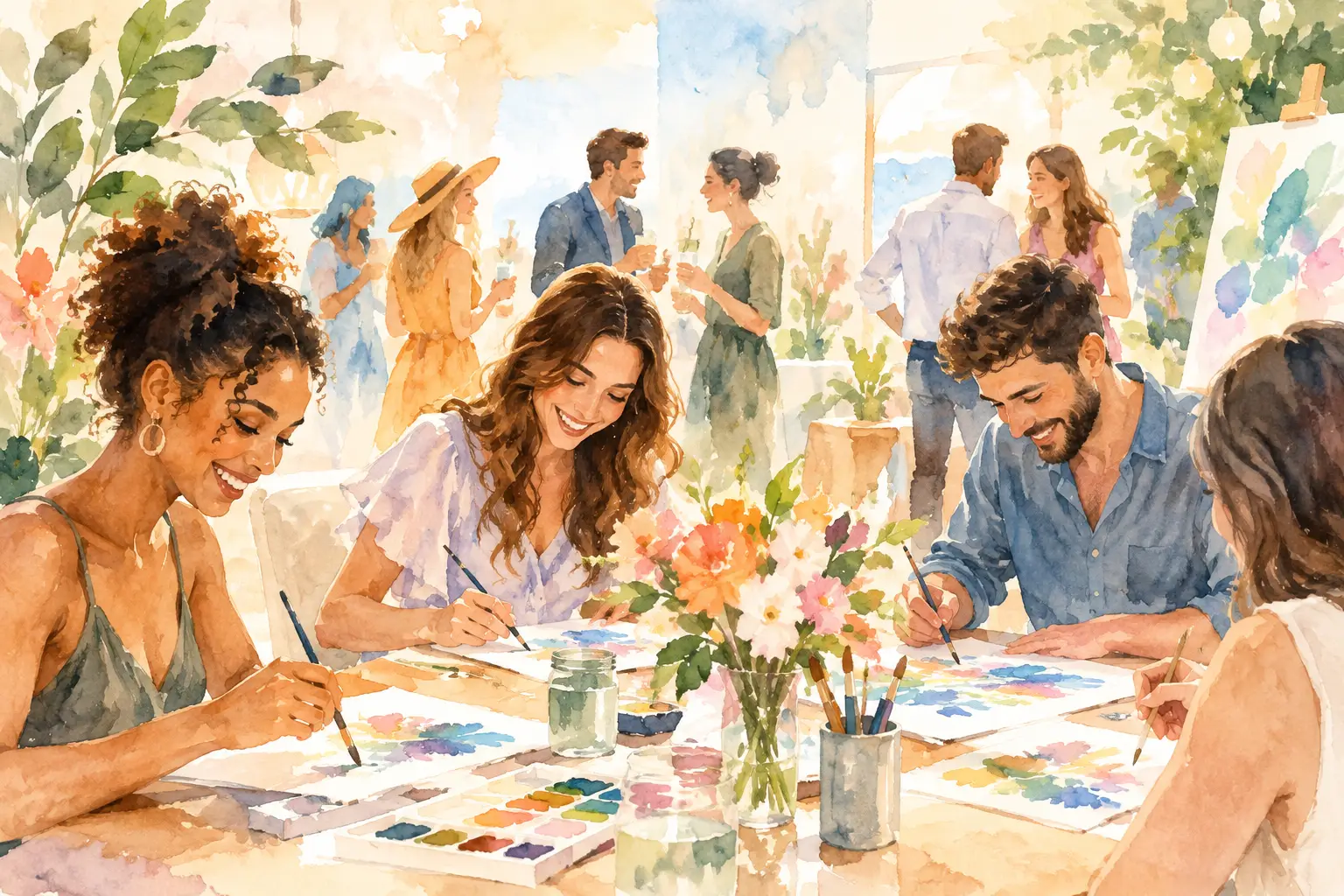
The group chat is not a photo archive. Neither is someone’s camera roll, a forgotten AirDrop promise, or the social post that only shows the polished 3 percent of the night. A strong event content strategy solves the real problem: how do you get people to capture the moments you would have missed, then make those memories easy to enjoy together?
For weddings, birthday weekends, company offsites, and brand activations, the answer is not asking guests to “send pics.” That request comes too late, asks too much, and usually produces three blurry selfies from the same friend. The better approach is to build content participation into the experience itself.
What an event content strategy should actually do
Event content is more than a highlight reel. It is the candid evidence that people showed up, connected, laughed too hard, dressed up, tried the weird dessert, and made the moment their own.
Your strategy should serve two jobs at once. First, it should make contributing feel effortless for guests. Second, it should give the host, organizer, or marketing team a useful collection of photos after the room clears out. If either side loses, participation drops. Make it too controlled and guests feel like unpaid production staff. Make it too loose and you are back to chasing images across six text threads.
The sweet spot is a simple system with a clear reason to join. A QR code at the entrance is familiar. A few playful constraints make it interesting. A gallery reveal gives everyone a reason to come back.
Start with the moment, not the deliverable
Before choosing a tool or writing a prompt, decide what you want people to notice. “We need event photos” is not a strategy. It is a vague hope wearing a lanyard.
For a wedding, you may want the messy dance-floor energy and the quiet in-between moments the photographer cannot catch. For a company event, you may want team connection, speaker reactions, and the behind-the-scenes details that make the culture feel real. For a brand activation, the goal might be product interaction, guest style, and content that shows the experience from a customer’s point of view.
Pick one primary outcome and one secondary outcome. A launch party might prioritize social proof, then build an internal asset library. A family reunion might prioritize shared memories, then make it easier to print a photo book later. This focus shapes everything else: where you place signage, what you ask guests to photograph, whether content is public or private, and when the gallery becomes available.
Decide what “enough” looks like
More photos are great, until you have 900 versions of the same cocktail. Set a realistic target based on the size and format of the gathering. At an intimate dinner, 40 meaningful shots can tell the full story. At a 300-person conference, you may want hundreds of images across sessions, networking areas, and evening programming.
Think in coverage, not just volume. You want arrivals, people, details, action, and the ending. That mix creates a gallery with movement instead of a pile of duplicates.
Make joining almost too easy
Participation has a short window. If a guest needs to download an app, make an account, remember a password, and find the right album, you have already lost them to the bar line.
Use one clear entry point. Put a QR code where the experience begins: welcome signage, place cards, table tents, badges, or the first slide before a presentation. Add a short instruction that tells people exactly what happens next. “Scan. Snap. See it all tomorrow.” works because it is fast, specific, and gives people a payoff.
Do not bury the invitation in a long event email. That is useful as a reminder, but it is not where participation happens. Guests join when they are physically in the room, phone already in hand, looking for something to do between moments.
Revel is built around that behavior: guests scan, capture from their own phones, and contribute to one private album without the account-creation obstacle course.
Give people a reason to take better photos
Most guests are happy to contribute if you remove the pressure to be “good at content.” Prompts do that. They turn an open-ended request into a tiny game.
Instead of “Upload your photos,” try language with a point of view: “Catch the best-dressed guest.” “Take one photo that proves you were here.” “Show us your table’s energy.” “Find the detail nobody else noticed.” At a work event, a prompt like “Capture a teammate in their element” will usually produce warmer results than “Take photos of networking.”
Use prompts sparingly. Two or three across an event is plenty. Too many prompts make the experience feel like homework, especially at a celebration. The goal is to spark attention, not direct every second of the night.
Use constraints to create anticipation
A little limitation can make people more intentional. Digital disposable camera formats work because limited shots change behavior. Guests pause before tapping the shutter. They look for something worth saving. The result often feels less staged and more alive.
A delayed reveal can create the same kind of anticipation. Rather than exposing every upload in real time, hold the gallery until the next morning or the end of the weekend. People get to relive the event together instead of watching it unfold through screens while it is still happening.
This is not right for every event. A live brand activation may need immediate, shareable content for social channels. A private wedding or retreat may benefit more from the delayed reveal. Choose the timing based on the emotional job of the gallery.
Design for every phase of the event
The best event content strategy has a before, during, and after plan. Each phase needs a different message.
Before the event, introduce the idea without overexplaining it. Tell guests there will be a shared photo experience and hint at the payoff. “Your perspective belongs in the album” is more inviting than a paragraph of instructions.
During the event, make participation visible. Keep QR signage easy to spot and have a host, MC, planner, or team lead mention it at a natural transition. One enthusiastic reminder shortly after people arrive is usually more effective than five signs nobody reads. If the event lasts several hours, add a second prompt once the energy shifts, such as before dinner turns into dancing or when a conference moves into its social portion.
After the event, the gallery is the follow-through. Share it promptly, while the details are still fresh. If you are using a timed reveal, make that reveal feel like part of the occasion, not an administrative email. A short message such as “The evidence is in” gives the collection personality and nudges people to revisit it.
Protect the vibe while protecting privacy
Event content can be personal. That is part of why it matters. But privacy expectations change by setting, and your strategy should make those expectations clear.
For private celebrations, a closed gallery is often the right call. Guests can relax, contribute freely, and enjoy the full set of memories without wondering whether every image is headed to a public feed. For professional events, clarify who can use the photos and where. If a brand plans to repost guest content, ask for permission in a way that is obvious and respectful.
The trade-off is simple: public sharing can expand reach, while privacy can increase honesty and participation. You do not have to choose one forever. A private event gallery can still include an optional path for guests who want to share selected images publicly.
Measure participation, then improve the next one
Do not judge success only by how pretty the final gallery looks. Look at how many people joined, how many contributed, when uploads happened, and which prompts created the most varied photos. Those signals tell you whether the experience was easy and compelling.
If scans were high but uploads were low, your entry point worked but the reason to create did not. Try stronger prompts or a clearer reveal moment next time. If uploads clustered around one activity, use that insight to place future signs and reminders near high-energy moments. If only the organizing team contributed, the flow may have felt too formal or too hidden.
Good strategy gets better through small adjustments. Move the QR code. Shorten the instruction. Change the prompt. Let the room tell you what it needed.
The photos worth keeping are rarely the ones you planned down to the second. Make it easy for people to notice the unexpected, capture it, and add their angle to the story. Then let everyone see what the night looked like from the whole room.
A writer interested in connection, memory, and the everyday moments that matter more than we realize.
Tags: Event photo sharing , Event photo collection , Corporate events , Event gallery , Event photography , Event planning , Event QR , Brand event