Digital Disposable Camera vs App: What Wins?
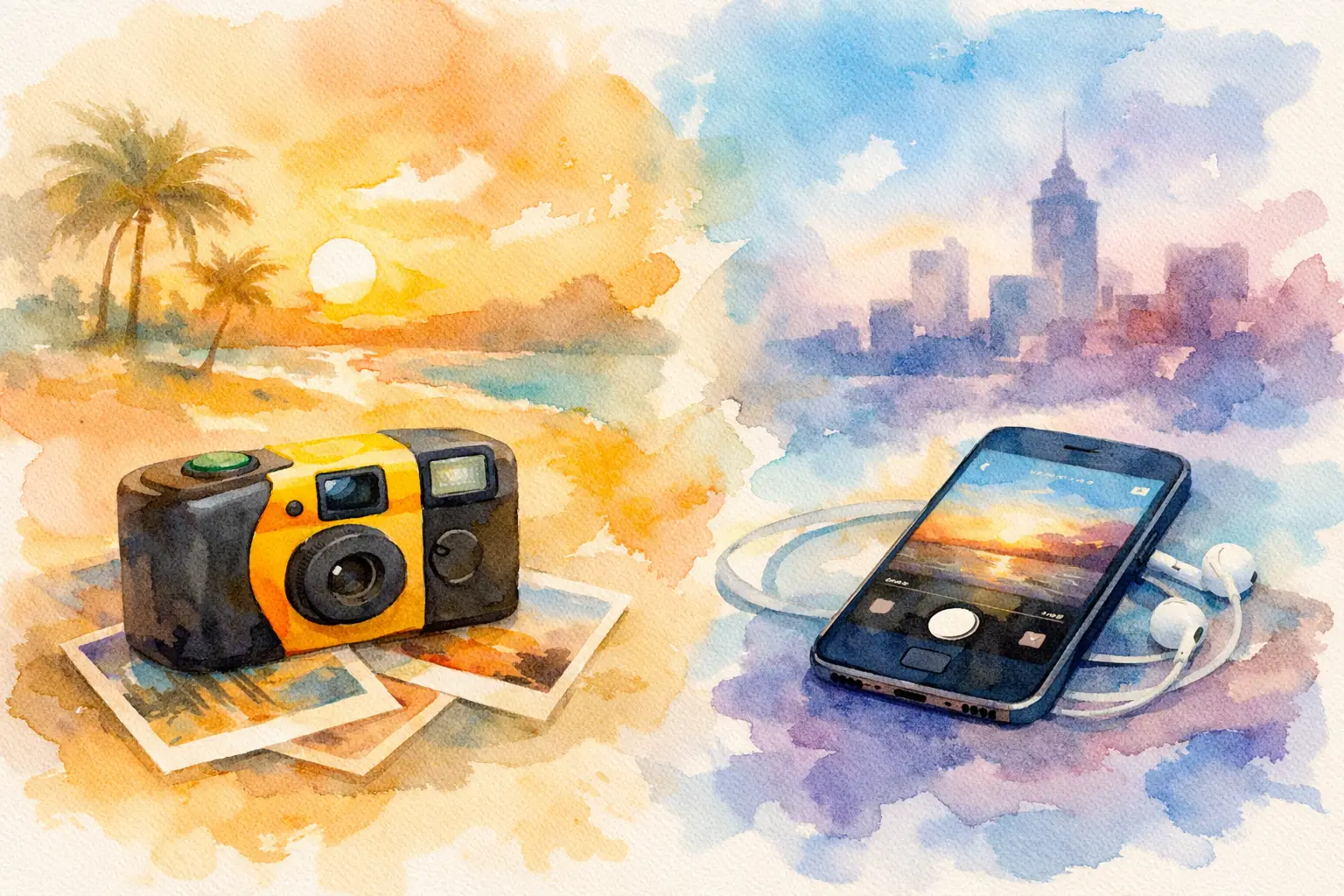
If you’ve ever left a wedding, birthday, or company offsite with 14 blurry AirDropped pics, three Instagram Stories, and no clue who took the good candids, the digital disposable camera vs app question gets real fast. On paper, both promise easy event photos. In practice, they create very different guest behavior.
That’s the part people miss. This isn’t just a tech choice. It’s a participation choice. The best event photo setup is the one people actually use without asking six questions, downloading something they’ll delete tomorrow, or forgetting about it halfway through cocktail hour.
Digital disposable camera vs app: the real difference
A digital disposable camera is built around a single event experience. It usually gives guests a simple way to join, a camera interface designed for the moment, and often a few rules that make it feel more intentional - like limited shots, nostalgic filters, or a gallery reveal later.
A generic photo-sharing app usually starts from the opposite direction. It’s built as an ongoing platform first, then adapted for events. That can mean more features, but it also tends to mean more friction. Guests may need to download an app, make an account, learn the interface, find the right album, and remember to upload after the event. That’s a lot to ask from someone holding a drink and trying to find their table.
If your goal is simply storing photos, an app can work. If your goal is getting lots of people to contribute in the moment, a digital disposable camera setup usually has the edge.
The biggest factor is guest participation
Most hosts do not have a camera problem. They have a people problem.
Everyone takes photos at events. Very few people share them in a way that’s organized, complete, and easy to collect. That gap is where generic apps often fall apart. Every extra step cuts participation. Download this. Sign up here. Confirm your email. Join the album. Upload later. It sounds minor until you multiply it by 40, 80, or 200 guests.
A digital disposable camera format feels lighter because it asks less in the moment. Scan a QR code. Open the camera. Take the photo. Done. That simplicity matters because events move fast. If the process isn’t immediate, people skip it.
This is also why the experience itself matters. A digital disposable camera feels like part of the party, not admin. Guests understand the assignment right away. Capture something fun. Add your angle. See it all later. That creates momentum in a way a standard upload tool rarely does.
Apps can be flexible, but flexibility isn’t always the point
To be fair, apps do have strengths. If you already use a shared platform with a close group, or you’re organizing a small trip where everyone is comfortable in the same ecosystem, an app might be enough. You may get folders, editing tools, chat features, cloud backup, and ongoing access in one place.
But event photography is a weirdly specific use case. You do not need endless options during a wedding reception. You need the path of least resistance. When the setup becomes too open-ended, people default back to their camera roll and promise they’ll send photos later. They won’t.
That’s the trade-off. Apps offer broader utility. Digital disposable cameras offer sharper focus. For one-off events and shared memory-making, focus usually wins.
What the camera experience does to the photos
There’s also a creative difference between the two.
Generic apps tend to preserve normal phone behavior. Guests take photos however they usually do, and the app is mostly a place those photos end up later. That means you often get a mix of polished portraits, screenshots, accidental duplicates, and random uploads from the Uber ride home.
A digital disposable camera changes how people shoot. Limited shots make guests more intentional. Built-in filters make the gallery feel cohesive. A delayed reveal adds suspense and keeps the event from turning into an instant content review session.
That last part is underrated. When people can’t immediately obsess over every photo, they stay in the moment. The gallery becomes something to look forward to instead of something everyone micromanages in real time.
For weddings, milestone birthdays, and brand events, that can seriously improve the vibe. More presence. More spontaneity. Better candids.
Setup matters more than hosts think
Hosts usually compare tools by features. Guests compare them by effort.
That’s why setup should be a headline issue in any digital disposable camera vs app comparison. If your guests need an app store, password, invite flow, or account creation step, you’ve already lost part of the room. Some people will opt out instantly. Others will mean to join and never get around to it.
The best event tools reduce decisions. A QR code at the bar, on the tables, or in the welcome signage works because it meets guests where they already are - phone in hand, ready to scan. No tutorial needed.
This becomes even more important for mixed-age groups or big events. A college birthday party might tolerate more chaos. A wedding with grandparents, coworkers, and college friends all in one room needs something more universal. The easier the entry point, the more complete your gallery becomes.
Sharing after the event is where most systems break
Here’s the classic post-event mess: photos scattered across text threads, social DMs, shared albums, and someone’s camera roll forever. You know the pictures exist. You just can’t get all of them.
Apps often struggle here because they rely on delayed behavior. Guests have to remember to upload later, sort their images, and take action once the event is over. That’s exactly when attention drops off.
A digital disposable camera works better when capture and collection happen at the same time. If the photo goes straight into the event gallery when it’s taken, there’s no second task later. No chasing. No begging for candids a week after the fact.
That’s a major reason event-specific platforms outperform general apps. They’re designed to collect during the moment, not after momentum is gone.
When an app is still the better choice
There are cases where a standard app wins.
If your event is really a long-term group project, like a recurring team collaboration or a months-long travel album, an app may give you better ongoing organization. If your group already lives inside one platform and everyone is comfortable there, forcing a new behavior may not be necessary.
And if you need heavy editing, messaging, or file management beyond event photos, a broader app can make sense.
But for short, social, high-energy occasions, event-first capture usually performs better. Weddings, showers, reunions, retreats, birthday dinners, conferences, and brand activations all benefit from tools that prioritize instant participation over multi-purpose functionality.
What to choose for weddings, parties, and brand events
For weddings, the answer is usually the digital disposable camera route. Weddings run on emotion, movement, and many different guest perspectives. You want volume, ease, and candids from the room, not another system people forget to open.
For birthdays and vacations, it depends on the size and vibe. A casual trip with four close friends can survive on a shared app. A bigger birthday weekend with multiple locations and lots of guests benefits from something faster and more guided.
For company events and brand activations, participation is everything. If the tool feels like work, people won’t use it. If it feels instant and social, they will. That’s why streamlined, no-download experiences tend to get better results in the field.
This is exactly where a platform like Revel fits naturally - event-specific, QR-based, and built to get more people contributing without killing the mood.
So, which one actually wins?
If you care most about storage, ongoing collaboration, or using a platform your group already knows, an app can be perfectly fine.
If you care most about contribution, simplicity, and creating a shared event experience people actually join, a digital disposable camera is the stronger choice. It does less, on purpose. And for events, that’s usually the point.
The best photos from a great night are rarely the ones you planned. They come from the side conversations, the dance floor chaos, the table selfies, the tiny moments you didn’t see yourself. Choose the tool that makes those moments easier to catch, easier to collect, and more fun to relive.
A writer interested in connection, memory, and the everyday moments that matter more than we realize.
Tags: Digital disposable camera , Disposable camera app , Wedding disposable camera , Camera app , QR code camera , Film roll app , Vintage camera apps