Conference Photo Collection, Without the Chase
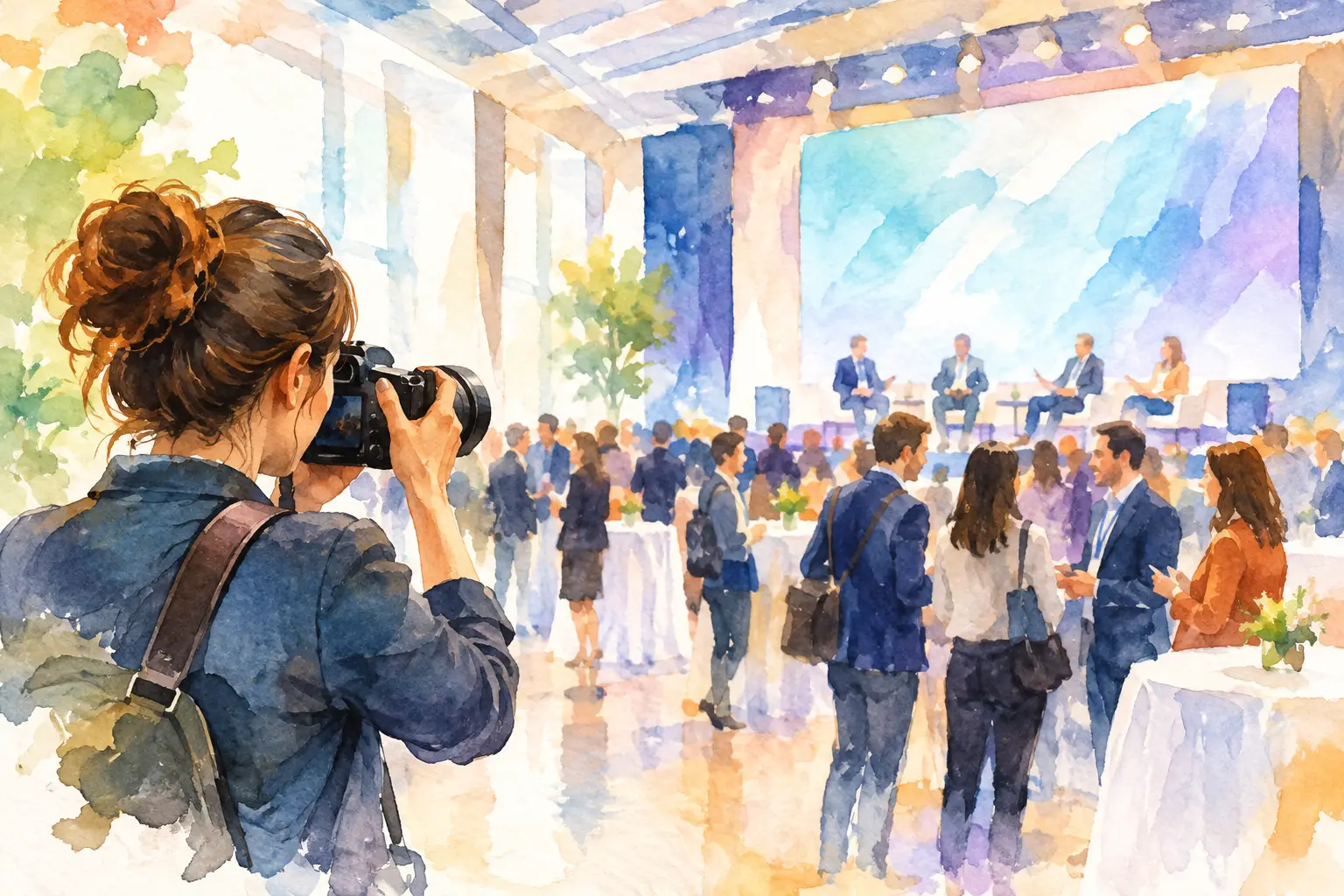
The keynote ends. The happy-hour photos live in six Slack threads. A speaker posts three great shots on LinkedIn. Someone from sales has the candid everyone wants, but it is buried in their camera roll. That is how a conference photo collection becomes a scavenger hunt instead of a record of the event.
Conferences create more photo-worthy moments than almost any other format: the packed room before doors open, the standing ovation, the hallway introductions, the booth chaos, the late-night team dinner. The problem is not getting people to take photos. It is getting those photos into one place while the energy is still there.
A better collection system makes contributing feel less like admin and more like part of the experience. Scan. Shoot. Keep moving. Then give everyone one shared place to relive what happened.
Why conference photos disappear so fast
Most event teams know they need content. They book a photographer, build a social plan, and ask attendees to share their shots afterward. Then the follow-up begins: “Can you send me those photos?” “Do you have the group shot?” “Who took that video from the panel?”
The usual tools create friction at exactly the wrong time. Shared drives require an invite, a login, and enough patience to find the upload button. Text threads compress files and bury the good stuff. Social posts are public by default and only capture the most polished moments. An email request sent after the conference gets a few responses - from the people who were already most organized.
Meanwhile, the photos with actual personality are often gone. Not deleted, just trapped on individual phones. That means your recap misses the attendee perspective that makes an event feel alive.
What a good conference photo collection needs
The best system is not the one with the most settings. It is the one people will use in a crowded room, between sessions, with one hand holding coffee.
Start with instant access. A QR code at check-in, on table cards, or on the closing slide gives people a clear way in. No app download. No account setup. No “I’ll do it later,” which is event-speak for never.
Next, make the destination obvious. Attendees should understand that their photos are joining a shared private gallery, not floating into the void. When the purpose is clear, participation feels social. People are not merely uploading assets for the marketing team. They are helping make the memory.
Finally, protect the payoff. A collection should preserve quality, support different phones, and make it easy to revisit every perspective after the event. If the gallery is revealed at a planned moment, even better. That little bit of anticipation can turn a routine upload into a shared post-event beat.
Build participation into the event, not the follow-up
The easiest way to collect more photos is to stop treating collection as a task for later. Put it in the flow of the conference.
At registration, position the QR code where people are already waiting. A simple prompt works: “Your camera roll is part of the recap.” Keep the instruction to one sentence. If it takes a paragraph to explain, people will walk past it.
During the event, place the code in high-energy zones: the photo wall, sponsor booths, lounge areas, dinner tables, and breakout rooms. These are the places where candid content happens. A sign near the stage may collect a few speaker photos; a prompt near a hands-on demo will collect faces, reactions, and real interaction.
Your emcee can also make the collection feel like a group activity. Call out a specific moment worth capturing: the opening room, the team selfie, the final applause. Specific prompts beat vague ones. “Share your conference photos” is easy to ignore. “Scan this before the after-party and add your best accidental photo of the night” gets a response.
There is a trade-off here. Too many reminders can feel promotional and interrupt the event. For a professional conference, a few well-placed cues usually outperform constant announcements. Let the experience do the rest.
Give attendees a reason to shoot differently
A professional photographer is still valuable. They capture polished speaker portraits, sponsor deliverables, and the images you need for next year’s registration page. But a photographer cannot be everywhere at once.
Attendee photos fill in the texture: the coworker seeing a favorite speaker, the spontaneous mentor conversation, the booth game that got unexpectedly competitive. Those moments are often more useful for community storytelling because they show what the conference felt like from inside the room.
Digital disposable camera mechanics can help here. Limited shots make people a little more intentional, while nostalgic filters take the pressure off perfection. Instead of treating every image like branded content, guests capture what is funny, warm, and genuinely happening. That is often the material your recap was missing.
Use a timed reveal to extend the event
The conference does not have to end when the last badge comes off. A timed gallery reveal gives attendees a reason to come back together after they have traveled home, unpacked, and returned to their inboxes.
This works especially well for company offsites, multi-day industry events, and brand activations. Rather than exposing every photo instantly, collect throughout the experience and reveal the full gallery at a set time. The delay creates a small but meaningful moment of anticipation. People return to see the photos they forgot they took and the moments they never saw.
For organizers, the reveal also creates a clean handoff from live event to post-event engagement. You can share the gallery with attendees as a thank-you, pull themes for a recap, and identify standout visuals without chasing dozens of contributors one by one.
Privacy matters here. A public hashtag may make sense for a consumer-facing activation built for reach. For internal conferences, leadership events, or attendee communities, a private gallery is usually the better fit. The right choice depends on the room and what participants expect when they scan.
Make the gallery useful after the applause
A conference photo collection should not become another forgotten folder. Use it while the event is still fresh.
Your event team can review the gallery for authentic moments that support recap emails, social posts, internal communications, and future event promotion. Sales teams may find great images of customer connections. Community teams can surface attendee-led stories. HR can use candid photos to make an offsite feel more real than a staged group portrait ever could.
Still, set expectations before you collect. If photos may be used in marketing, say so clearly in the event materials and at the point of entry. If the gallery is for attendees only, honor that. Trust is what gets people to contribute again at the next event.
It also helps to assign one person to own the collection experience. Not to manually upload photos, but to make sure QR codes are visible, prompts are clear, and the reveal reaches everyone. The technology removes the chase. A thoughtful event owner makes the system feel intentional.
A simpler way to collect the whole room
Revel is built for the moment traditional photo collection usually loses: the gap between someone taking a photo and actually sharing it. Guests scan a QR code, capture from their phones, and contribute without downloading an app or creating an account. High-resolution uploads, offline capture syncing, and a shared timed reveal keep the process light for attendees and useful for organizers.
That matters at a conference because every extra step costs participation. Your guests have sessions to catch, people to meet, and notifications already fighting for their attention. The photo experience should take seconds, not commitment.
The goal is not to turn attendees into content machines. It is to make it easy for them to leave a trace of the moments that mattered to them. A packed agenda tells people what happened. The photos tell them what it felt like to be there.
Put the QR code where the good moments happen. Give people a reason to scan. Then let the room build the record together - one candid, one conversation, one slightly blurry after-party photo at a time.

A writer interested in connection, memory, and the everyday moments that matter more than we realize.
Tags: Conference Photo Collection , Conference , Event photography , Event planning