Company Retreat Gallery Results Example That Works
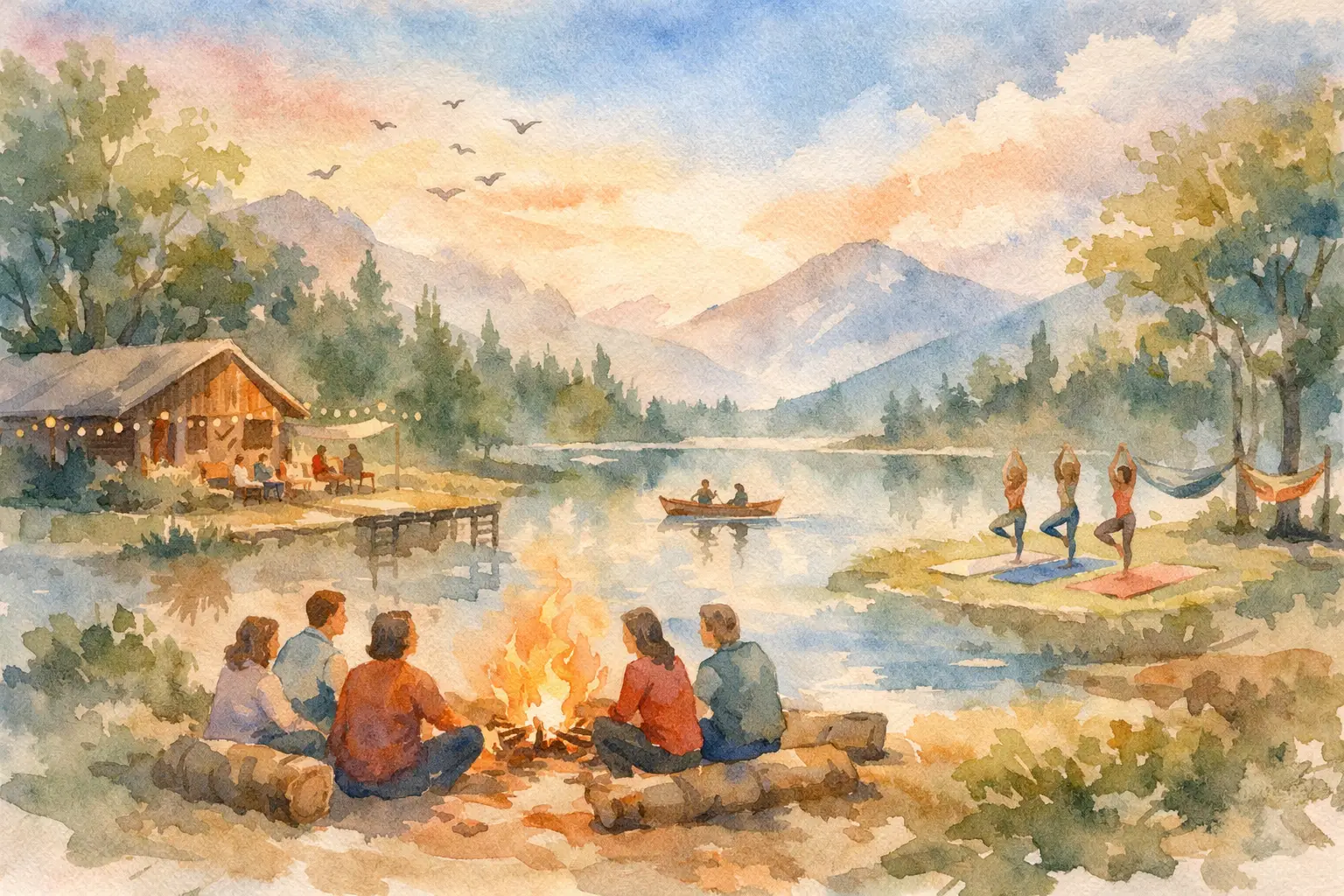
The best company retreat gallery results example does not start with a polished recap video. It starts with the photos nobody on the planning team would have captured: the new hire laughing during trivia, the product team’s chaotic breakfast table, the quiet lake view before the first workshop, and the CEO getting fully committed to karaoke.
Those are the pictures that make an offsite feel real after everyone is back in Slack. The problem is that they usually disappear into personal camera rolls, group texts, and the digital void. A shared retreat gallery changes that - but only when contributing is easier than ignoring the request.
What great retreat gallery results actually look like
A company retreat is not a wedding. Employees may love the experience and still feel unsure about sharing photos, especially if the process involves downloading an app, finding a link later, creating an account, or uploading a giant batch after a long travel day.
That is why gallery success is not just about photo count. It is about participation, perspective, and the feeling people get when they revisit the event together.
Here is a realistic company retreat gallery results example. Imagine a 90-person, two-day offsite with workshops, outdoor activities, a team dinner, and a closing party. Instead of asking employees to send photos to one organizer, the event team puts a QR code at check-in, on table cards, and near activity areas. Guests scan, snap, and contribute from their phones as the retreat happens.
By the end, the gallery might include 500 to 800 photos from 60 or more contributors. The exact number depends on the team culture and schedule, but the meaningful result is this: the gallery is not dominated by the event planner and three enthusiastic photographers. It reflects the whole room.
You see candid conversations between departments. You see the sales team trying archery. You see the behind-the-scenes setup that makes the event feel bigger than a series of agenda blocks. You also get plenty of usable images for internal culture posts, recruitment materials, and future retreat decks - without treating employees like unpaid content creators.
The before-and-after is the real proof
Before a structured gallery, retreat photos often follow a familiar pattern. Someone creates a shared drive folder. A handful of people upload. Others promise to do it later. The organizer posts a reminder the following week, then another one two weeks later. Eventually, the folder contains 47 photos, most from the same two phones.
After a low-friction capture setup, contribution happens while the moment still has energy. Employees do not need to remember which folder to use at the airport. They simply scan a code and take the picture.
That shift changes the results in three ways.
First, you get more photos because the request happens at the moment of capture, not days afterward. Second, you get a broader mix of people and activities because everyone has a camera in their pocket. Third, the final gallery becomes something employees actually want to browse, rather than an administrative task everyone politely forgets.
For a remote or hybrid company, this matters even more. Retreat photos become proof of connection for teammates who need a reminder that the people behind the profile icons are funny, creative, and occasionally terrible at mini golf.
Why a timed reveal can outperform an open gallery
An open gallery has its place. If the goal is live social posting or a quick internal recap, immediate access makes sense.
But for many retreats, a timed gallery reveal creates more anticipation and better participation. Everyone knows their photos are going somewhere. No one needs to scroll through uploads while they are still trying to enjoy dinner. Then, once the gallery opens, the team gets a small second wave of the retreat experience.
This is especially effective for companies that want to build ritual into their culture. Picture the gallery revealing on Monday morning after a Friday retreat. The first team message is not another project update. It is a shared wall of moments that says, “That happened. We were there.”
Revel brings this disposable-camera energy to company events: limited shots, nostalgic filters, private galleries, and a reveal that gives the photos a reason to be seen together. It feels less like collecting files and more like opening a memory.
Build the gallery around the retreat, not beside it
The strongest gallery results come from making photo capture part of the experience without making it a mandatory assignment. A QR code buried in a closing slide will not do much. People need clear, casual invitations at the right moments.
At check-in, let attendees know there is one private gallery for the retreat. Keep the instruction short: scan, take photos, reveal together. Add the code to badges, welcome cards, table tents, or signage near high-energy activities.
Then give people natural prompts. A scavenger hunt can include a photo challenge. Team awards can ask for one victory shot. At dinner, place a small card on each table that invites guests to capture “the people you only get to see in person twice a year.” The best prompt is specific enough to spark a photo and loose enough to avoid forced content.
Do not overdo it. If every session begins with “take out your phones,” the gallery starts to feel like a workplace obligation. Aim for two or three high-visibility prompts across the event, then let spontaneous moments do the rest.
What to measure beyond total uploads
Photo volume is an easy headline number, but it can be misleading. A gallery with 1,000 nearly identical party pictures may be less valuable than one with 400 images spread across the full retreat.
Look at contributor rate first. If 50 out of 90 attendees add a photo, that tells you the setup was accessible and socially comfortable. Next, check coverage: did the gallery capture workshops, meals, travel, activities, and downtime, or only the final party?
Also pay attention to gallery engagement after the event. Are employees revisiting, reacting, downloading favorites, or mentioning photos in team channels? Those signals show that the gallery extended the event rather than merely documenting it.
For employer-branding or internal communications teams, separate content usefulness from personal memory value. You may only need 20 photos that work for a recruiting page, but the candid blurry shot of a team huddled over a board game might be the one employees cherish most. Both outcomes count.
Trade-offs to plan for
Not every retreat needs a delayed reveal, filters, or a high-volume photo challenge. A leadership summit with sensitive discussions may need stricter capture boundaries. A client-facing offsite may require approval before photos are shared. A team with a strong privacy culture may prefer an opt-in gallery and clear no-photo zones.
Make those boundaries visible before the first photo is taken. A simple note about where photography is welcome, what will be shared, and who can access the gallery goes a long way. Private does not have to mean vague.
There is also a balance between candid and curated. If your only goal is a polished corporate recap, hire a professional photographer and give them a shot list. If your goal is culture, connection, and a more honest record of the retreat, invite the team in. The two approaches work well together.
Make the reveal part of the next moment
A gallery should not end with a folder link and a “thanks, everyone.” Use the reveal to create a lightweight post-retreat moment. Share it during the next all-hands. Put a few employee-selected favorites in the retreat follow-up. Let teams nominate the photo that best captures the trip.
The point is not to manufacture nostalgia. It is to give the experience somewhere to land.
When people can see the retreat through dozens of perspectives, the result is bigger than event documentation. It becomes a shared record of the jokes, risks, conversations, and little moments that make a company feel like a group of people - not just a calendar full of meetings.

A writer interested in connection, memory, and the everyday moments that matter more than we realize.
Tags: Company retreat , Company photo sharing , Corporate Event Photography , Corporate events , Event photo collection , Event photo sharing , Event photography