Best Wedding Guest Camera Alternative
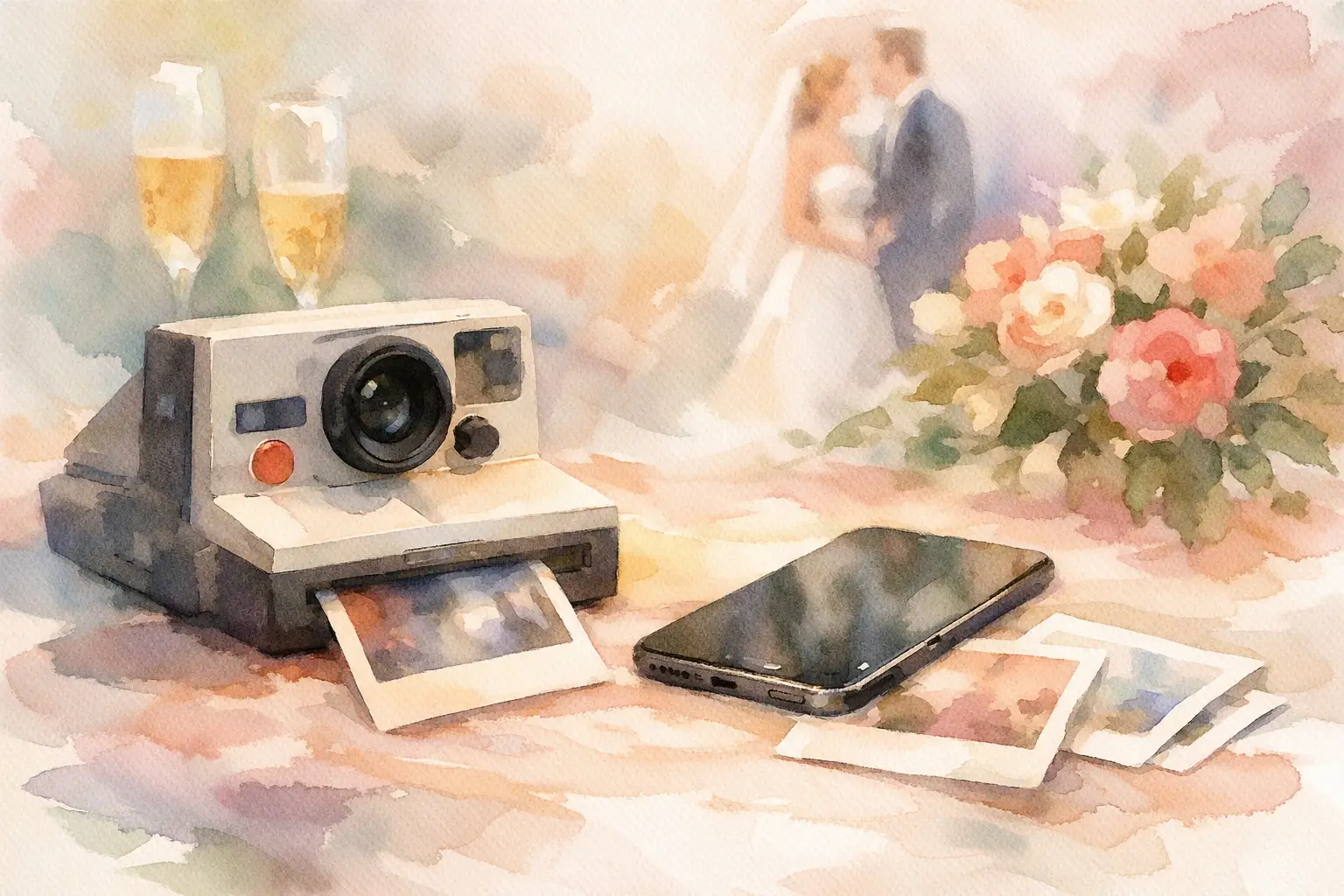
The disposable camera table setup has great intentions and a pretty rough follow-through. You picture candid dance floor shots, blurry late-night selfies, your grandma laughing with your college roommates. What you often get is half-used cameras, flash disasters, missing rolls, and a photo batch that shows up long after the honeymoon looking like it survived a flood.
That’s exactly why the search for a wedding guest camera alternative has gotten so much bigger. Couples still want guest perspective. They still want the chaos, the charm, the real stuff. They just want a version that actually works.
What people really mean by wedding guest camera alternative
Most couples are not trying to replace their photographer. They’re trying to fill the gap between the polished album and the lived experience of the day.
Your photographer gets the first kiss, family portraits, and the golden-hour magic. Your guests get the in-between moments - your best friend fixing your veil, the packed bathroom mirror selfies, the cousin who turned cocktail hour into a full photoshoot. That’s the layer people are after.
So when someone looks for a wedding guest camera alternative, they usually want four things at once. More participation. Less setup. Better photo quality. And one place where everything ends up.
That last part matters more than most couples expect. The real problem is not that guests fail to take photos. It’s that those photos disappear into camera rolls, text chains, Instagram stories, and vague promises like, “I’ll send them later.” They won’t. Or they’ll send three.
Why disposable cameras stopped being the default
Disposable cameras still win on nostalgia. They look cute on the table. They signal fun. They make people feel like they’ve been invited to contribute. But the actual experience is full of friction.
Film costs add up fast, especially when you buy enough cameras for a full guest count and then pay to develop them. Quality is unpredictable. Some guests forget to use them. Some kids burn through an entire roll in eight minutes. Some cameras vanish before dinner. And because there’s no preview, no backup, and no easy way to organize anything, you’re left crossing your fingers.
That trade-off can be worth it if your whole wedding style leans heavily retro and you genuinely love the imperfect look of film. But for most couples, the charm wears off once the logistics kick in.
There’s also a participation problem. Disposable cameras sound interactive, but they’re passive objects. They sit there and hope someone picks them up. That’s not always enough, especially at larger weddings where guests are already juggling drinks, conversations, and their own phones.
The options couples usually consider
Most wedding guest photo solutions fall into a few buckets, and each one solves one problem while creating another.
Shared albums are the obvious first move. They’re easy in theory because guests already have smartphones. But they usually depend on everyone joining the album, understanding how to upload, remembering to do it, and feeling motivated after the event. That’s a lot of steps for people who are there to celebrate, not complete admin.
Hashtags are even looser. They can collect some social posts, but only from guests willing to post publicly or semi-publicly. That means you miss private moments, older relatives, and anyone who doesn’t want their wedding content floating around social media. You also end up with a collection shaped by who likes posting, not by who was actually present.
Photo booth rentals create a fun moment, but they’re not really a full wedding guest camera alternative. They capture one station, one backdrop, one slice of the night. Great for posed group shots. Not great for the spontaneous perspective happening everywhere else.
App-based guest photo tools promise organization, but many lose people at the first hurdle. If guests need to download something, make an account, remember a password, or navigate a clunky interface, participation drops. Fast.
That’s the pattern worth noticing. Every extra step costs you photos.
What makes a better wedding guest camera alternative
The best alternative is usually the one your guests barely have to think about. If they can join quickly, shoot naturally, and know their photos are actually going somewhere useful, you get better results without turning your wedding into a tech tutorial.
Low friction beats good intentions
Guests will contribute if the system feels instant. Scan a QR code. Open a camera. Start taking pictures. That kind of flow fits the energy of a wedding.
The opposite also happens. If your instructions are too long, the sign on the table needs a paragraph, or guests have to troubleshoot anything during cocktail hour, they move on. Weddings are busy. Attention is short. Simplicity wins.
Your guests already have the camera
This is the big shift. The best guest camera at a wedding is usually the one already in everyone’s hand. Smartphone cameras are better than ever, guests know how to use them, and there’s no learning curve.
That doesn’t mean every smartphone-based option is good. It means the smart move is building around behavior that already exists instead of trying to force a new one. People are already taking photos. The question is whether you’ve made it easy to collect them.
One gallery changes everything
Collection matters as much as capture. A strong wedding guest camera alternative doesn’t just help guests take photos. It gives everyone one private place to put them, find them, and enjoy them together.
That solves the real post-wedding headache. No chasing. No “Can you AirDrop that?” No six-week scavenger hunt through group chats. Just one album, built as the day unfolds.
Why the digital disposable camera model works so well
This is where things get more interesting than a basic shared album. A digital disposable camera setup takes the nostalgia people love and strips out the parts that make it annoying.
You still get the fun of limited shots, the feeling of guest participation, and that candid, less-polished energy. But now it runs through a phone instead of a plastic camera with a mystery flash. Guests can join through a QR code, shoot from their own device, and upload into one private gallery without an app download dragging the whole thing down.
The delayed reveal piece is especially smart for weddings. It turns the gallery into an event of its own. Instead of photos scattering instantly across texts and social posts, everyone contributes to a shared collection that opens later. That creates anticipation. It also keeps the focus on being present while the wedding is happening.
For couples who want that disposable-camera mood without the waste, cost, and chaos, this model hits the sweet spot.
Where each option works - and where it doesn’t
Not every wedding needs the same setup. If you’re having a 25-person backyard dinner, a simple shared album might be enough. If your crowd is highly online and you want public social content, a hashtag can support that. If you care most about a single entertainment moment, a photo booth still has a place.
But if your goal is broad participation across the whole day, from getting ready to the last dance, those tools feel partial. They either capture too little, ask too much, or rely on habits that exclude a chunk of your guest list.
A modern wedding guest camera alternative works best when it covers the full event and keeps the barrier to entry close to zero. That’s especially true at weddings with mixed age groups, multiple locations, or lots of guests who don’t know each other well. The easier the format, the more naturally people join in.
That’s also why products like Revel make sense in this space. They keep the nostalgic disposable-camera feel, but the experience is built for how people actually behave at weddings now - quick scan, no app, real participation, shared payoff.
What to look for before you choose one
Before picking a system, think less about the feature list and more about guest behavior. Ask yourself what your least techy guest will do, what your most distracted guest will skip, and what happens to the photos once the music stops.
Look for private sharing if you don’t want your wedding photos living on public platforms. Look for high-resolution uploads if you want the gallery to feel worth keeping. Look for offline support if your venue has spotty service. And look for something that feels fun, not managerial. If it feels like homework, guests won’t bother.
The best setups quietly guide people into participating. They don’t need chasing. They don’t require reminders every twenty minutes. They just fit the day.
A wedding should not leave you with 400 hidden photos spread across 70 people and five apps. If you want candid memories from your guests, don’t settle for a system that depends on luck. Pick the one that makes contributing feel effortless, because that’s how you get the shots you actually want to keep.

A writer interested in connection, memory, and the everyday moments that matter more than we realize.
Tags: Wedding camera , Wedding guest camera , Wedding photo sharing , Wedding photo app , Wedding photo ideas , Wedding photo gallery , Wedding photos , Wedding photography , DYI wedding photography