What Makes a Shared Photo Album Work?
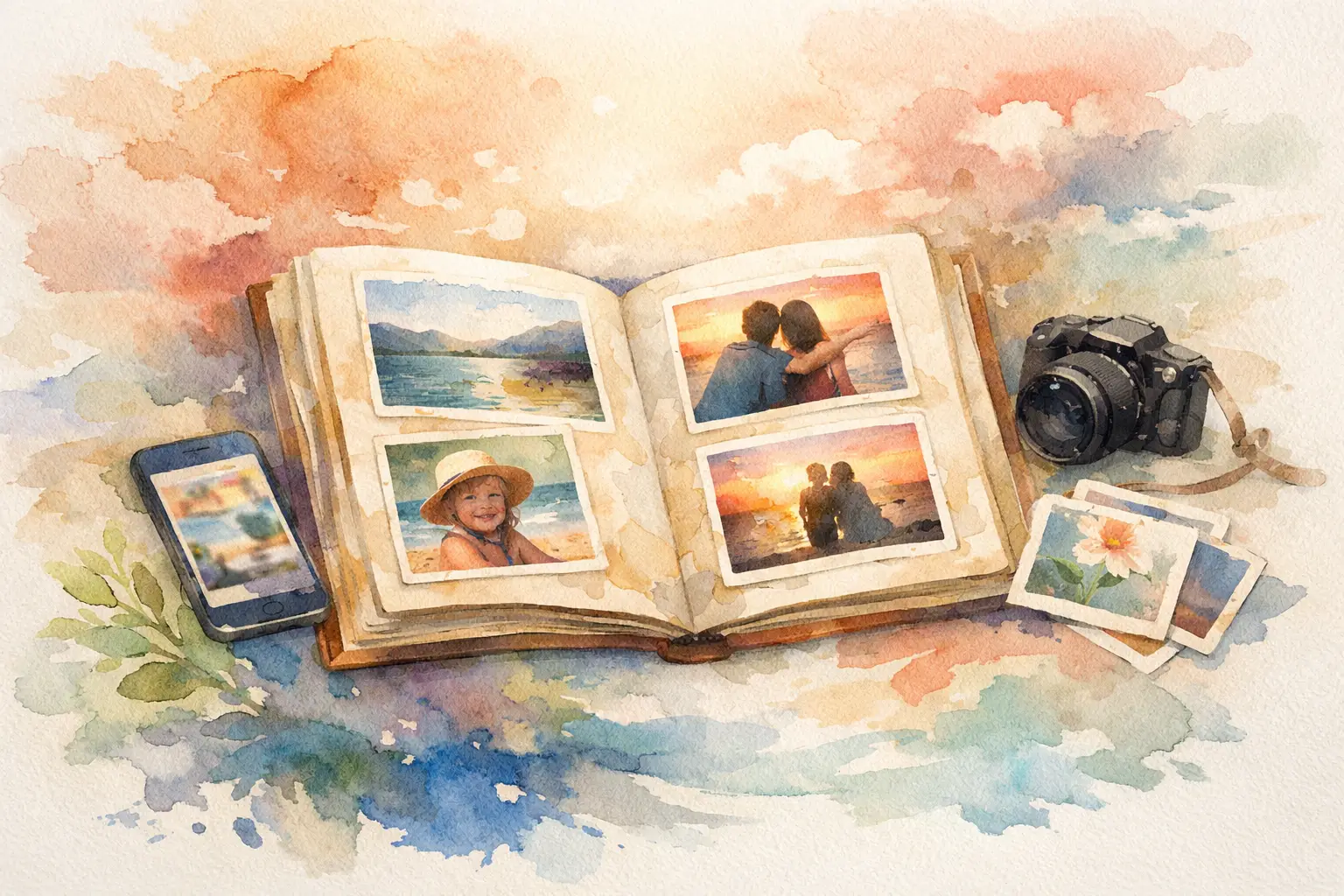
You can plan the playlist, lock in the cake, and set out disposable cameras at every table, but if collecting photos after the event means chasing ten group chats and three people who “swear they’ll send them later,” the shared photo album is already broken.
That’s the real problem. Most people do not need more places to store pictures. They need a better way to get everyone to actually contribute while the moment is still alive. For weddings, birthdays, vacations, team offsites, and brand events, a shared photo album only works when joining feels effortless and participation feels fun.
Why most shared photo album tools fall apart
The usual setup sounds fine on paper. Create an album. Send a link. Ask everyone to upload. Wait. Then keep waiting.
The drop-off happens fast because every extra step kills momentum. If guests need to download an app, make an account, remember a password, or search through their camera roll the next day, a huge chunk of photos never makes it in. Not because people do not care. Because the party moved on.
And then there is the social part. People are far more likely to take and share photos when the experience feels like part of the event, not admin after it. That is why old-school disposable cameras still have charm. They give people a role. Snap the moment. Pass it on. See what everyone got later.
A digital shared photo album should keep that energy, not replace it with homework.
What people actually want from a shared photo album
Most hosts are not asking for complicated gallery management. They want one private place where the best moments from everyone end up without friction. Guests want the same thing, too. They want to scan, shoot, upload, and get back to the fun.
That means the best shared photo album experiences tend to have a few things in common. They are fast to join, obvious to use, and built around real event behavior. Nobody wants to stand in the corner figuring out settings while the toast is happening.
Privacy matters too, especially for personal events. A wedding morning, a baby shower, a graduation dinner, a company retreat - these moments are not always meant for the public feed. A good shared album keeps the vibe intimate while still making it easy for everyone invited to participate.
Then there is the payoff. People share more when there is something to look forward to. A live gallery can work for some events. For others, a timed reveal is better. It creates anticipation and keeps the whole collection feeling like one complete story instead of random uploads dribbling in over a week.
The features that change participation
If you have ever watched guests ignore a photo-sharing link, you already know the issue is not storage. It is friction.
QR access solves more than people think. At an event, it is the difference between “I’ll do it later” and “oh, that took two seconds.” Put the code on tables, signage, invitations, welcome screens, or swag, and the album becomes part of the environment. No app store detour. No account wall. Just instant entry.
The camera experience matters just as much. Asking people to upload old photos from their camera roll is one kind of behavior. Giving them a simple in-the-moment capture tool is another. The second one wins because it meets people where the energy is. They are already holding their phone. Let them use it now.
That is also where limited-shot formats and disposable-style design get interesting. They make people more intentional. Fewer throwaway snaps. More personality. More perspective. It feels playful, not performative.
Filters can help, too, when they are used with restraint. The goal is not to bury every image under effects. It is to give the gallery a mood. A little nostalgia goes a long way when the event itself is emotional.
Offline capture is another underrated detail. Real events happen in venues with weak service, on beaches, on buses, in fields, inside conference halls, and at packed receptions where the network gives up by dinner. If the tool cannot keep up there, the album misses the exact moments people care about most.
Shared photo album vs. the usual alternatives
Text threads are chaotic. Social platforms are public by default and split photos across accounts, stories, and disappearing posts. Cloud folders can work, but they often feel utilitarian and get low guest participation unless the group is already highly organized.
That is the difference. The best event photo tools are not just places where photos can be uploaded. They are systems designed to get photos from people who would not otherwise bother.
For casual vacations, a generic album might be enough if the group is small and motivated. For weddings, milestone birthdays, and activations with dozens or hundreds of people, the math changes. You need something structured. You need something guests can understand instantly. You need something that feels social from the first scan.
Different events need different album behavior
A shared photo album for a wedding should feel private, polished, and emotionally paced. Guests want easy access during the day, but the couple may not want every image popping up in real time. A delayed reveal can make the gallery feel more cinematic and keep everyone focused on being present.
For birthdays and house parties, speed usually matters more. People want to join fast, take candid photos, and relive the mess the next morning. The more lightweight the experience, the better.
For company events and brand activations, participation is the real win. You are not just collecting memories. You are gathering multiple perspectives, candid moments, and proof that people actually engaged. In those settings, the best shared album balances ease with quality. It has to work across devices, support a lot of users, and produce content that is usable later.
So yes, the right setup depends on the event. But the same rule keeps showing up: if guests have to work for it, most of them will not.
How to choose a shared photo album that people will use
Start with one simple question: what will guests need to do before they can take a photo? If the answer includes downloads, logins, invitations buried in email, or too many taps, expect participation to dip.
Next, think about timing. Do you want photos visible instantly, or do you want a reveal moment later? Neither is universally better. Real-time galleries can fuel energy during conferences and brand events. Delayed access often feels better for weddings, trips, and celebrations where surprise is part of the fun.
Then look at the guest experience from ten feet away. Can someone understand it from a small sign at a crowded table? Can your least techy relative use it? Can your most online friend use it without rolling their eyes? That sweet spot matters.
Quality and compatibility matter after that. High-resolution uploads are worth caring about if you might print, post, or repurpose the images later. Broad device support matters because events are mixed-device by nature. The best tools do not punish guests for showing up with an older phone or bad signal.
One more thing: choose a format that matches the mood of the event. Some albums feel like storage. Others feel like part of the memory itself. That difference is bigger than it sounds.
When the album becomes part of the event
This is where a modern product can borrow the best part of disposable camera culture without the usual mess. A shared album should not just wait for photos. It should invite them.
That might mean QR-based entry that takes seconds. It might mean a digital disposable camera format with limited shots, nostalgic filters, and a gallery that opens later when everyone is back on the couch reliving the night. Done right, the album becomes an experience, not just an archive.
That is why platforms like Revel feel different when they are used well. They are built around participation first. More guests join. More photos get captured in the moment. More of the event survives from angles the host never would have seen.
And that is the whole point. The best shared photo album does not leave you begging friends for pictures three days later. It gives people a simple, social reason to contribute while the music is still on and the memory is still warm.
If you are planning something worth remembering, do not settle for a system people mean to use. Pick one they will actually use.
A writer interested in connection, memory, and the everyday moments that matter more than we realize.
Tags: Shared photo gallery , Shared photo album , Photo sharing , Guest photo sharing , Wedding photo sharing