Wedding Guest Photo Sharing That Works
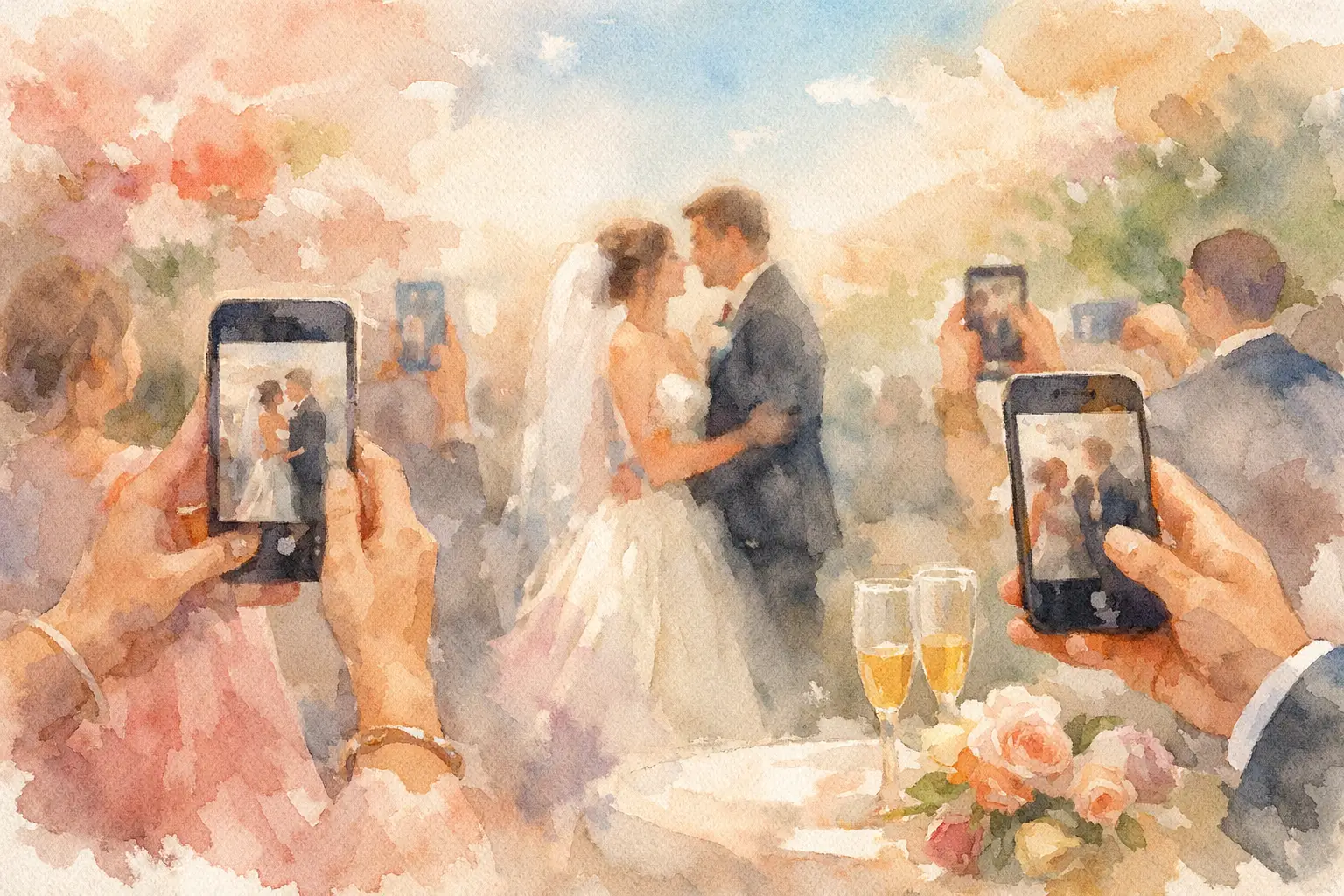
By the time the wedding weekend ends, the photos are already scattered. A few are buried in text threads. Some live on Instagram stories for 24 hours. Someone promises to AirDrop the dance floor videos and never does. Wedding guest photo sharing sounds simple until you actually try to collect everything.
That gap matters more than people expect. Your photographer captures the big moments beautifully, but guests capture the stuff that gives the day texture - the blurry laugh during speeches, the table selfie your aunt somehow nailed, the late-night fries, the pre-ceremony nerves, the tiny interactions you never got to see. Those are often the photos couples revisit the most. The problem is getting them in one place without turning your honeymoon into admin.
Why wedding guest photo sharing usually falls apart
Most wedding photo collection systems fail for one boring reason: too much effort. If guests need to download an app, create a login, remember a password, find the right album, and upload later, participation drops fast. Not because people do not care. Because weddings move quickly, phones fill up, and nobody wants homework after the reception.
Shared folders can work for a very organized crowd, but they are not exactly built for momentum. QR codes that point to a complicated setup page lose people. Hashtags are public, inconsistent, and dependent on guests posting at all. Group chats create chaos instead of a gallery. You end up with duplicate photos, compressed images, missing context, and a lot of "wait, can you send me that one?"
There is also a social factor. Guests are much more likely to contribute when the experience feels immediate and fun. If the photo-sharing method feels clinical, participation becomes passive. If it feels like part of the event, people actually use it.
What guests will actually do
The best wedding guest photo sharing systems respect one rule: the easier it is, the more photos you get.
That means guests should be able to join instantly, ideally by scanning a QR code and starting right away. No app download. No account creation. No long explanation from the maid of honor standing next to a welcome sign trying to troubleshoot someone’s browser. If the process takes longer than a few seconds, you lose the room.
It also helps when the experience gives guests a reason to participate beyond "please upload your photos later." A digital disposable camera format works well because it changes the behavior in the moment. Limited shots make people more intentional. Nostalgic filters make casual snaps feel cohesive. A timed gallery reveal builds anticipation. Instead of another upload task, it becomes part of the wedding.
That trade-off is worth calling out. If you want total volume with zero constraints, unlimited uploads may sound better. But if you want photos that feel curated by the crowd rather than spammed into a folder, a little structure helps. It depends on the vibe of your wedding and what kind of gallery you want to end up with.
How to choose a wedding guest photo sharing setup
Start with the guest experience, not the tech checklist. Ask one simple question: can my least techy guest figure this out in under 10 seconds?
If the answer is no, keep looking.
From there, privacy matters. Weddings are personal. Some couples are fine with social posting and public tags, but many want something more contained. A private album changes the tone. Guests can relax, share more freely, and know the photos are for the people who were actually there.
Image quality matters too. Compression is one of the most common disappointments in guest photo collection. The spontaneous shot of your grandparents dancing loses some of its magic when it looks like it was screenshot three times. If guest photos are worth collecting, they are worth keeping in decent quality.
Then think about timing. Some couples want instant access during the reception. Others like the delayed-reveal effect because it stretches the excitement past the event itself. There is no single right answer here. Immediate galleries are great for fast gratification. Timed reveals are better if you want a shared post-wedding moment instead of everyone disappearing into their phones halfway through dinner.
Where guest photo sharing fits into the wedding day
The smartest setups do not rely on one announcement and a prayer. They show up in a few natural places throughout the event.
At the entrance or welcome table, a QR code gives guests an easy on-ramp. On bar signs or table cards, it acts as a reminder once people settle in. Near the dance floor or photo booth area, it catches guests when they are already in picture-taking mode. A quick mention from the DJ or planner helps too, but the system should not depend on repeated explanations.
Good wedding guest photo sharing feels ambient. It is there when people want it, obvious when they look for it, and invisible when they do not need it. That is a big difference from tools that demand constant prompting.
There is also a practical reason to think about placement. Not every venue has perfect service. A setup that supports offline capture and syncs later is much more reliable than one that assumes flawless reception in a barn, vineyard, or concrete-walled hotel ballroom.
Why the disposable camera format hits differently
Traditional disposable cameras gave weddings a kind of magic, but they also gave couples a stack of underexposed tablescapes and one decent candids reel if they were lucky. The digital version keeps the charm and drops the mess.
That format works because it creates a shared game. Guests are not just documenting the wedding. They are participating in a tiny challenge - use your limited shots well, capture something funny, catch a moment other people might miss. Suddenly the gallery is full of perspective, not just coverage.
It also solves a modern problem. People take hundreds of photos and never sort them. A disposable-style setup narrows the field. Less clutter. More intention. Better odds that the final gallery feels like a story instead of a camera roll dump.
For couples who want polished but not stiff, this balance is hard to beat. You still get the professional album. You also get the guest-eye version of the day, with all the weird, sweet, unplanned moments intact.
The real win is participation
This is the part couples tend to underestimate. The quality of a wedding guest photo sharing tool is not just about where photos end up. It is about how many people actually contribute.
High participation changes everything. You get more angles, more candids, more generational overlap, more evidence of things you missed while talking to relatives at table seven. You also get a stronger shared memory for guests, because contributing makes people feel part of the record.
That is why friction matters so much. Every extra step filters out people who would have happily shared if it were easy. When the barrier disappears, contribution stops feeling like a favor and starts feeling automatic.
This is also where a platform like Revel fits naturally. The appeal is not just QR access or a clean gallery. It is the fact that guests can join instantly, shoot without downloading anything, and come back for a shared reveal later. Capture together. Reveal together. That is a much better wedding energy than "please upload your files when you get a chance."
What to avoid if you want more than a handful of photos
If your plan depends on guests remembering to do something tomorrow, expect a weak return. Tomorrow is when people travel home, recover, and forget. Wedding guest photo sharing works best when most of the action happens in the moment.
It also helps to avoid making the system feel like work. Long instructions, forced sign-ins, and clunky album interfaces all send the same message: not worth it. The opposite is what you want. Quick, playful, obvious.
And be honest about public social posting. It can complement guest sharing, but it is not a replacement for it. Plenty of guests never post. Others post selectively. Some keep their accounts private. A hashtag may capture a slice of the event, but almost never the full picture.
The best wedding galleries feel collective
There is something different about a gallery built by the room. It is less polished, more alive. You see the wedding from inside it, not just from the perimeter. The couple gets moments they missed. Guests get to revisit the night from each other’s perspective. The event keeps unfolding after it ends.
That is the real point of wedding guest photo sharing. Not more files. Better memory. Better access. Better odds that the small moments survive.
If you are planning a wedding, make the photo-sharing part as easy as the champagne pour. People want to contribute. They just need a system that meets them where they already are - phone in hand, in the moment, ready to catch something worth keeping.

A writer interested in connection, memory, and the everyday moments that matter more than we realize.
Tags: Wedding guest photos , Wedding photo sharing , Wedding photography , Photo sharing , Event photo sharing , Guest photo sharing