Shared Album Issues That Ruin Event Photos
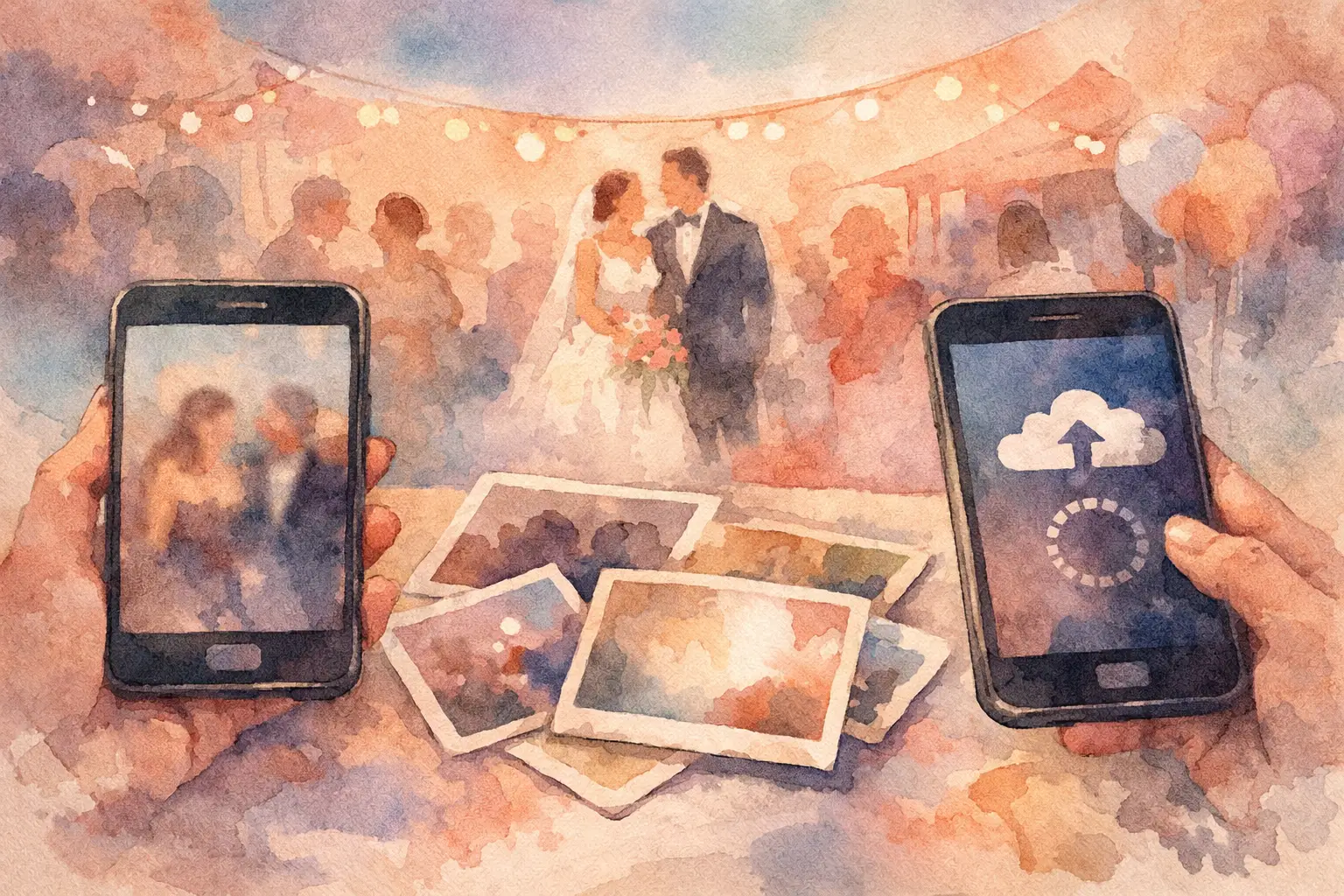
You know the moment. The party was great, everyone definitely took photos, and then somehow the memories vanish into five group chats, three AirDrop attempts, one blurry social post, and a folder nobody opens again. That mess is exactly why shared album issues keep showing up after weddings, birthdays, trips, and team events.
The problem usually is not that people forgot to take pictures. It is that the system for collecting them asks too much at the wrong time. Guests are busy. Phones are full. Attention spans are short. If sharing takes more than a few seconds, most people tell themselves they will do it later, and later never shows up.
Why shared album issues happen so often
Most shared albums fail in a boring way. Not with a dramatic crash, just with small bits of friction that quietly kill participation. One guest needs the right app. Another cannot find the invite link. Someone turns off photo syncing. A few people upload the next day, but most never circle back.
That is the real issue with traditional album sharing. It assumes people are willing to do admin work after the fun part is over. They are not. At a wedding, they are dancing. On a birthday trip, they are in motion. At a company event, they are networking, not sorting camera rolls.
There is also a psychology problem. The longer the gap between taking a photo and being asked to share it, the lower the participation rate. In the moment, contributing feels social. The next morning, it feels like homework.
The most common shared album issues at events
Some problems show up everywhere, whether you are planning a baby shower or running a brand activation.
Too many steps before guests can join
If guests need to download an app, make an account, verify an email, and learn a new interface, you have already lost a chunk of them. Every extra step is a filter. The less tech-comfortable guests drop off first, but even phone-native people bail when the process feels annoying.
This gets worse in mixed-age groups. Your college friends may join fast. Your aunt, your coworker, and the venue coordinator probably will not move at the same speed. A shared album only works if almost everyone can access it without needing tech support.
Photos stay trapped on personal camera rolls
People mean well. They really do. But when event photos live on each guest's phone, they get buried under screenshots, grocery lists, and random selfies by the next day. By the time someone asks for uploads, the urgency is gone.
That is why post-event collection is such a weak model. It relies on memory, motivation, and follow-through from dozens of people. Those are not dependable inputs.
Invite links get lost
One text thread becomes two. Someone asks for the link again. Another person uses the wrong album. A few never saw the message because they were added late. Suddenly your shared album is incomplete before it even starts.
This is one of the sneakiest shared album issues because it feels small, but it splits participation. Even a tiny access problem can create a two-tier event, where some guests are in the gallery and everyone else is outside of it.
Upload quality drops
Not every platform handles uploads the same way. Some compress files hard. Some struggle with mixed device types. Some do fine on strong Wi-Fi and badly when service is spotty.
That trade-off matters more than people think. If the final gallery looks noticeably worse than the originals, guests are less likely to value it, revisit it, or share it around afterward.
The album feels empty too early
Nothing discourages participation like walking into a nearly blank shared album. People take social cues from what they see. If there are only three photos inside, it can feel like nobody else is contributing.
The opposite is also true. When guests sense momentum, they join in. A good event photo system creates visible energy, not hesitation.
Why weddings, parties, and trips make this harder
Events are messy in the best way. Lighting changes. Signal drops. People move between rooms, tables, bars, beaches, buses, and dance floors. Your photo-sharing setup has to survive real behavior, not ideal behavior.
Weddings are the clearest example. You have multiple generations, a packed schedule, and a huge emotional payoff attached to the photos. The couple wants candids from every angle, but guests do not want to spend the night dealing with upload instructions.
Trips create a different problem. Photos are taken over several days, often across different locations and time zones, and people assume someone else is capturing the important moments. Without an easy shared flow, the best pictures stay scattered.
For brand activations and company events, the stakes shift again. You are not just collecting memories. You are collecting usable content. If participation is low or file quality is weak, the event loses value after it ends.
The real fix is reducing friction, not sending more reminders
A lot of organizers respond to shared album issues by chasing people harder. More texts. More follow-ups. More "please upload your pics" messages.
That rarely works well. It turns a fun event into a light administrative burden. It also puts all the pressure on the host, who already did enough.
The better fix is to make contribution happen in the moment, while excitement is still high. If guests can join instantly and start taking photos without stopping to create an account or sort through their camera roll later, participation changes fast. The album becomes part of the event instead of an afterthought.
That is the key distinction. Good photo collection systems meet people where they already are - phone in hand, attention on the moment, ready to snap something funny, sweet, chaotic, or unexpectedly great.
What a better shared album experience looks like
A strong setup does not just store photos. It shapes behavior.
Guests should be able to join in seconds. A QR code works because it removes the classic "send me the link" bottleneck. No hunting through texts. No complicated onboarding. Just scan and start.
The camera experience should feel native and immediate. If people can capture right there instead of promising to upload later, your album fills while energy is still alive. That solves one of the biggest shared album issues before it starts.
It also helps when the system is designed for participation, not passive viewing. Things like limited shots, simple prompts, or a delayed gallery reveal can turn photo-taking into part of the experience. That is more effective than hoping guests will voluntarily do cleanup work after the event.
This is where a platform like Revel fits naturally. It treats group photo collection like an actual event feature, not a file cabinet. That difference matters because people respond to experiences, not chores.
It depends on the event, and that matters
Not every gathering needs the same photo-sharing setup. A 12-person birthday dinner can survive with something lightweight. A 150-person wedding needs something much more foolproof. A conference or brand event has to balance speed, scale, and content quality.
There are trade-offs. A totally open album may feel easy, but it can also get messy fast. A more structured experience may increase consistency, but only if it stays simple. The sweet spot is a system with almost no guest friction and just enough structure to keep the gallery useful.
You also need to think about timing. Some events benefit from instant visibility. Others get more excitement from a timed reveal, where everyone sees the gallery together later. That delayed payoff can make the album feel more curated, more emotional, and way more fun to revisit.
How to avoid shared album issues before your next event
Start by asking a blunt question: would a guest be able to join and contribute in under ten seconds? If not, the process is too complicated.
Next, think beyond storage. You are not just choosing where photos live. You are choosing how people participate. The best setups create contribution during the event, not after it.
Then look at the human side. Guests need clear cues, easy access, and a reason to care. When the experience feels playful, immediate, and social, people contribute more. When it feels technical or delayed, they drift away.
The best event galleries do not happen because people are unusually organized. They happen because the system makes sharing feel effortless and worth doing right now. That is the difference between begging for photos after the fact and actually getting the night from everyone's angle.
If your last event ended with missing memories and a dead album link, the answer is not more reminders. It is a better setup from the start. Stop chasing photos. Build a moment people can join as it happens.

A writer interested in connection, memory, and the everyday moments that matter more than we realize.