Wedding Photoshoot Near Me: Planning Tips for Better Results
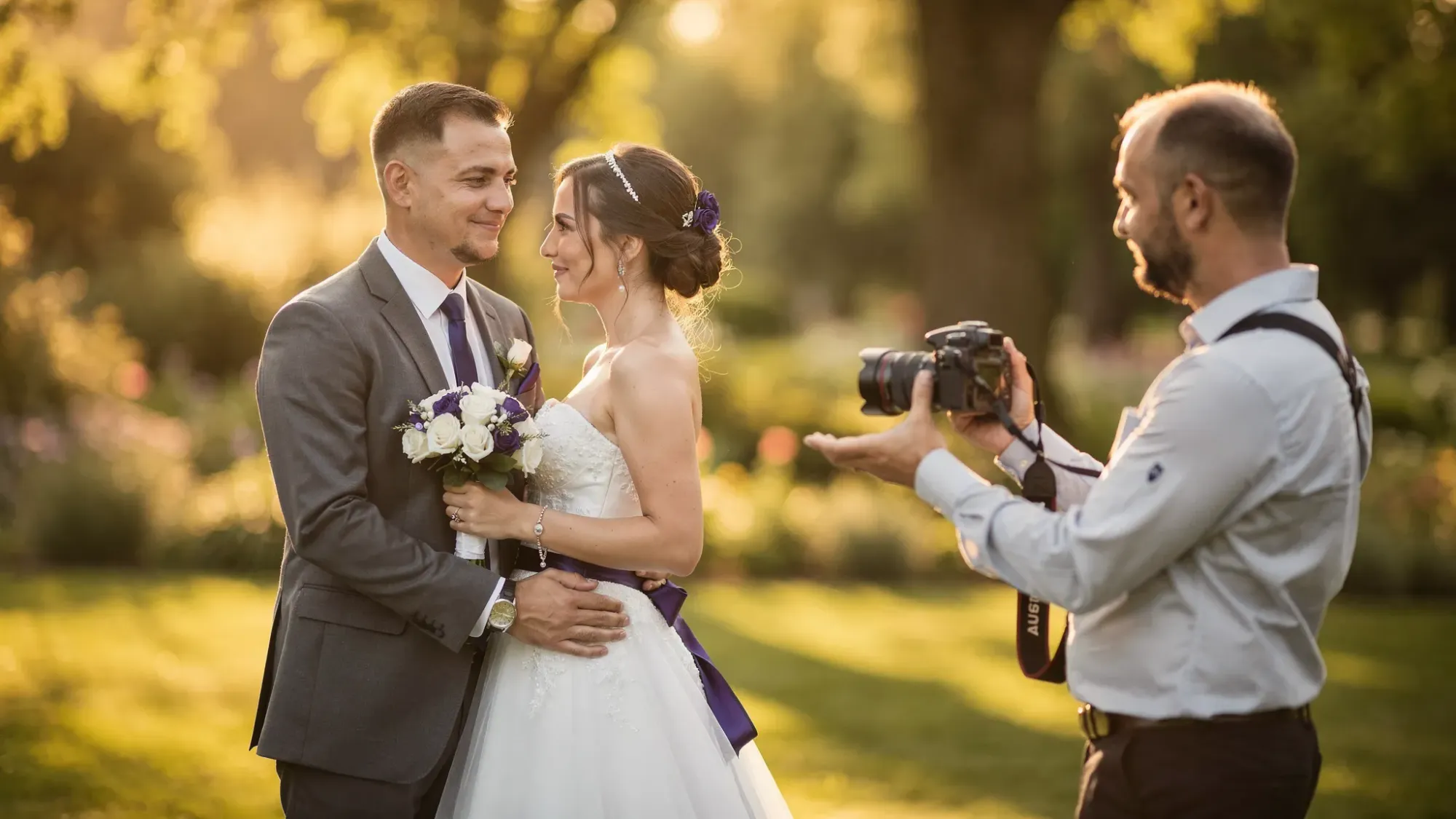
Typing “wedding photoshoot near me” into Google is usually the easy part. The hard part is making sure the photos feel like you, fit your timeline, and come out consistently great, even if the weather shifts or the location is crowded.
This guide focuses on practical planning moves that noticeably improve results, whether you’re booking an engagement session, bridal portraits, a courthouse wedding, or a full wedding day portrait block.
First, define what “wedding photoshoot” means for you
Before you contact photographers, get specific about the session type because it changes pricing, timing, and logistics.
Common options:
- Engagement session (often 60 to 120 minutes): low pressure, great for getting comfortable in front of the camera.
- Bridal portraits (solo or with wedding party): typically scheduled pre-wedding when hair and makeup can be controlled.
- Wedding day portraits: usually split between couple portraits, family formals, and wedding party.
- Day-after session: more freedom, fewer time constraints, often better light and locations.
A clear definition helps you compare photographers fairly and prevents timeline surprises.
How to search “wedding photoshoot near me” and shortlist the right pros
“Near me” should mean more than distance. For photos, local experience matters because it affects location suggestions, permit awareness, and backup plans.
Look for location fluency, not just pretty portfolios
When you browse portfolios, look for:
- Full galleries (not only highlights): consistent lighting and skin tones across an entire session.
- Work in conditions like yours: indoor low light, midday sun, beach wind, winter gloom, etc.
- Familiarity with popular local spots: the best locals know where crowds gather, where parking is easiest, and what time light hits a specific overlook.
Read reviews for planning behavior (not just friendliness)
In reviews, scan for keywords that reveal how they operate:
- “helped with timeline”
- “scouted locations”
- “great with family photos”
- “handled rain plan”
- “made us feel comfortable”
Those details predict your experience more than “nice photos” does.
Ask 5 questions that quickly reveal fit
Use these in inquiries or consult calls:
- What locations do you recommend near (venue/neighborhood), and why?
- How do you handle harsh sun or bad weather? Do you bring lighting?
- What does your posing direction feel like (guided vs candid)?
- How do you run family formals efficiently?
- What deliverables are included and what’s the turnaround time?
If they answer clearly and confidently, you’re likely in good hands.
Pick a location like a photographer (light, backgrounds, logistics)
A gorgeous location can still produce stressful photos if it’s crowded, windy, or full of harsh shadows.
Here’s a simple way to evaluate options.
| Location factor | What to check | Why it affects results |
|---|---|---|
| Light | Is there open shade? Does the sun set behind buildings/trees? | Better light means smoother skin, fewer squints, and less editing strain |
| Crowd flow | Will people walk behind you constantly? | Fewer distractions, more relaxed expressions |
| Parking + walking | How far in outfits and shoes? | You’ll conserve energy and stay on schedule |
| Permits/rules | Are photos allowed? Any fees? | Prevent last-minute interruptions or fines |
| Backup spots | Is there a nearby covered area? | Saves the session if weather changes |
Permits tip: many parks and public spaces have rules around professional photography. If you’re unsure, check the location’s official site. For U.S. national parks, start with the National Park Service guidance on filming and photography permits.
Timing: schedule for flattering light and less stress
The fastest way to upgrade photo quality is to schedule around good light.
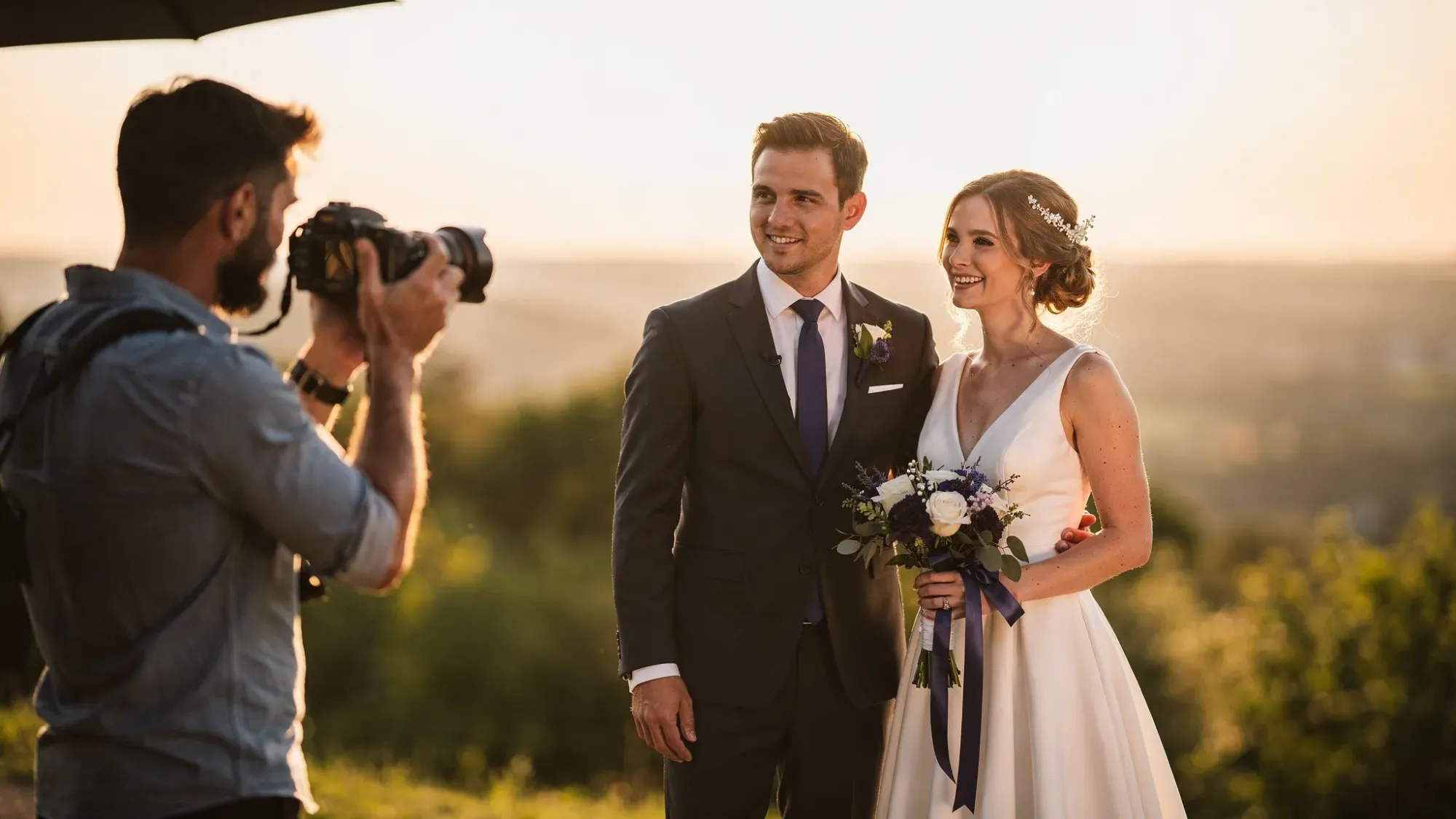
Golden hour is popular for a reason
Golden hour (shortly after sunrise or before sunset) tends to be softer and warmer, which is generally flattering and easier to shoot. If you want a precise estimate for your date and city, use NOAA’s Sunrise/Sunset Calculator.
If you’re stuck with midday, use these workarounds
Midday sun is not “bad,” it just requires smarter choices:
- Choose open shade (the edge of a building, a line of trees, a covered walkway).
- Avoid patchy light under sparse trees (it creates “spotlight” patches on faces).
- Pick backgrounds that won’t blow out (light walls can be fine if you’re shaded).
Build a timeline that protects your portrait time
If this is for a wedding day, portrait time gets eaten by travel, bustle help, and family wrangling. A simple buffer plan helps more than any posing trick.
| Moment | Typical time block | Planning note |
|---|---|---|
| Couple portraits | 20 to 45 min | Longer if you want multiple locations or outfit changes |
| Wedding party | 15 to 30 min | Keep it moving, pick one consistent background |
| Family formals | 15 to 30 min | Depends on number of groupings and how organized the list is |
| Travel/parking | 10 to 30 min | Often underestimated, especially downtown or at parks |
(Your photographer or planner can tailor this to your venue and culture-specific traditions.)
Prepare outfits, details, and “micro choices” that show up on camera
Small prep details prevent the most common photo regrets.
Outfit and styling checks
- Fit and comfort: If you can’t breathe or move, it will show in shoulders and posture.
- Underlayers: plan underwear lines, bra straps, shapewear edges, and sock marks.
- Shoes: bring a comfy pair for walking between spots, even if you shoot in different shoes.
- Hair in wind: if you’re outdoors, consider pins or a style that stays intentional.
Bring a tiny emergency kit
You don’t need a suitcase. A small pouch is enough:
- blotting papers or translucent powder
- tissues
- water
- stain remover pen
- bobby pins
Create a shot list that helps, not one that handcuffs
A shot list works best when it focuses on must-have people and moments, not 80 Pinterest poses.
For engagement or couple sessions
Pick 6 to 10 “anchors,” such as:
- one wide scenic shot (establishing)
- one close, quiet moment
- walking and laughing (movement)
- a dramatic backlit option if light allows
- one pose that shows the ring clearly
For wedding day family formals
This is where lists are essential. Keep it simple and group by who is present.
| Category | Examples of groupings |
|---|---|
| Couple + immediate family | couple with each set of parents, couple with siblings |
| Couple + extended family | couple with grandparents, aunts/uncles, cousins |
| Couple + wedding party | full group, then one side at a time |
Efficiency tip: assign one assertive person (planner, sibling, or friend) to call names and pull people in while the photographer focuses on lighting and framing.
Practice being photographed (yes, it’s a skill)
You don’t need modeling experience. You need familiarity.
Try this once before the shoot:
- Stand in front of a mirror and relax your shoulders.
- Practice a slow inhale and exhale (it softens facial tension).
- Decide what to do with hands (hold hands, hold a bouquet, hand in pocket, arms around waist).
If you’re doing an engagement session, it doubles as a rehearsal for the wedding day. You learn what direction feels natural, and your photographer learns what makes you look most like yourselves.
Plan the “photo experience” beyond the pro session (so you don’t miss candid moments)
Professional portraits are only part of the story. Some of the most meaningful photos come from guests: the moments you don’t see, the in-between laughs, and the last dance chaos.
A simple way to capture those without chasing people later is to set up an event-only shared camera.
With Revel.cam, couples or planners can create a private Moment and let guests join instantly via QR code, NFC tap, or link. Guests take photos and they upload automatically to one gallery, with options like guest photo limits, a Moment end time, and host review/moderation before sharing.
This works especially well for:
- getting-ready photos from multiple rooms
- cocktail hour candids while you’re doing portraits
- after-party photos that rarely make it to the couple
Frequently Asked Questions
How far in advance should I book a wedding photoshoot near me? Many couples book as soon as they have a date and venue, especially for peak Saturdays. If you’re flexible (weekday, off-season, sunrise), you may find more availability.
What should I wear for an engagement or bridal photoshoot? Wear something that fits comfortably, photographs well in motion, and matches the location vibe. Avoid busy micro-patterns, and plan layers if temperatures change quickly.
Do I need a permit for a wedding photoshoot in a public park? Sometimes, yes. Rules vary by city, park district, and site. Check the location’s official website or call ahead, especially for tripod use, large groups, or popular overlooks.
What’s the best time of day for a wedding photoshoot? Golden hour is often the easiest for flattering light, but great photos are possible anytime with good location choices (open shade) and a photographer who can handle harsh light.
How can I collect guest photos without making everyone download an app? Use a QR-based, no-signup flow. Revel.cam lets guests scan a QR code (or tap NFC) and go straight to a camera that uploads to a private event gallery automatically.
Make your wedding photo story feel complete
Your local photographer will handle the polished portraits. For everything else, friends, family, and the wedding party are already taking photos.
Create a private shared gallery in minutes with Revel.cam, then place a QR code at the welcome table, bar, and reception tables so guest photos upload automatically during the day. When your Moment ends, you can review and share a clean, curated gallery without chasing texts or links.
A writer interested in connection, memory, and the everyday moments that matter more than we realize.
Tags: Wedding photos , Wedding photography costs , Wedding photo gallery , DYI wedding photography , Wedding photo sharing