How to Collect Guest Photos Without Chasing
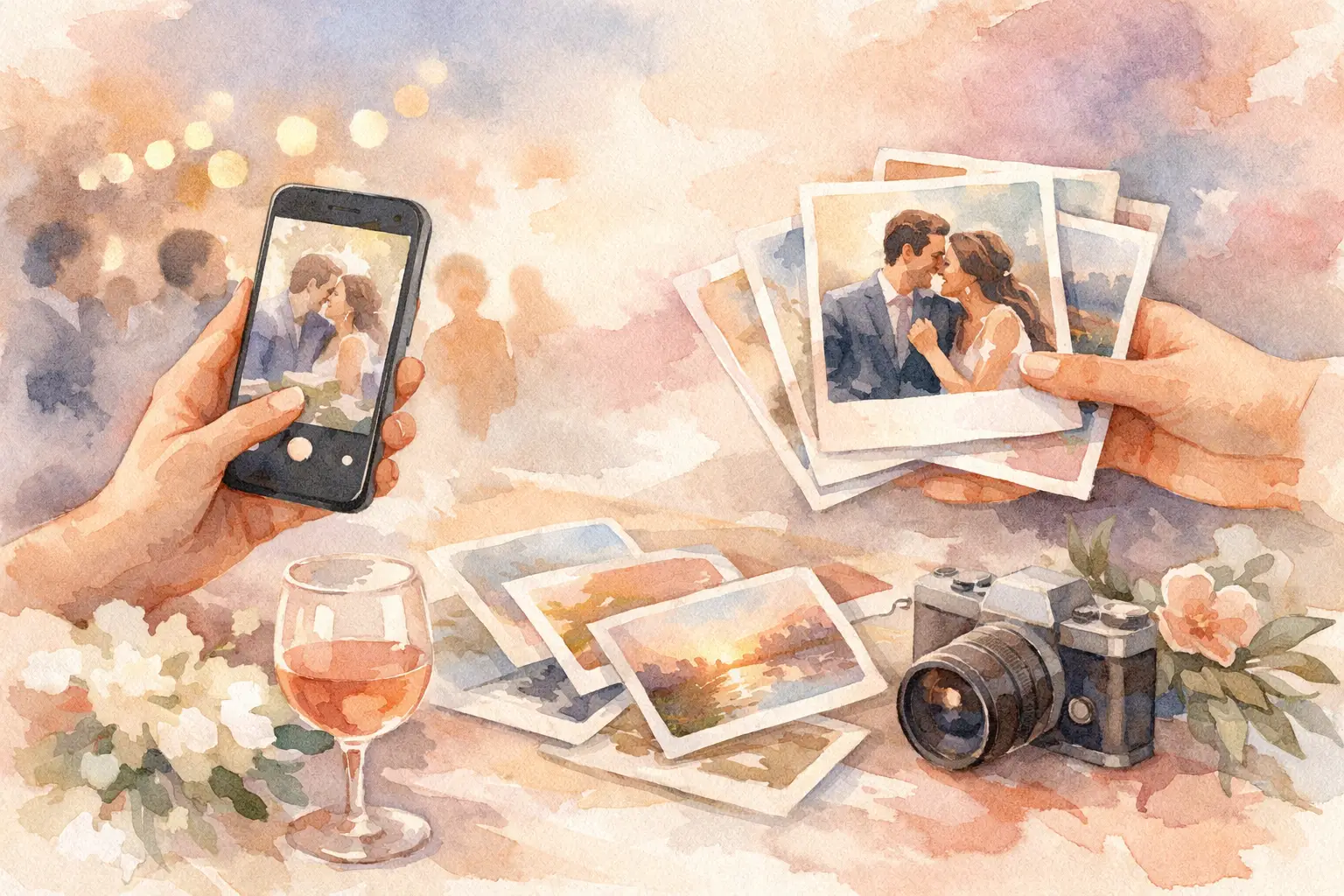
The most chaotic part of any great event usually starts after it ends. Everyone had fun. Everyone took photos. And somehow those photos vanish into camera rolls, half-dead group chats, Instagram stories, and that one person who swears they’ll send everything tomorrow.
If you’re figuring out how to collect guest photos, the real problem is not whether people took them. It’s whether your system makes sharing feel easy enough to happen in the moment. That’s the whole game. The best photo collection setup is the one guests barely have to think about.
Why collecting guest photos usually falls apart
Most hosts assume guests just need a reminder. In reality, they need less friction.
A shared album sounds simple until people have to download an app, make an account, search for the link, remember their password, or sort through hundreds of photos after the event. By then, the energy is gone. Participation drops fast when sharing feels like homework.
There’s also a timing problem. If you wait until the next day to ask for photos, you’ve already lost a chunk of them. People get busy, forget which images came from which event, or decide their photos are too random to bother sending. Meanwhile, the best shots are often the candid ones guests never think to share unless the process is baked into the event itself.
How to collect guest photos the smart way
If you want more photos from more people, build collection into the experience before the first drink is poured, the first speech starts, or the first dance happens.
The easiest approach is a single access point every guest can use instantly. That usually means a QR code guests can scan on arrival, at the table, near the bar, on signage, or wherever people naturally pause. No scavenger hunt. No long instructions. No "I’ll do it later."
This matters because contribution is emotional as much as technical. People are much more likely to participate when it feels social, fast, and part of the event vibe. They’re less likely when it feels like file management.
A strong setup usually has four things working together: instant access, no app download, no account creation, and a clear reason to join right now instead of later. If any one of those is missing, your collection rate usually drops.
Set up photo collection before the event, not after
The best time to solve photo sharing is before anyone takes a single picture.
Start by deciding what kind of event you’re running. A wedding, birthday, company offsite, graduation party, and brand activation all have different rhythms. At a wedding, guests are moving between ceremony, cocktail hour, dinner, and dancing. At a conference, they’re bouncing between sessions and networking. Your collection method should match that flow.
For social events, simplicity wins every time. Guests should be able to join in seconds and start shooting immediately. For professional events, you may also care about content quality, branding, and making sure the gallery stays private. Either way, the same rule applies: if guests have to stop and figure it out, fewer of them will contribute.
This is where a QR-based system works especially well. Put it where people already look. Welcome signs, table cards, drink menus, photo booth signage, event screens, and printed handouts all work because they meet guests where they are instead of asking them to remember a link later.
Make participation feel fun, not administrative
People take more photos when the experience has a little momentum behind it.
That does not mean you need to turn your event into a tech demo. It means the photo-sharing process should feel like part of the fun. A digital disposable camera format is a great example. Limited shots, nostalgic filters, and a delayed reveal give guests a reason to play along instead of dumping random uploads into a folder they’ll never revisit.
That trade-off is worth understanding. Unlimited uploads can be useful for content-heavy events, but they also tend to create clutter. A more curated format often gets better participation because it feels intentional. Guests are not just uploading files. They’re contributing to a shared memory.
The delayed gallery reveal is especially smart for social events. It keeps people present, cuts down on instant posting pressure, and creates a second wave of excitement when everyone gets to see the gallery together later. Capture together. Reveal together. That emotional payoff matters more than most hosts realize.
The easiest way to get more guests to actually contribute
You do not need a long speech. You need one clear prompt, repeated in the right places.
Tell guests exactly what to do in one sentence. Something like: scan the code, take photos, and they’ll appear in the shared event gallery. That’s it. Short beats clever here.
Then reinforce it naturally throughout the event. Your DJ can mention it once. Your MC can mention it. If you have signage, the call to action should be impossible to miss. If the experience is mobile-first and friction-free, that reminder is usually enough.
A few practical details also make a real difference. Test the QR code before the event. Make sure signage is readable in low light. Put the code in more than one location. Assume not everyone arrives at the same time. And if your event has weak service, use a system that can handle offline capture and sync later. That last part matters more than people think, especially at outdoor venues, travel events, and packed conference spaces.
What to avoid when collecting guest photos
Some common solutions sound good but quietly kill participation.
Texting everyone after the event is the obvious one. It feels personal, but it creates work for every guest and even more work for you. You’ll get a few replies, a handful of compressed images, and a pile of people saying they forgot.
Shared cloud folders are another trap. They can work for small, organized groups, but most guests do not want to sort through permissions, uploads, and folder structures while they’re trying to enjoy themselves. The same goes for app-based tools that require downloads or account creation. Every extra step cuts your contribution rate.
Hashtags are even less reliable for private events. They depend on public posting behavior, which many guests simply do not want. They also split your event photos across platforms and often miss the best moments entirely.
If privacy matters, this is not a small issue. Weddings, baby showers, family parties, and internal company events often need a closed gallery, not a social media scavenger hunt. A private album gives people more confidence to participate freely.
How to collect guest photos for different event types
The right setup depends on what kind of memory you’re trying to build.
For weddings, candid guest perspective is the gold. Your photographer captures the polished story. Guests capture the weird, sweet, blink-and-you-miss-it moments in between. Here, low friction and a private gallery matter most.
For birthdays, showers, vacations, and reunions, the goal is usually volume and spontaneity. You want lots of angles, lots of personalities, and no one asking where to upload. A playful, mobile-first experience tends to outperform formal sharing requests.
For company events and brand activations, there’s a different balance. You may want higher-resolution uploads, stronger moderation, and easier access to content after the event. But even in professional settings, the same truth holds: if participation feels clunky, guests and attendees will skip it.
That’s why platforms designed around instant joining tend to do better than generic storage tools. When people can scan, shoot, and contribute without an app or account, the barrier is low enough that they actually do it. Revel is built for exactly that kind of participation-first event flow.
The best guest photo systems feel invisible
This is the part most people miss. Great event photo collection should not feel like a separate task layered onto the event. It should feel like the event naturally includes it.
When the system is right, guests join quickly, contribute casually, and never have to be chased. The gallery grows from multiple perspectives at once. You get the table-side candids, the dance floor chaos, the behind-the-scenes moments, and the little in-between shots no photographer could catch alone.
That is what makes the difference between a gallery that looks complete and one that feels alive.
So if you’re deciding how to collect guest photos, do not start with storage. Start with behavior. Make it easy. Make it immediate. Make it fun enough that people want in. Once that happens, the photos stop being something you have to hunt down and start becoming part of the experience itself.
Stop chasing photos. Start collecting them.
A writer interested in connection, memory, and the everyday moments that matter more than we realize.
Tags: Guest photo sharing , Guest photo capture , Guest photo uploads , Wedding guest photos , Guest photo album