Why Guests Do Not Share Photos
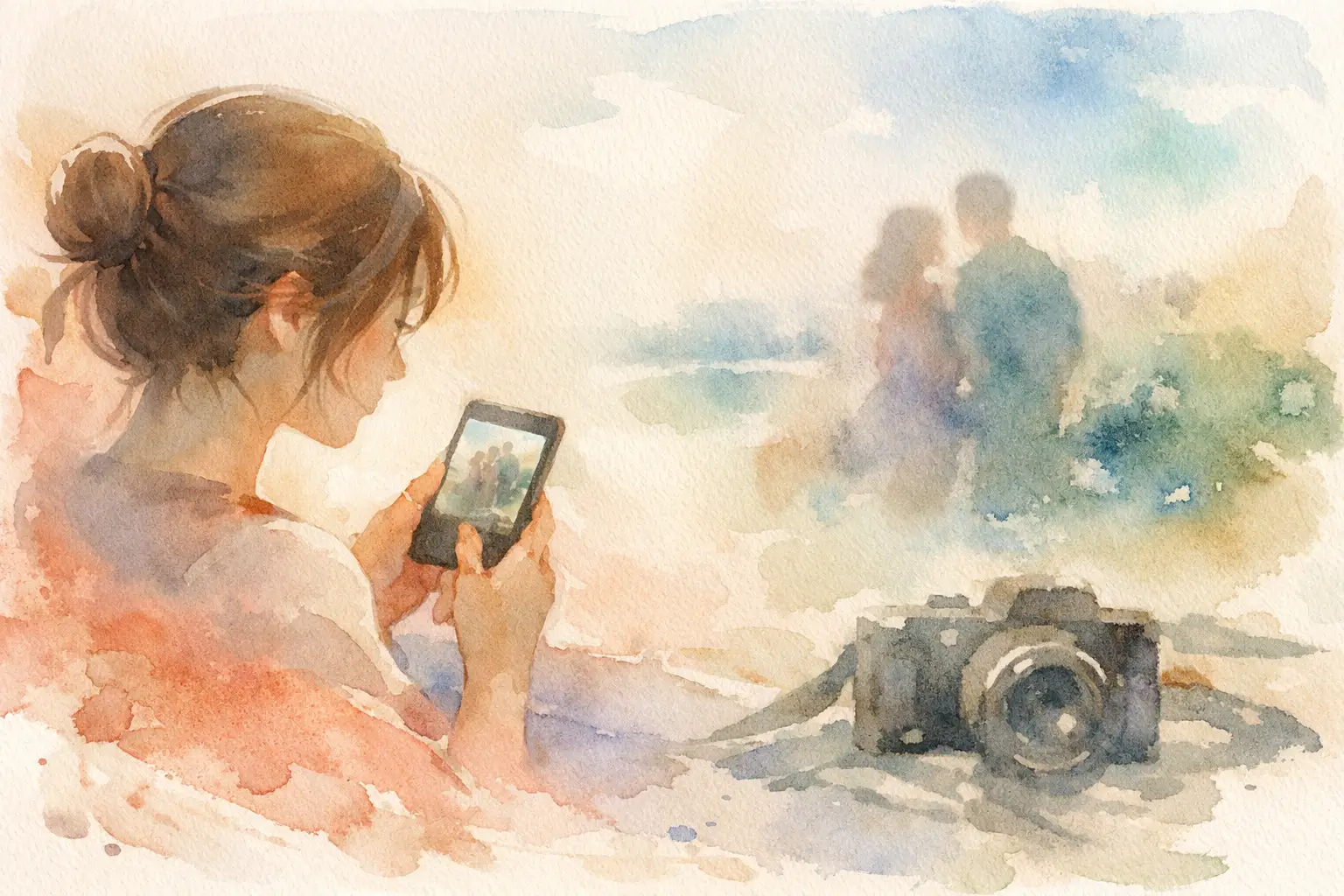
The group chat says, “Drop your pics here,” and then... nothing. Maybe two blurry screenshots. One selfie. A video nobody can download. That gap between a great event and an actually shared photo album is exactly why guests do not share photos - not because they did not take them, but because sharing usually asks for one step too many at the wrong moment.
If you are planning a wedding, birthday, vacation, brand event, or team offsite, this matters more than it sounds. The problem is not a lack of memories. It is a participation problem. People capture plenty. They just do not follow through.
Why guests do not share photos after an event
Most guests are not intentionally withholding photos. They are busy, distracted, mildly overwhelmed, or assuming someone else will handle it. That sounds small, but at events, small points of friction kill momentum fast.
The biggest reason is simple: sharing is almost never built into the moment. Taking the photo feels fun and instant. Sharing it later feels like admin. Once a guest has to sort through their camera roll, choose the good ones, find the right link, log in, upload, and wait, the energy is gone.
That is the pattern behind why guests do not share photos. The event creates excitement. Traditional sharing tools create homework.
There is also a social layer to it. Guests often hesitate because they are not sure what is worth sharing. They may have ten decent photos but no obvious hero shot. They may think their angle is redundant, their lighting is bad, or their candid is too random. When the bar feels unclear, people default to doing nothing.
Then timing does what timing always does. The event ends. Everyone goes home. Life resumes. What felt urgent for six hours becomes infinitely postponable by the next morning.
The real friction points guests run into
Photo sharing fails in predictable ways. Most of them have nothing to do with whether guests liked the event.
Too many steps
The fastest way to lose contributions is to ask guests to do setup. Download an app, create an account, verify an email, remember a password, grant permissions, then upload. That is not a sharing flow. That is a mini onboarding funnel in the middle of someone trying to enjoy a party.
Even one extra step can cut participation hard. People scan a code more readily than they install something. They tap a camera much faster than they complete a form. Convenience is not a nice-to-have here. It is the whole game.
They plan to do it later
Later is where event photos go to disappear.
Guests absolutely mean well when they say they will send photos tomorrow. But tomorrow comes with work, errands, travel, kids, recovery, and 300 other camera roll items. By then, the emotional temperature has dropped. What felt like part of the experience now feels optional.
That delay is one of the clearest answers to why guests do not share photos. Sharing that depends on follow-up is usually sharing that never happens.
Their camera roll is chaos
This one gets underestimated. A guest might have 200 photos from a weekend trip, a wedding, or a conference. Mixed in are screenshots, grocery lists, outfit mirror checks, accidental pocket photos, and twelve versions of the same toast. Asking them to organize before they share creates a silent bottleneck.
People are much more likely to contribute when they can do it as they go, while the event is still happening, instead of curating afterward like unpaid content editors.
They do not want to spam anyone
Text threads and group chats are terrible galleries. Guests know this. Dumping 35 photos into a chat feels chaotic. Sending an album link to everyone can feel weirdly formal. Posting publicly on social can exclude the people who were actually there.
So they hold back. Not because they do not want to share, but because the available formats feel awkward.
They assume someone else already got the shot
At social events, diffusion of responsibility is real. If there is a photographer, a designated organizer, or just one friend who always documents everything, everyone else relaxes. They think the memory is covered.
But the best event galleries are rarely built from one person’s perspective. They come from the messy, funny, off-angle, in-between shots that only other guests catch. When people assume coverage exists, those photos never make it into the story.
Privacy is unclear
Guests are more cautious than hosts sometimes realize. They may not know where photos are going, who can see them, whether they will be posted publicly, or whether their kids, coworkers, or plus-ones will show up online. If the destination feels vague, people hesitate.
Private, clearly defined sharing gets better participation because it answers the unspoken question: where is this actually going?
Why good intentions are not enough
A lot of hosts think a reminder will solve the issue. Sometimes it helps. Usually it does not fix the system.
You can ask for photos in the invite, mention it during the event, remind people in the thank-you text, and still end up with a thin album. That is because intention is weaker than friction. Always.
If the process is clunky, reminders become nagging. If the process is easy, reminders are barely necessary.
This is where event design matters. Not just decor, schedule, and playlist - photo flow. If guests have to remember a task later, contribution drops. If sharing is built into the actual experience, contribution rises because the behavior happens at the exact moment people are already engaged.
The psychology behind participation
People share more when it feels playful, low-pressure, and collective.
That means the best systems do not make guests feel like they are submitting files. They make them feel like they are part of the memory. A little structure helps. So does a little novelty. Disposable-camera energy works for a reason: it gives people permission to capture real moments instead of chasing perfect ones.
There is a trade-off here. If you make the experience too polished or performance-driven, some guests get self-conscious. They stop contributing unless the shot feels “good enough.” But if you make it casual and immediate, people participate more freely. You get less overthinking and more actual event texture.
The reveal matters too. When guests know their photos are contributing to a shared gallery everyone will enjoy later, the payoff becomes social. It is not just upload-and-forget. It is capture together, then relive it together.
What actually gets guests to share more photos
The fix is not complicated, but it has to be intentional.
First, remove setup. If guests can join instantly with a QR code and start taking or uploading photos without an app or account, you eliminate the drop-off point where most participation dies.
Second, keep it inside the moment. The more photo sharing feels like part of the event, the better the response. People are much more likely to contribute when they can do it on the spot instead of after the fact.
Third, make the destination obvious. Guests should know exactly where photos go and who will see them. Private shared albums outperform vague requests because they feel contained and purposeful.
Fourth, give the experience some shape. Limited shots, a timed reveal, or a shared album everyone can unlock later creates anticipation. That changes the behavior from “I should send my photos sometime” to “I want to be part of this.”
That is part of why tools built for events outperform generic folders and text threads. They are not just storage. They are participation design.
Revel works in that lane for a reason. It removes the annoying parts that make people bail, then adds just enough structure to make sharing feel fun again.
Why this matters for hosts, planners, and brands
When guests do not share photos, the loss is bigger than a missing album.
For weddings and birthdays, you miss the candid side of the day - the table laughs, dance floor chaos, behind-the-scenes moments, and little interactions the couple or host never saw. For vacations, the whole trip ends up documented through one or two people instead of the full group.
For company events and brand activations, the cost is even more practical. Low sharing means weaker recap content, fewer authentic attendee perspectives, and less usable media after the event. If your event depends on energy, participation, or community, your photo system should support that instead of slowing it down.
That does not mean every event needs the same setup. A formal gala may need a cleaner, more controlled experience than a birthday weekend. A conference audience may care more about speed than nostalgia. A wedding crowd may respond better to emotional payoff than utility. It depends on the event, the audience, and how social the environment already is.
Still, the pattern holds: if sharing feels easy, private, and built into the moment, guests contribute. If it feels like a chore, they do not.
So if you are wondering why the album always ends up half-empty, do not blame your guests too quickly. Most people are not unwilling. They are just one extra tap away from opting out. Build around that reality, and the photos show up.
A writer interested in connection, memory, and the everyday moments that matter more than we realize.
Tags: Guest photo sharing , Guest photo album , Guest photo capture , Guest photo uploads , Wedding guest photos