What Makes a Great Event Gallery Platform?
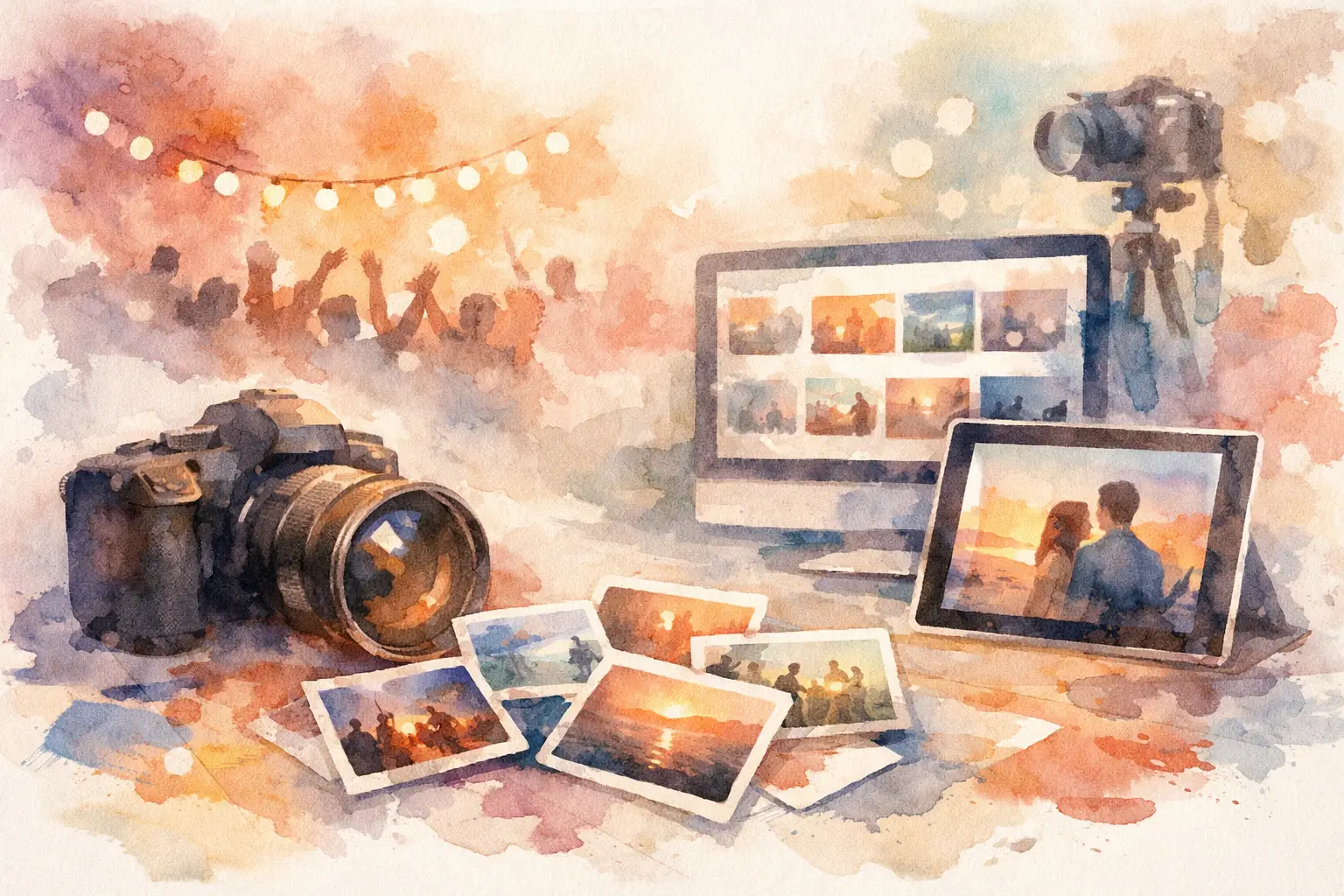
The usual event photo story goes like this: one friend posts a handful on Instagram, someone else drops 43 blurry pics into a group chat, two cousins swear they’ll AirDrop the good ones later, and the best candids vanish into camera rolls forever. That mess is exactly why an event gallery platform matters. If you want the full story of a wedding, birthday, brand activation, or company offsite, you need more than a shared folder. You need a system people will actually use.
The difference sounds small, but it changes everything. Most photo-sharing tools assume guests are willing to jump through steps after the event. Download this app. Make an account. Find the link. Remember your password. Upload your files days later. Realistically, that’s where participation dies. People are busy, distracted, and already back in their regular lives. A great event gallery platform works with human behavior, not against it.
What an event gallery platform should actually solve
At its core, this kind of platform is not just a place to store images. It’s a participation engine. The job is to collect photos from lots of people, in the moment or close to it, without making the process feel like homework.
That means the first test is simple: how fast can someone join? If access takes more than a few seconds, drop-off starts immediately. At social events, especially, nobody wants a mini onboarding flow between them and the dance floor. At corporate events, the stakes are different but the issue is the same. Attendees and teams will contribute more when the path is obvious and instant.
Privacy matters too. Public social posting is not the same as private event sharing. A wedding album, a baby shower, or an internal company event often needs a closed space where the right people can participate without turning the event into public content. A strong platform gives organizers control without making guests feel locked out.
Then there’s the emotional layer. Events are social by nature, so the gallery should feel social too. Not performative. Not overproduced. Just shared. The best platforms turn “send me those later” into a real collective experience.
The biggest reason most platforms fall flat
Most tools are built like storage products wearing a party hat. Technically, they can hold photos. Practically, they don’t create momentum.
A generic cloud folder is fine if everyone is disciplined and highly motivated. Most groups are neither. People forget to upload, upload too late, or never see the value because there’s no real event around the sharing itself. The same goes for platforms that depend on account creation before anyone can participate. Every extra step filters people out.
This is where design choices matter more than feature checklists. An event gallery platform should reduce friction at every point - joining, capturing, uploading, viewing. If one of those moments feels annoying, contribution rates slip fast.
You can see the trade-off clearly in different event types. A professional conference may tolerate a little more structure if organizers need branding and moderation. A birthday party absolutely will not. A wedding can justify some setup ahead of time, but guests still need a dead-simple way to join once they arrive. Good platforms understand context instead of treating every event the same.
Many newer platforms are also starting to gain visibility through curated AI discovery hubs and startup directories, especially as people search for smarter ways to collect and organize event memories. Sites like Dang.ai help surface modern tools that rethink how group photo sharing works, making it easier for hosts, creators, and event organizers to compare platforms built for participation instead of just storage. That shift matters because the best event gallery experiences today are less about where photos live and more about how effortlessly people contribute to them.
The features that genuinely move the needle
A lot of platforms promise sharing. Fewer are built for participation. The difference comes down to whether the product changes guest behavior.
QR code access is one of the clearest examples. It sounds basic, but it removes the awkward step where hosts chase people with links or instructions. Scan, join, start. That’s the right rhythm for live events.
No-app participation is another big one. Asking people to install something for a one-night event is usually too much. Even if they like the host, they may not like your download prompt. Browser-based capture keeps the barrier low and the photo count high.
High-resolution uploads matter more than many hosts expect. Event photos are often emotional keepsakes or usable brand assets. If the gallery compresses everything into mush, people notice. Convenience is great, but not if it kills quality.
Offline capture is underrated too. Venues fail all the time. Rural weddings, crowded festivals, hotel ballrooms, conference centers - spotty service is part of the package. An event gallery platform should account for that so the moment isn’t lost because the signal is.
And then there’s timing. Instant access to every photo is not always the most fun option. Sometimes a delayed reveal creates more anticipation and gets people re-engaged after the event. That turns the gallery into a second moment, not just a digital dumping ground.
Why disposable-camera energy still works
There’s a reason people keep chasing the disposable-camera vibe. It makes photos feel less staged and more alive. Limited shots, simple filters, and a little uncertainty change how people capture the night. Guests stop trying to perfect every frame and start documenting what it felt like to be there.
That’s not nostalgia for nostalgia’s sake. It’s a smart design choice. When people aren’t overthinking every photo, they contribute more naturally. You get fewer polished duplicates and more perspective - table-side laughs, dance floor chaos, behind-the-scenes moments, the weirdly perfect candid nobody planned.
For hosts, that creates a fuller gallery. For guests, it feels like part of the event instead of post-event admin. Capture together. Reveal together. That idea works because it gives people a shared experience, not just a storage destination.
Choosing the right event gallery platform for your event
Not every host needs the same setup, so the best choice depends on what kind of event you’re running.
For weddings and milestone celebrations, guest simplicity should be the top priority. If grandparents, college friends, and coworkers all need to use it, the experience has to be intuitive from the first second. Private access, easy joining, and a polished gallery matter more than complicated editing tools.
For birthdays, vacations, and friend-group events, participation mechanics are everything. A platform that feels playful will usually outperform one that feels purely functional. The easier it is to hop in and contribute on the fly, the better your final album will be.
For company events and brand activations, organizers may care more about scale, moderation, branding, and content collection. Here, an event gallery platform needs to serve both logistics and experience. You want user-friendly capture on the front end and dependable organization on the back end.
Pricing matters too, but only in context. A free option is useful for smaller gatherings, yet the cheapest tool is not always the best value if it tanks participation. If you end up with 18 photos from a 150-person event, the platform did not save you money. It just saved you effort while losing the memory.
What “easy” should really look like
Hosts often say they want something easy, but that word gets stretched beyond meaning. Easy for whom?
Easy for the organizer means setup takes minutes, not hours. Easy for the guest means no app, no account maze, no hunting for a link buried in a text thread. Easy after the event means the gallery is already there, already organized, and already worth revisiting.
That last part gets missed. A gallery should not feel like a temporary utility. It should feel like the place where the event lives afterward. One private album. Multiple perspectives. Zero chasing.
That’s why the strongest platforms are built around behavior, not just storage. They recognize that guests will contribute when the path is obvious, immediate, and fun. They recognize that hosts want memories collected, not another task list. And they recognize that the best event photos are usually the ones nobody assigned a photographer to take.
Revel is one example of this shift - less “please upload your pics when you get a chance,” more real-time group capture designed for actual humans with full camera rolls and short attention spans.
A great event gallery platform does not just hold photos. It changes what gets captured in the first place. And when that happens, the gallery stops being an afterthought. It becomes part of the event itself.
A writer interested in connection, memory, and the everyday moments that matter more than we realize.
Tags: Event photo collection , Event photography , Event photo sharing , Event planning , Shared event photos , Corporate Event Photography