Wedding Reception Photos: A Timeline-Based Shot Plan
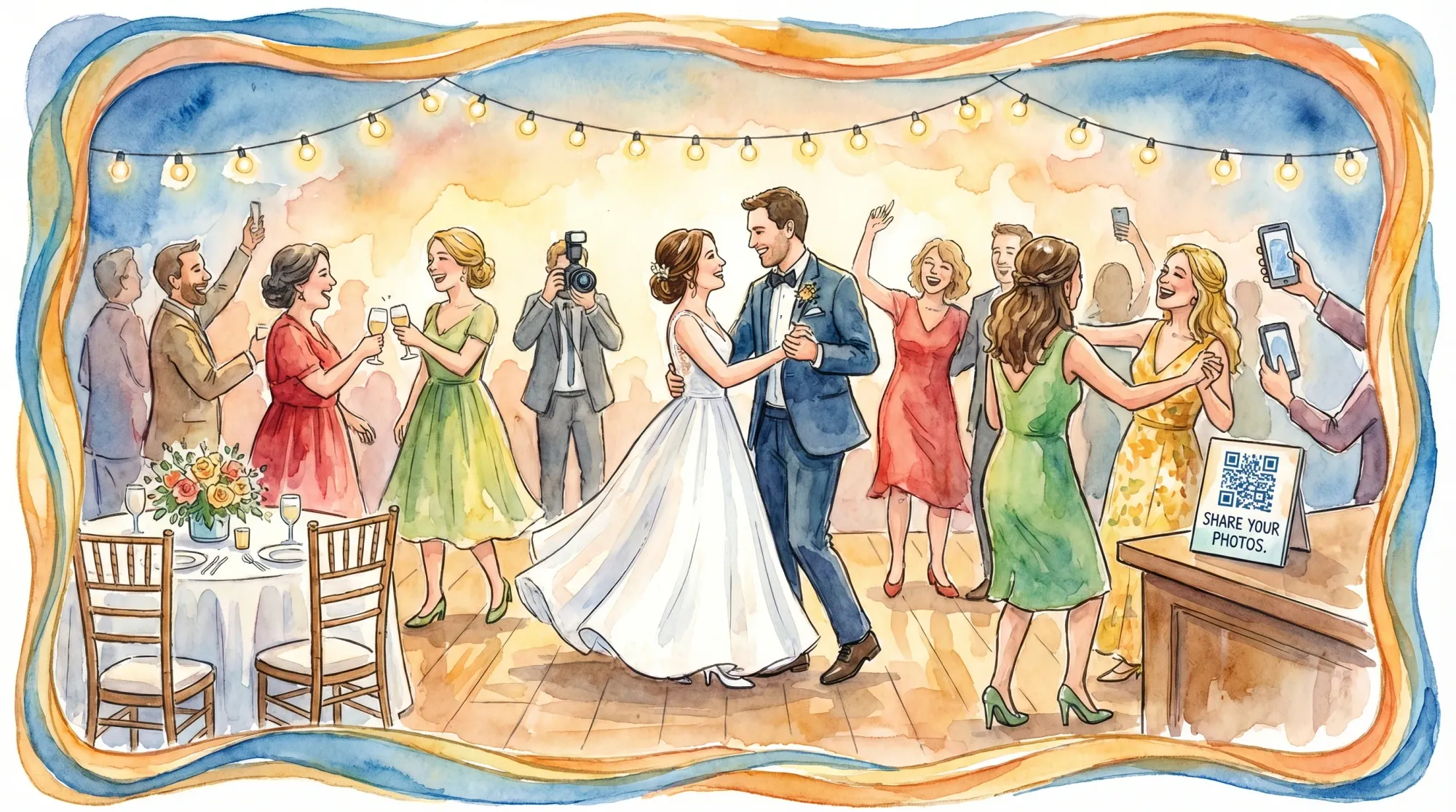
Your wedding reception is where the story opens up. The formal parts are over, everyone is together, and the best photos are usually unplanned: the hug you missed, the laugh at a toast, your friends going all-in on the dance floor.
The problem is that receptions move fast, and the room is loud, dark, and full of simultaneous moments. A simple shot list helps, but a timeline-based shot plan is what actually prevents misses, because it ties photos to the run of show.
Below is a practical plan you can copy into your reception timeline, share with your photographer and coordinator, and use to get better wedding reception photos (without turning the night into a production).
How to use this reception shot plan
Think of this as a “coverage map” for the reception, not a list of poses.
- Pick your priorities (before you add shots). Choose 5–10 reception photos you would be genuinely sad to miss.
- Attach shots to time blocks. Your reception already has blocks (entrance, dinner, toasts, dancing). That’s your structure.
- Assign an owner for each block. Pro photographer for must-haves, and a lightweight guest-photo layer for candids happening elsewhere.
If you have a planner or coordinator, this drops cleanly into the reception run of show.
The 3 reception-photo decisions that save you from chaos
1) Define your “must-get” reception photos (5–10 total)
These are the images you want even if something runs late. Most couples pick from:
- Room reveal (wide shot of the reception space)
- Your reaction entering the room
- First dance (or first moment on the dance floor)
- Toast reactions (you laughing, parents crying, best friends screaming)
- Table photos with VIPs (not every table)
- A packed dance floor wide shot
- A quiet “we made it” candid of the two of you
- Exit or send-off (if you’re doing one)
2) Decide what’s “pro only” vs. “guest is perfect”
Professional photographers excel at consistency, lighting, and once-only moments. Guests excel at proximity and volume.
A practical split:
- Pro only: entrances, first dances, toasts, cake cutting (if you care), any staged cultural moments.
- Guest is perfect: table candids, friend group selfies, chaotic dance floor moments, behind-the-scenes.
3) Choose your reception “photo cue moments”
Most guests won’t remember to share photos later. If you want a fuller story, plan 2–3 cues where you actively invite photos.
Good cue moments:
- Right after grand entrance
- Right before toasts
- When the dance floor opens
(You’ll see scripts for this below.)
Wedding reception photos: a timeline-based shot plan
Use the table as a template. Adjust times to match your reception length.
| Reception block | What to capture (shot ideas) | Why it matters | Who should own it |
|---|---|---|---|
| Pre-reception (15–30 min before guests enter) | Wide room reveal, sweetheart/head table, centerpieces, place settings, menus, escort display, signage, cake, favors | This is the only calm window for details | Pro photographer (or planner content helper) |
| Guest arrival + cocktail hour (45–75 min) | Hugs, drinks in hand, groups forming, candids with grandparents, passed apps, bar moment, band/DJ setup, venue exteriors at golden light | Sets the scene and captures people before it gets dark | Pro photographer + guests |
| Grand entrance (5–10 min) | Wide shot of room, you entering, crowd reaction, bridal party energy, first toast/clink, immediate hug with parents | High energy, high emotion, fast | Pro photographer |
| First dance + parent dances (10–20 min) | Wide + close of faces, hands, spin/dip (if you do it), parent reactions watching, quick candid right after | These are “only happen once” moments | Pro photographer |
| Dinner service (45–90 min) | Table touches with VIPs, cheers, laughter, kids, outfit details, champagne pours, food (one hero shot), vendor details (menus, florals in use) | Most guest interaction happens here | Guests + one designated helper |
| Toasts (10–25 min) | Speaker with mic, you reacting, partner reacting, parents reacting, crowd laughing, clinking, hug after | Reception emotion peak for many families | Pro photographer |
| Golden hour mini-break (optional, 10–15 min) | 2–3 quick couple portraits outside, plus a candid walking back in | Best light of the day, low effort if timed right | Pro photographer |
| Cake cutting / dessert moment (5–15 min) | The cut, feeding bite (if doing), crowd behind you, quick kiss/laugh after | Short moment that’s easy to miss | Pro photographer |
| Dance floor opens (first 10 minutes) | First “everyone on the floor” wide, best friends hyping you up, group singalongs, parents dancing, fast-motion candids | This is when the dance floor looks fullest | Pro photographer + guests |
| Open dancing (60–120+ min) | Wide shots every so often, small groups, candid hugs, silly faces, shoes off, late-night snack run, DJ booth energy | The “real story” of the night | Guests (with guardrails) |
| Exit / send-off (optional) | Staging, sparklers/confetti (if allowed), kiss, walking away, getaway car detail | A clean ending photo | Pro photographer |
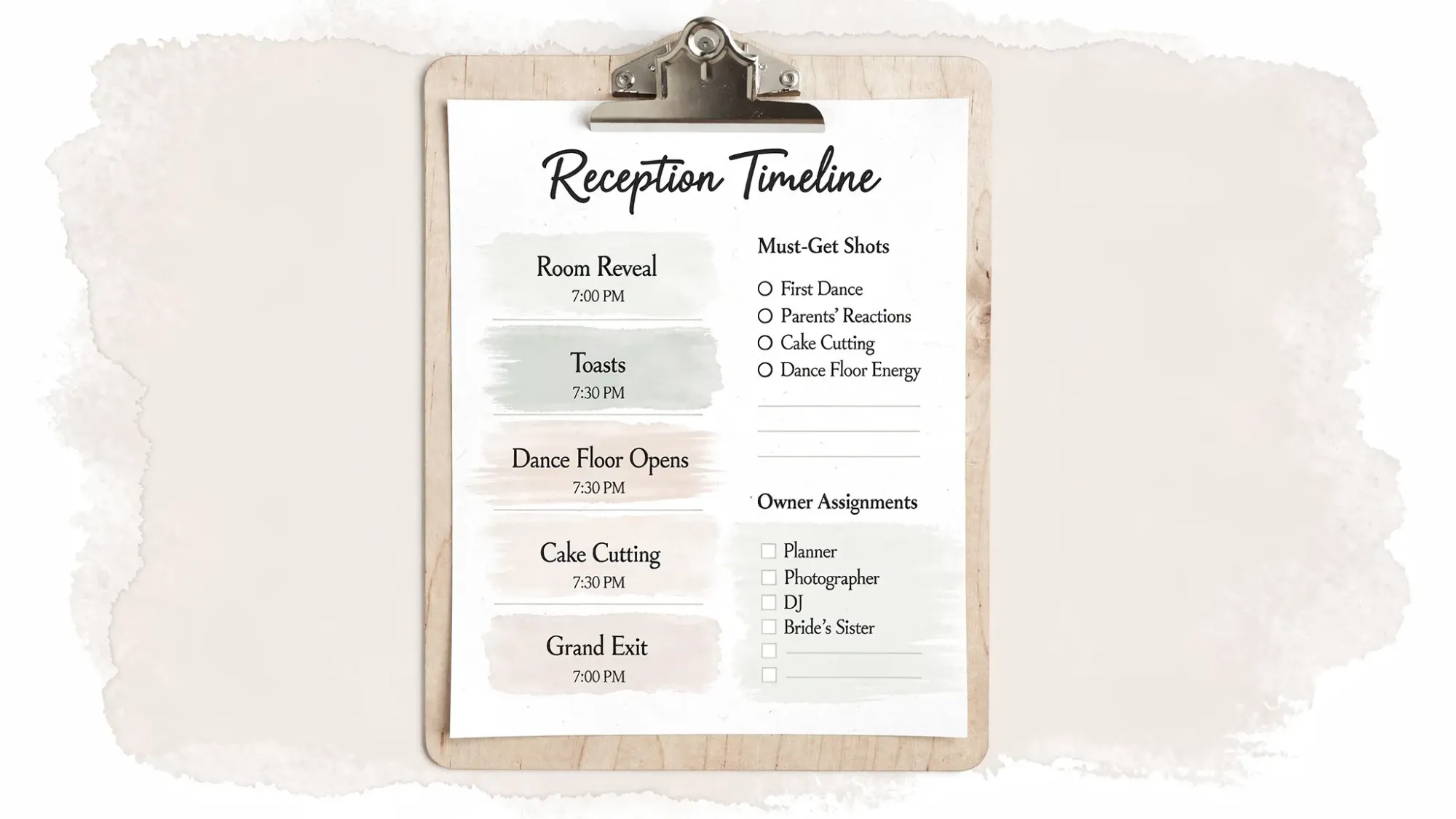
Block-by-block guidance (what matters, what people forget)
Pre-reception: the room reveal and detail sweep
This is where your photographer gets the “magazine” photos: the room as designed, untouched. If you want these, you need a clear plan with your coordinator and venue.
Practical tips:
- Confirm when the room is fully set (often later than expected).
- Build a hard rule: no guests enter until the detail sweep is done (even 10 minutes helps).
- If your venue flips a room from ceremony to reception, ask for a 5-minute empty window once tables are set.
Cocktail hour: people are still camera-ready
Cocktail hour is the easiest time to get flattering, well-lit guest photos, because:
- Hair and makeup are fresh.
- People are still holding structured conversations.
- Lighting is usually better than late-night dancing.
If you want more guest coverage here, cue it: put the photo capture point somewhere unavoidable (bar, welcome sign, or escort card area).
Grand entrance: plan your “reaction shots”
Your entrance isn’t only about you walking in. The best reception photos here are often:
- Parents seeing you
- Wedding party losing it
- Your friends cheering from a back table
Tell your photographer if you care about specific reactions (for example, “Please get my dad’s face when we enter”).
Dinner: don’t try to do every table
“Photo with every table” sounds nice but often eats your entire dinner, and you end up with repetitive photos.
Instead:
- Pick VIP tables only (immediate family, wedding party, grandparents).
- Get the rest of the room through natural candids.
If you want a guaranteed minimum, assign one person (planner assistant, cousin, friend) to do 10 minutes of table candids from their phone.
Toasts: get the speaker and the reactions
A complete toast set includes:
- Speaker in a clean frame
- Couple reactions (both of you)
- One parent reaction
- Crowd reaction (laughter, tears)
- The hug after
If your toasts happen during dinner service, ask your coordinator to pause plates if possible. Servers moving through frames can block reactions.
Dance floor: the first 10 minutes are gold
Dance floors look fullest right when they open. If you care about the “packed floor” photo, plan it:
- Ask DJ/MC to invite everyone up for one song to start.
- Tell your photographer: “We want one big wide shot in the first song.”
After that, coverage becomes more candid and chaotic, which is great, but less predictable.
A minimal “if we’re running late” shot plan (10 photos)
If the timeline slips, these 10 will still tell the reception story:
- Wide room reveal
- You entering the room
- First dance wide
- First dance close
- Toast speaker
- Your reaction during toasts
- One photo with each set of parents (candid is fine)
- One packed dance floor wide
- One chaotic friend group moment
- One quiet end-of-night couple candid
How to get more reception photos from guests (without group chat chaos)
Guest photos are the easiest way to capture everything happening at once: the other side of the room during toasts, the table you never reached, the dance circle you didn’t even know happened.
What usually breaks guest photo sharing is friction:
- Another app to download
- Another login
- “Text them to us later” (it won’t happen)
A cleaner approach is a shared reception camera: guests scan a QR code (or tap an NFC tag), take photos, and uploads happen automatically to one private gallery.
Revel.cam is built for exactly this workflow. Hosts create a private event gallery called a Moment, then share entry via QR code, NFC tag, or link. On iPhone, it can open as an App Clip (no app install) so guests go straight to the camera. You can also set photo limits per guest, define an end time, and review/moderate before sharing.
If you want the full setup playbook, this guide goes deeper: QR photo: The Complete Guide to Collecting Wedding Photos From Guests.
Reception placements that actually work
| Where to place the QR/NFC | When guests notice it | Best for |
|---|---|---|
| Bar sign or bar top display | Every drink trip | Cocktail hour candids, friend groups |
| Escort card / seating chart area | Arrival flow | Early guest photos, outfits, arrivals |
| Table tents (2–3 tables only, not every table) | While sitting down | Dinner candids, table moments |
| DJ booth sign | Dance floor opening | Peak energy dance photos |
| Bathroom mirror sign | Quick downtime | Funny, unfiltered candids (often a lot) |
If you’re worried about noise, set a reasonable per-guest photo limit so contributions stay intentional.
A 15-second MC script (reception-friendly)
Keep it simple and permission-based:
“Quick note: we’re collecting everyone’s photos in one shared gallery tonight. If you want to add yours, just scan the QR code on your table or at the bar. No app, no login. Totally optional, but we’d love your perspective.”
Quick technical tips for better reception photos (even on phones)
Receptions are often low light. Two small habits improve results immediately:
- Wipe the lens (seriously, it fixes more than any setting).
- Step closer instead of zooming, zoom makes blur and grain worse.
If you want a deeper fix for blur on dark dance floors, this article is practical and phone-specific: Crowd Photos: How to Get Sharp Shots in Low Light.
Frequently Asked Questions
How many wedding reception photos should we expect? It depends on reception length, guest count, and whether you have one or two photographers. Instead of chasing a number, plan for coverage of each reception block (entrance, toasts, dancing) plus candids.
What reception moments are most commonly missed? Room details before guests enter, parent reactions during toasts, and a truly packed dance floor wide shot (because it happens early and fast).
Is a shot list annoying for photographers? A long, pose-by-pose list can be. A timeline-based plan is usually helpful because it aligns with how photographers already work: key moments plus structured windows for details and candids.
How do we collect guest photos without making everyone download an app? Use a camera-first QR experience where scanning opens the camera immediately, and photos upload automatically to one event gallery. Tools like Revel.cam use QR codes and iPhone App Clips to avoid installs.
Should we share guest photos live during the reception? Many couples prefer a reveal later so everyone stays present and you can remove anything you do not want shared. If you do share during the event, keep it optional and private.
Turn your reception into one complete photo story
A great reception gallery is rarely about one perfect shot. It’s about coverage: the room, the reactions, the energy, and all the little moments you did not see.
If you want an easy way to collect guest wedding reception photos in one place, create a private Moment on Revel.cam. Share it by QR code or NFC, let guests join instantly (no signup), set photo limits, and reveal the finished gallery when the night ends.
A writer interested in connection, memory, and the everyday moments that matter more than we realize.
Tags: Wedding photography , Wedding photo gallery , Group wedding photos , Wedding photos , Wedding photo sharing