Private Event Photo Album Guide That Works
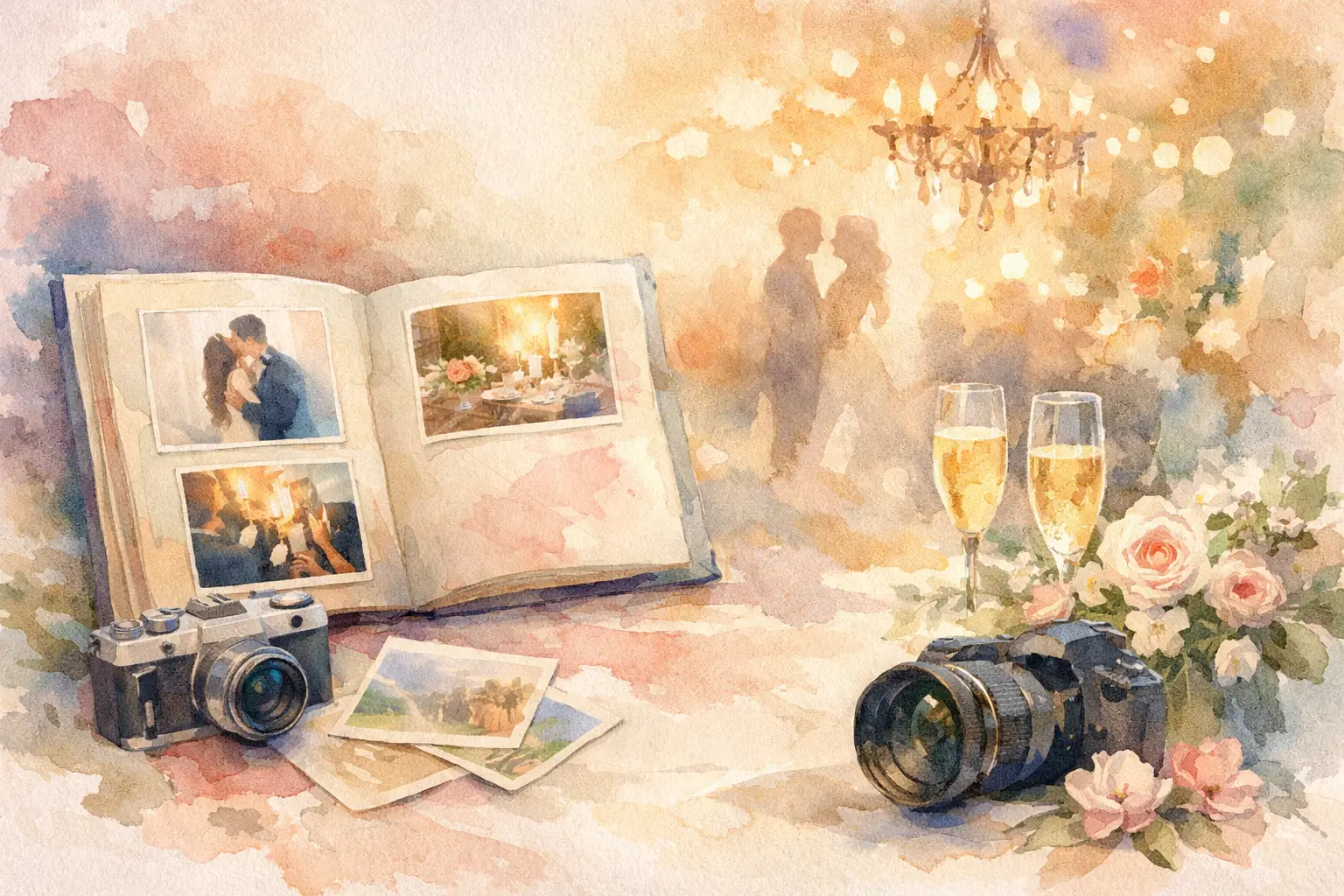
You know the pattern. The event was great, everyone took photos, and then the memories vanished into camera rolls, text threads, AirDrop circles, and one person’s half-finished shared folder. A good private event photo album guide fixes that before the first drink is poured or the first speech starts.
The goal is not just to store pictures. It’s to get more people to actually contribute, keep the album private, and make the whole thing feel fun instead of like admin work. Whether you’re planning a wedding weekend, birthday dinner, baby shower, company offsite, or brand event, the best album setup is the one guests will use without thinking twice.
What a private event photo album guide should solve
Most event photo problems are not really photo problems. They’re participation problems.
If guests need to download an app, make an account, remember a password, or figure out where to upload later, contribution drops fast. If the album link gets buried in a group chat, same issue. If privacy feels shaky, people hesitate. If the process is clunky, the photos stay on phones forever.
A strong system handles four things at once. It makes joining instant, uploading easy, viewing controlled, and the final gallery worth waiting for. That mix matters because people are much more likely to contribute in the moment than after the event, when real life takes over and nobody wants another task.
This is where organizers often overthink the tech and underthink the behavior. The album platform matters, but guest friction matters more.
Start with the event type, not the tool
A wedding has different needs than a networking mixer. A birthday trip has different privacy expectations than a branded pop-up. Before you pick a setup, decide what kind of experience you want the album to create.
For personal events, the best albums usually feel intimate and low-pressure. Guests should be able to jump in quickly, snap candid moments, and know the gallery is staying within the group. For work events and activations, you may care more about volume, branding, and getting usable content from lots of attendees in different parts of the room.
The trade-off is simple. The more open and public the photo flow feels, the easier it can be to collect lots of content. But the more private and curated it is, the safer and more personal the experience feels. Most private events lean toward privacy first, with participation as the close second.
The easiest albums get the most photos
This sounds obvious, but it’s where most setups fail.
If you want a private event album that people actually use, access should feel almost invisible. Guests scan, join, and start taking photos. No app download. No account creation. No asking, “Wait, what was the link again?” The less setup you ask for, the more perspectives you get.
QR-code access works especially well because it matches how people behave at events. They’ll scan something placed on a table, bar sign, welcome board, or seat card faster than they’ll search through messages. It turns photo sharing into part of the environment instead of another digital chore.
That’s also why delayed uploads are risky. Asking people to upload later sounds reasonable, but later is where good intentions go to die. Capture in the moment beats chasing content after the fact every time.
Privacy is more than a password
When people hear “private album,” they usually think of access control. That matters, but it’s only one part of privacy.
True privacy also includes who can see the gallery, when they can see it, and whether the experience encourages oversharing in real time. For some events, instant gallery access is perfect. For others, especially weddings, parties, or multi-day trips, a timed reveal creates a better vibe. People stay present, keep snapping, and then enjoy the full gallery together later.
That delayed reveal adds a surprisingly useful social benefit. It removes the pressure to monitor what’s being posted as the event unfolds. Instead of performing for a live feed, guests contribute to a shared memory bank that opens once the moment has had time to breathe.
If your event includes kids, internal company moments, or invite-only guests, this kind of controlled access becomes even more valuable. Private should feel genuinely contained, not technically available to anyone who ends up with a forwarded link.
Build the album into the event itself
The best photo albums are not hidden in a follow-up email. They show up during the event in smart, lightweight ways.
Place your entry point where guests naturally pause: check-in tables, cocktail bars, dinner tables, welcome bags, restroom mirrors, or event signage. Give a one-line prompt that tells them exactly what to do and why. Something short works best: scan to join, take photos, see the full gallery later.
You can also shape the kind of photos you get by where you place the prompt. A table sign invites candid dinner shots. A dance floor sign gets energy. A welcome sign gets arrivals and outfits. For corporate events, signage near demos, lounges, or speaker areas can drive coverage across the entire event footprint.
This is one of the easiest wins in any private event photo album guide. Don’t just create the album. Stage participation.
Why disposable-camera energy works so well
There’s a reason people love the look and feel of digital disposable camera features. They make guests less stiff.
When photos feel a little more playful, a little less polished, people stop trying to produce perfect content and start capturing the night. Limited-shot formats can increase intention. Nostalgic filters can make everyone bolder. A shared gallery with a delayed reveal gives the whole thing momentum.
The payoff is not just aesthetic. It changes behavior. Instead of a few people documenting everything while everyone else lurks, more guests join in because the experience feels social and low stakes.
That said, it depends on the event. If you need every image in crisp, immediate detail for marketing or press, heavy stylization may not be the move. But for weddings, birthdays, vacations, and culture-forward brand events, disposable-camera energy often gets better participation than a standard upload folder ever could.
The features that matter most
A flashy album is useless if the basics break. High-resolution uploads matter because nobody wants blurry memories once the event is over. Broad phone compatibility matters because your guest list will never be all one device type. Offline capture syncing matters more than people expect, especially in packed venues, remote properties, or conference spaces with weak reception.
The album also needs a clean viewing experience. If the gallery is chaotic, hard to navigate, or slow to load, all that collected content feels less valuable. Good organization turns a pile of files into a shared story.
This is where a product built for events has an edge over generic cloud storage. Event photo collection is not just file transfer. It’s participation design.
One setup for personal events, another for professional ones
For personal celebrations, simplicity and emotion usually win. You want guests to contribute with almost no effort and revisit the gallery as a memory piece afterward. A timed reveal, private access, and a fun capture flow tend to outperform anything that feels technical.
For professional events, you may need more structure. Think attendee count, content volume, activation zones, and whether the album supports the brand experience without making guests work for it. In those cases, the ideal setup still needs to feel frictionless, but it also has to hold up operationally.
That’s why platforms like Revel fit both worlds when the event depends on easy participation. Guests can join instantly through a QR code, contribute without downloading an app, and experience the gallery together instead of scattering photos across ten different channels.
Common mistakes that quietly kill the album
The biggest mistake is assuming guests will upload later. The second is making access too complicated. The third is treating privacy like a checkbox instead of a user experience.
Another common miss is poor prompting. If guests don’t know the album exists, why it matters, or how long it takes to join, they won’t bother. And if the organizer only mentions it once, early arrivals may join while everyone else misses it.
There’s also a balance issue. Too many reminders can feel pushy. Too little visibility means low participation. The sweet spot is simple, visible, and woven into the event flow.
How to know your album setup is the right one
Ask a blunt question: would a slightly distracted guest use this in under ten seconds?
If the answer is yes, you’re close. If they need instructions, downloads, logins, or follow-up effort, expect drop-off. A strong private album setup feels immediate at the front end and rewarding at the back end. Guests can join fast, contribute naturally, and enjoy the payoff later.
That’s what makes a private event photo album worth doing. Not the storage. Not the software checklist. The feeling of seeing the event from everyone’s angle, all in one place, without chasing anyone down afterward.
Set it up so the album collects itself. Your future self will be very into that.
A writer interested in connection, memory, and the everyday moments that matter more than we realize.
Tags: Photo album guide , Photoshoot , Shared photo gallery , Shared album , Shared event photos