Wedding Photoshoot Package: What to Ask Before You Book

A wedding photoshoot package can look deceptively simple on a pricing page: “6 hours,” “gallery included,” “engagement session,” “second shooter.” But those labels hide the details that actually determine whether your photos feel effortless (and whether your budget stays intact).
The goal of the questions below is not to interrogate a photographer. It is to make sure you are buying the outcome you want, with no surprises about timelines, deliverables, or what happens when something goes off-plan.
First, define what “photoshoot package” means for your wedding
Couples often use “photoshoot” to mean different things:
- Engagement session (a separate date, often used for save-the-dates)
- Bridal portraits (bridal look, often calm and editorial)
- Wedding-day portraits (couple, wedding party, family formals)
- Day-after session (more time, less pressure)
- Mini session (short coverage for elopements or courthouse weddings)
Before you ask a photographer for package details, get clear on two decisions:
1) What do you want the photos to do for you? Examples: document the full story, produce frame-worthy portraits, prioritize candid moments, capture details for publication.
2) Where do you want the time spent? More time on portraits usually means less time on candid coverage (and vice versa). A package is ultimately a time allocation.
If you want a quick gut-check, write one sentence you can paste into inquiries:
“We care most about (candid reception energy / family formals / golden-hour portraits). Our must-have moments are (first look / ceremony / sunset).”
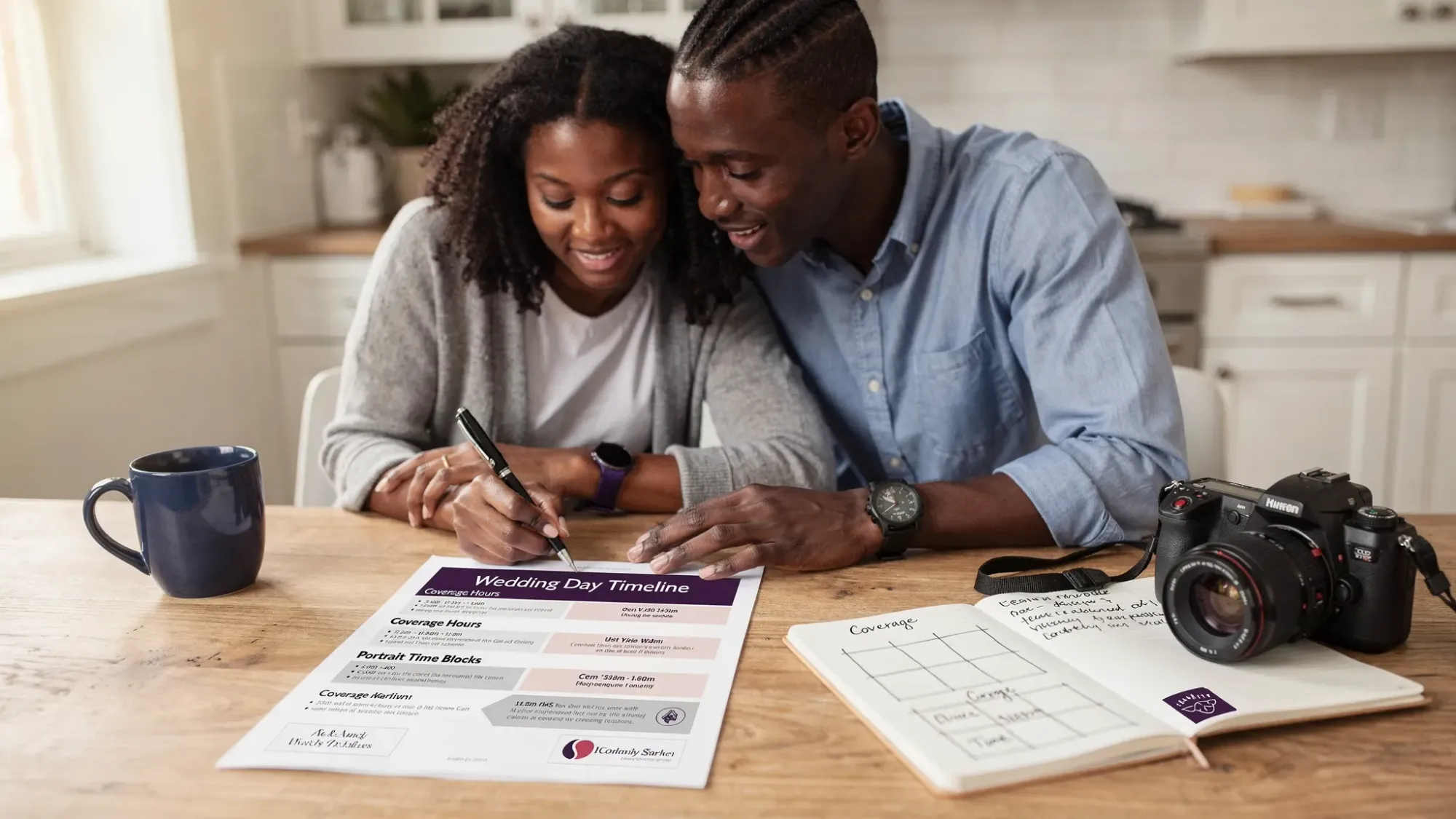
Questions to ask about coverage hours and the real timeline
Hours are not the same as coverage. This is where packages quietly diverge.
When does coverage start and end, exactly? Ask whether time begins at arrival, first photo taken, or at “ready to shoot” after details.
What is your recommended photography timeline for our day? A strong photographer will guide you through what is realistic.
How do you handle schedule drift? Weddings run late. Ask how they adapt if hair and makeup goes long, transportation is delayed, or the ceremony starts late.
What happens if we need extra time? Ask the overtime rate, how it is triggered, and whether it must be approved in advance.
How much time do you need for family formals? Good photographers will ask for a shot list and a “family wrangler.” If they do not, you may lose time and patience.
If we want golden-hour portraits, when do you recommend we step out? This question reveals whether they can lead a timeline without derailing the reception.
Questions to ask about who is actually photographing your wedding
Many package pages list “second shooter” like a checkbox. You want to understand the real staffing plan.
Will you personally be the lead photographer on our wedding day? If the studio assigns associates, ask to see full galleries from the specific person who would shoot.
If there is a second shooter, what do they cover? Examples: one covers cocktail hour while the other does portraits, two angles during ceremony, more candid coverage.
How do you two work together during key moments? A rehearsed team produces better coverage than a last-minute add-on.
If you are sick or have an emergency, what is your backup plan? Ask whether they have a network, and what your options are if the replacement is not a fit.
Questions to ask about deliverables (what you actually receive)
A package should specify outputs, not just time.
How many edited images should we expect for our coverage hours? You are not buying a fixed number, but you should get a realistic range.
What is included in editing? Clarify color correction, exposure, cropping, black-and-white conversions, and whether complex retouching is extra.
Do you deliver high-resolution files suitable for printing? Ask about download format and whether you can print wherever you want.
Do you provide full wedding galleries to review (not just highlights)? Highlights are marketing. Full galleries show consistency in mixed light, cluttered rooms, and fast moments.
What is your turnaround time, and do you offer sneak peeks? Get timelines in writing.
Do you deliver RAW files? Most photographers do not, for good reasons (RAW is unfinished work), but asking clarifies expectations.
If you want a neutral reference on copyright basics in the US, the U.S. Copyright Office explains how copyright ownership typically works for creative work.
Questions to ask about style, consistency, and “hard situations”
Packages often look identical until you compare how photographers handle real-world conditions.
How would you describe your editing style, and has it changed recently? Trends shift. You want consistency between portfolio and deliverables.
Can we see 2 to 3 full galleries shot in lighting similar to our venue? Examples: dark reception hall, outdoor noon sun, mixed LED lighting.
How do you approach candid photos versus posing? Ask what percentage of the day is directed.
How do you handle harsh midday light or rain? The answer should include contingency locations, not just “we make it work.”
Do you use flash during reception? Some couples love clean flash; others want ambient, documentary vibes. Align early.
Questions to ask about locations, travel, and permits
Locations can add cost and complexity that is not obvious in a package.
Is travel included? Ask what radius is included, mileage fees, and whether lodging is required for distance.
If we want portraits at a separate location, how does that affect coverage? Remember: travel time usually counts.
Do you help with permits or venue restrictions? Some parks and landmarks require permits for professional photography.
Do you scout locations, and if so, when? Scouting can be virtual, same-day, or pre-wedding depending on distance.
Questions to ask about risk management (the unglamorous essentials)
A wedding photoshoot package should include professional risk planning. You are not being “extra” by asking.
Do you carry liability insurance? Many venues require it.
What gear redundancy do you bring? Look for answers like dual-card cameras, backup bodies, backup lenses, and multiple flashes.
How do you back up images during and after the wedding? Ask about dual card recording and post-event backups.
What happens if a memory card fails or images are lost? The contract should address limitations and remedies.
For a general consumer overview of wedding vendor contracts and planning considerations, FTC consumer guidance can be a helpful starting point (not wedding-specific, but useful for contract basics).
Questions to ask about rights, sharing, and privacy
This is increasingly important for couples who want more control.
Can we share our photos anywhere, and can we print them? Most packages include personal usage, but confirm.
Do you require a model release? If yes, ask what it allows (portfolio, website, ads, submission to publications).
Can we request privacy (no posting)? Some photographers offer a privacy add-on or will honor requests.
How do you handle guest privacy in candid reception photos? They should have a thoughtful approach to sensitive moments.
Questions to ask about pricing structure (and the hidden line items)
Two packages can cost the same and still behave very differently.
What is the retainer/deposit, and is it refundable? Ask what happens if you cancel.
What is the payment schedule? Get dates in writing.
Are there extra fees we should plan for? Common ones include travel, overtime, extra locations, albums, expedited editing, or extra retouching.
What is the rescheduling policy? Weather and illness happen.
Do you offer albums, and what is included versus optional? If an album matters to you, compare this carefully because album pricing can vary widely.
Ask to see the contract before you commit
If you only ask one “grown-up” question, make it this.
Can we review the contract now, before we pay anything? Then scan for:
- Coverage hours definition and overtime terms
- Deliverables and turnaround time
- Cancellation and rescheduling
- Replacement photographer policy
- Liability limits and force majeure language
- Usage rights and privacy/model release
If anything is unclear, ask for plain-English clarification. You are not being difficult. You are reducing stress later.
A simple comparison matrix you can use in 10 minutes
When you are comparing options, you want a consistent way to evaluate value beyond price.
| Package element | Ask this | Why it matters |
|---|---|---|
| Coverage definition | “When does time start and end?” | Prevents surprise overtime or missed moments |
| Staffing | “Who is shooting, and what does a second shooter cover?” | Determines angles, candid coverage, and logistics |
| Full galleries | “Can we see 2 to 3 full weddings?” | Reveals consistency in real conditions |
| Deliverables | “What do we receive (files, prints, gallery), and when?” | Aligns expectations and avoids disappointment |
| Editing approach | “What is included vs extra retouching?” | Avoids surprise fees and style mismatch |
| Backup plan | “What happens if you cannot attend?” | Protects you from the worst-case scenario |
| Risk management | “Do you have insurance and gear redundancy?” | Reduces the chance of catastrophic loss |
| Rights and privacy | “Can we opt out of posting?” | Ensures comfort and control |
| Travel and logistics | “What fees apply for travel, permits, extra locations?” | Avoids budget creep |
How to build a package that captures more, without paying for “more hours”
Even an excellent photographer cannot be everywhere at once. The most common “regret” couples share is not about portraits, it is about missing candid moments they were not present for.
A practical approach is to keep your professional coverage focused on what only a pro can reliably deliver (portraits, ceremony, formal groups, key reception moments), then add a guest-driven layer for everything in-between.
That is exactly where Revel.cam fits: it is a shared event camera that lets guests scan a QR code (or tap an NFC tag) to open the camera and upload instantly, with no app install or account required. As the host, you can set guest limits, photo limits per guest, and a defined end time, then review and curate before sharing a final gallery.
Used alongside a photographer, this can help you capture:
- Getting-ready moments in multiple rooms
- Cocktail hour interactions while you are taking portraits
- Friends’ candid dance floor photos from inside the circle
- Table moments and behind-the-scenes stories your photographer may not see
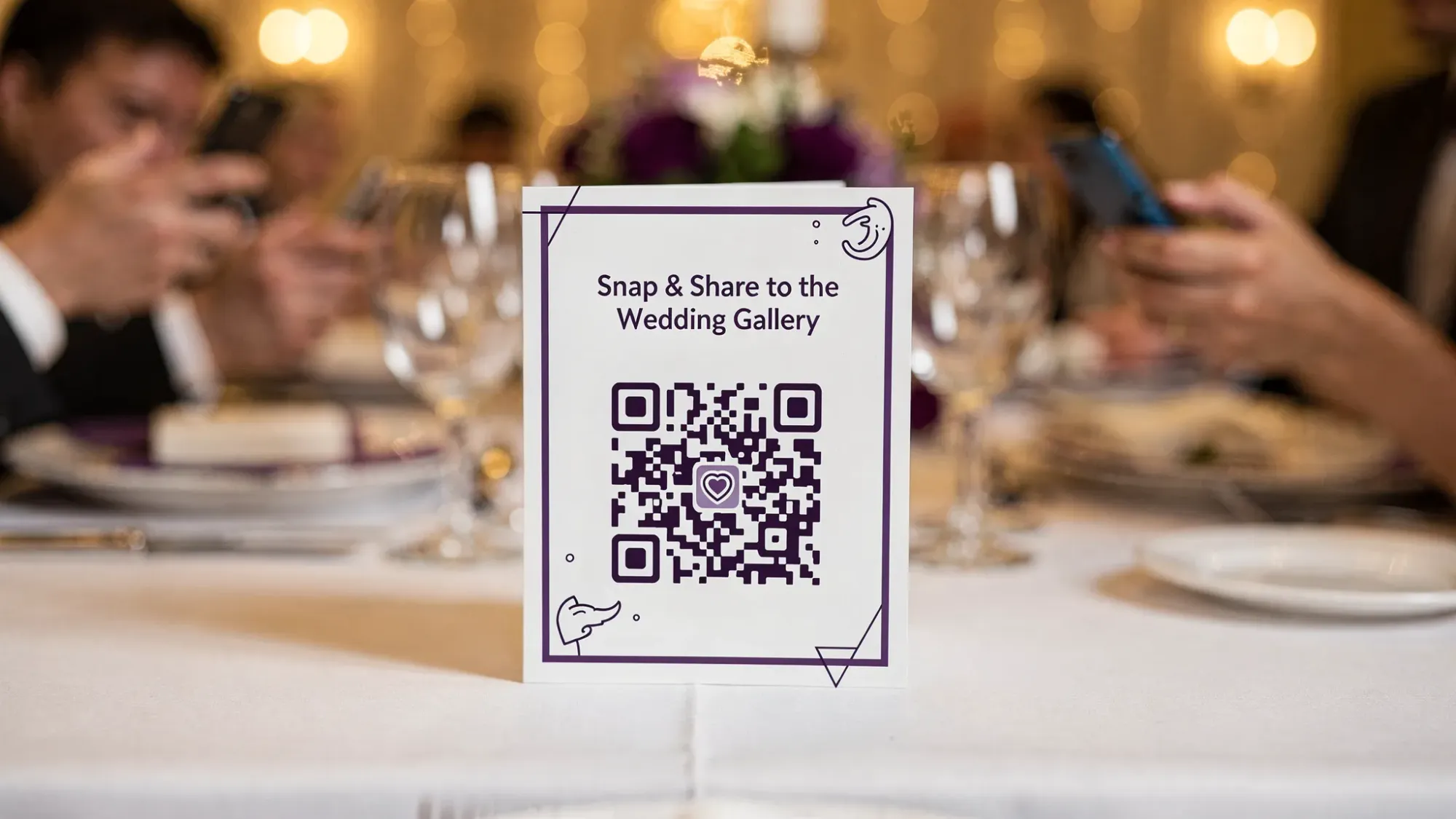
If you want that guest-photo layer without the friction of chasing uploads later, you can create a Moment at Revel.cam and place the QR code on escort tables, bar signage, or your wedding program.
The final “fit” question that makes decisions easier
Once you have asked the practical questions, end with one that reveals how the photographer thinks:
“What do you think we are not considering, based on our venue and timeline?”
Great photographers answer with specifics (lighting, ceremony rules, timeline pinch points, family formal strategy). That is often the clearest sign you are booking a partner, not just a package.
If you want, share your draft timeline and venue type, and I can suggest which package details to prioritize and which questions matter most for your day.

A writer interested in connection, memory, and the everyday moments that matter more than we realize.