Wedding Photographers Near Me: How to Compare Packages

You can find a dozen “wedding photographers near me” in a single scroll. The harder part is figuring out what you’re actually buying, because packages often bundle time, talent, editing, deliverables, and rights in ways that are easy to misread.
This guide gives you a practical way to compare wedding photography packages apples-to-apples, so you can choose the coverage that fits your day, your priorities, and your budget.
Start by comparing the outcome, not the price
Two photographers can both offer “8 hours + online gallery,” yet deliver totally different results. Before you look at line items, define your non-negotiables:
- What must be documented no matter what? (first look, ceremony, family formals, sunset portraits, reception exit)
- What matters more: candid documentary, editorial portraits, or a mix?
- How important is speed of delivery? (a few previews in days vs full gallery in weeks)
- Do you want heirloom products? (album, prints) or mostly digitals?
Once you know the outcome you’re aiming for, package comparison becomes straightforward.
The 7 package elements that change value the most
When you compare packages, focus on the items below first. They’re where “cheap” can become expensive (and where “expensive” can become a smart buy).
1) Coverage hours (and what “hours” actually include)
Photography time is not only “camera time.” Many contracts define coverage start and end precisely, and it may or may not include:
- Travel between locations
- Setup time (lighting, details styling)
- Breaks
- Extra time if the timeline runs late
What to look for: whether overtime is available, the overtime rate, and whether partial hours are billed.
2) Number of photographers (lead only vs second shooter)
A second photographer can add real value when:
- You’re getting ready in two locations
- You have 120+ guests with lots of moving parts
- You want simultaneous angles (processional, reactions, wide shot)
But a second shooter is not automatically better. Ask how the photographer uses them (separate coverage plan vs occasional backup).
3) Editing style and consistency
This is where portfolios can be misleading. Instagram highlights may show golden-hour portraits only, not difficult indoor light or mixed LED reception lighting.
What to do:
- Ask for 1–2 full galleries from weddings similar to yours (venue type, ceremony time, reception lighting)
- Look for skin tones, color consistency, and how they handle dark dance floors
4) Deliverables: digitals, prints, albums, and file quality
Packages vary widely here. Clarify:
- Are you getting high-resolution files or web-size images?
- Are downloads unlimited?
- Are prints included, and if so, what sizes and paper quality?
- If an album is included, what’s the page count, cover type, and upgrade pricing?
Also ask whether images are delivered with a print release (more on that below).
5) Turnaround time (and previews)
Turnaround is both a service feature and a planning issue (especially if you want photos for thank-you cards or a post-wedding brunch slideshow).
Compare:
- Typical delivery window for the full gallery
- Whether sneak peeks are included, and when
If turnaround is important to you, get it in writing.
6) Usage rights (print release, social sharing, vendor publication)
In the US, photographers generally retain copyright unless transferred, and clients are granted a license for personal use. That’s normal.
What you want to clarify:
- Personal-use license: printing, sharing with family, posting online
- Vendor sharing: can your planner or venue post images?
- Publication: whether the photographer submits to blogs or magazines, and whether you must approve
For background on licensing and copyright, see the U.S. Copyright Office overview.
7) Logistics and risk management (the unglamorous essentials)
The best package value often shows up when something goes wrong.
Compare:
- Backup cameras, lenses, flashes, and memory strategy
- Insurance (many venues require vendors to be insured)
- Data backup workflow
- Illness/emergency plan (associate coverage, network backup)
- Contract terms: cancellation, rescheduling, force majeure
If a package is cheaper because it cuts these corners, it’s not actually cheaper.
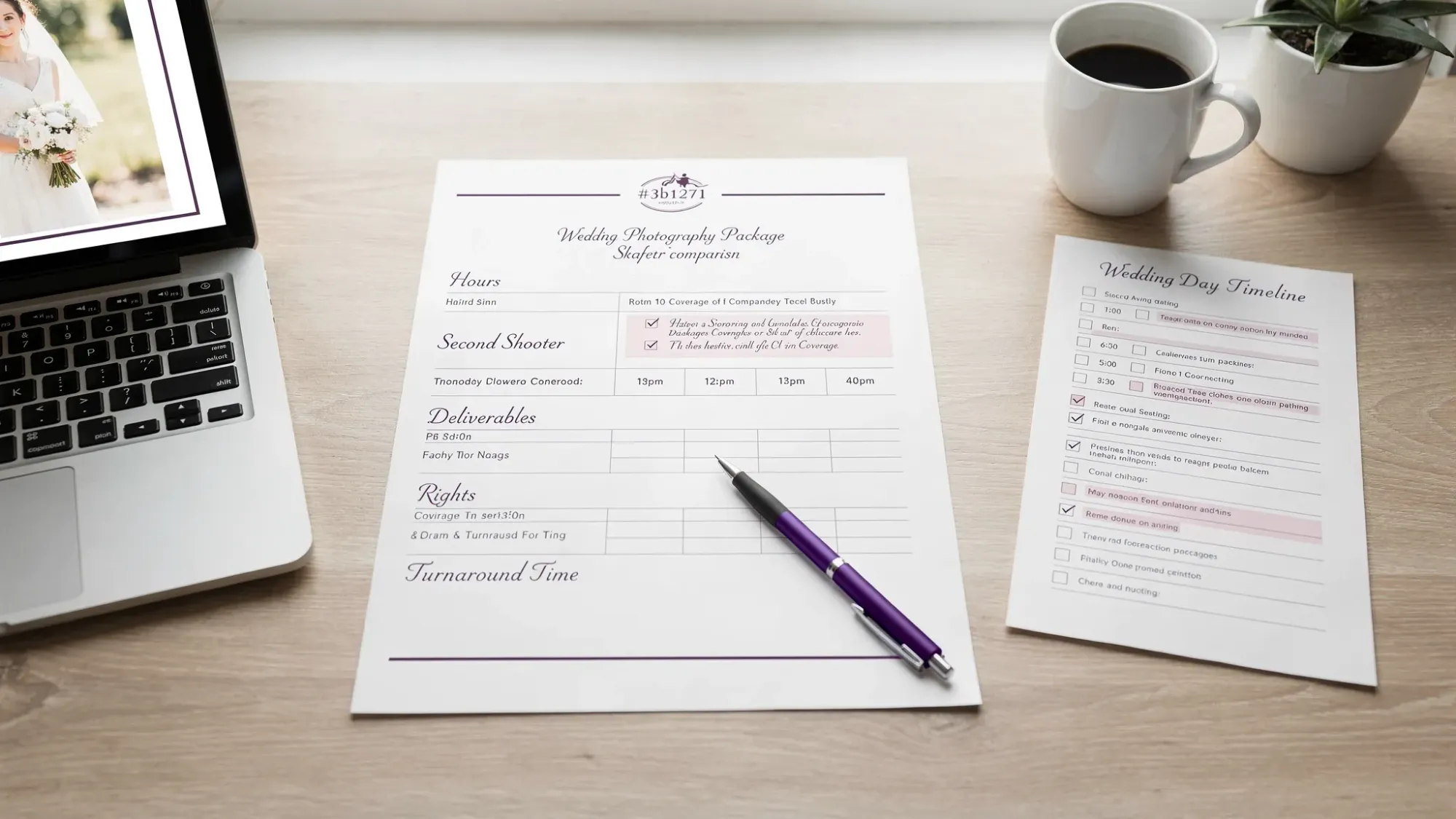
Build a simple comparison matrix (use this table)
When you’re talking to multiple photographers, create one consistent view. Here’s a framework you can copy into a spreadsheet.
| Package item | Photographer A | Photographer B | Photographer C | Notes / what you prefer |
|---|---|---|---|---|
| Coverage hours (start/end definition) | ||||
| Number of photographers | ||||
| Engagement session included | ||||
| Estimated images delivered | (Ask for a typical range, not a promise) | |||
| Sneak peeks + full gallery timeline | ||||
| Delivery method (online gallery, USB, both) | ||||
| Print release / personal-use license | ||||
| Album/prints included (specs) | ||||
| Travel fees + overtime rate | ||||
| Backup plan + insurance |
A note on “image count”: it’s okay if photographers won’t guarantee a number. What matters is whether their full galleries show consistent coverage of a full day.
How to spot “hidden costs” inside wedding photography packages
Package pricing can look clean until the add-ons appear. Common items that change your total:
Travel and location complexity
Local photographers may still charge for:
- Mileage beyond a radius
- Parking, tolls
- Lodging for far venues
If your day includes multiple locations, confirm whether travel time reduces shooting time.
Overtime, timeline delays, and “just 30 more minutes”
Weddings run late. A package with a strict end time can force a decision at the worst moment.
Ask:
- How overtime is requested and approved
- Whether it’s billed in 30-minute or 1-hour increments
Albums that start cheap and grow expensive
An album “included” can mean a small base album with paid upgrades. That’s fine, just compare like-for-like.
Ask for the spec sheet:
- Dimensions
- Page count
- Cover material
- Parent albums availability
Engagement session value (and constraints)
Engagement sessions can be incredibly useful if you:
- Want to practice posing and direction
- Plan to use images for invitations or your website
But compare constraints:
- Weekdays only?
- Limited locations?
- Image delivery included or extra?
Match the package to your actual wedding day timeline
The “right” package is the one that fits your day’s structure. Here are practical guidelines you can use without overbuying.
When 6 hours is often enough
- One ceremony and reception location
- Minimal travel
- You care most about ceremony through key reception moments
Tradeoff: you may miss late-night dancing, a grand exit, or more relaxed portraits.
When 8 hours is the most common sweet spot
- Getting ready through major reception events (first dance, toasts)
- Enough buffer for timeline drift
- More time for portraits without rushing
When 10–12 hours makes sense
- Two getting-ready locations
- Big guest count and lots of events
- Cultural weddings with extended ceremonies
- You want full-day storytelling (morning through exit)
If you’re unsure, ask the photographer to sanity-check your draft timeline and recommend coverage based on similar weddings.
Portfolio evaluation: what to look for beyond “pretty photos”
When comparing photographers near you, your goal is to judge repeatable skill, not one perfect sunset.
Ask for full galleries from similar conditions
Try to match:
- Indoor ceremony vs outdoor
- Midday sun vs golden hour
- Dark reception lighting
- Venue color casts (uplighting, barns, ballrooms)
Look for these technical and storytelling signals
- Exposure consistency: faces are correctly lit across changing scenes
- Moment coverage: reactions, parents, guests, small interactions
- Crowd management: family formals look organized, not chaotic
- Detail discipline: rings, stationery, attire details without feeling staged
Confirm the division of labor
If the photographer uses associate shooters or outsources editing, ask what is consistent across weddings and who is responsible for final style.
Contract terms you should compare side-by-side
Packages are marketing. Contracts are reality.
At minimum, compare:
- Payment schedule and due dates
- What counts as a cancellation vs reschedule
- Weather plan for portraits
- Liability limitations
- Delivery timeline language (specific vs “best effort”)
If you want a credible baseline for what professional services often include, you can reference the Professional Photographers of America (PPA) for general industry education and standards.
The big question: do you need a second shooter or more hours?
If you’re choosing between upgrading coverage hours or adding a second photographer, use this rule of thumb:
- Choose more hours if you feel rushed (travel, portraits, timeline uncertainty).
- Choose a second shooter if you need simultaneous coverage (two locations, big guest count, heavy candid priority).
If you can’t decide, ask the photographer how they would cover your day with each option. Their answer tells you a lot about their planning mindset.
How to get more candid photos without changing your photography package
Even the best wedding photographer cannot be everywhere, especially during cocktail hour and the reception when guests are spread out.
That’s where guest photos can fill in the story, as long as collecting them is effortless.
A simple, low-friction guest photo plan
Instead of asking everyone to “send pics later” (which rarely works), set up a shared event camera so guests can contribute in the moment.
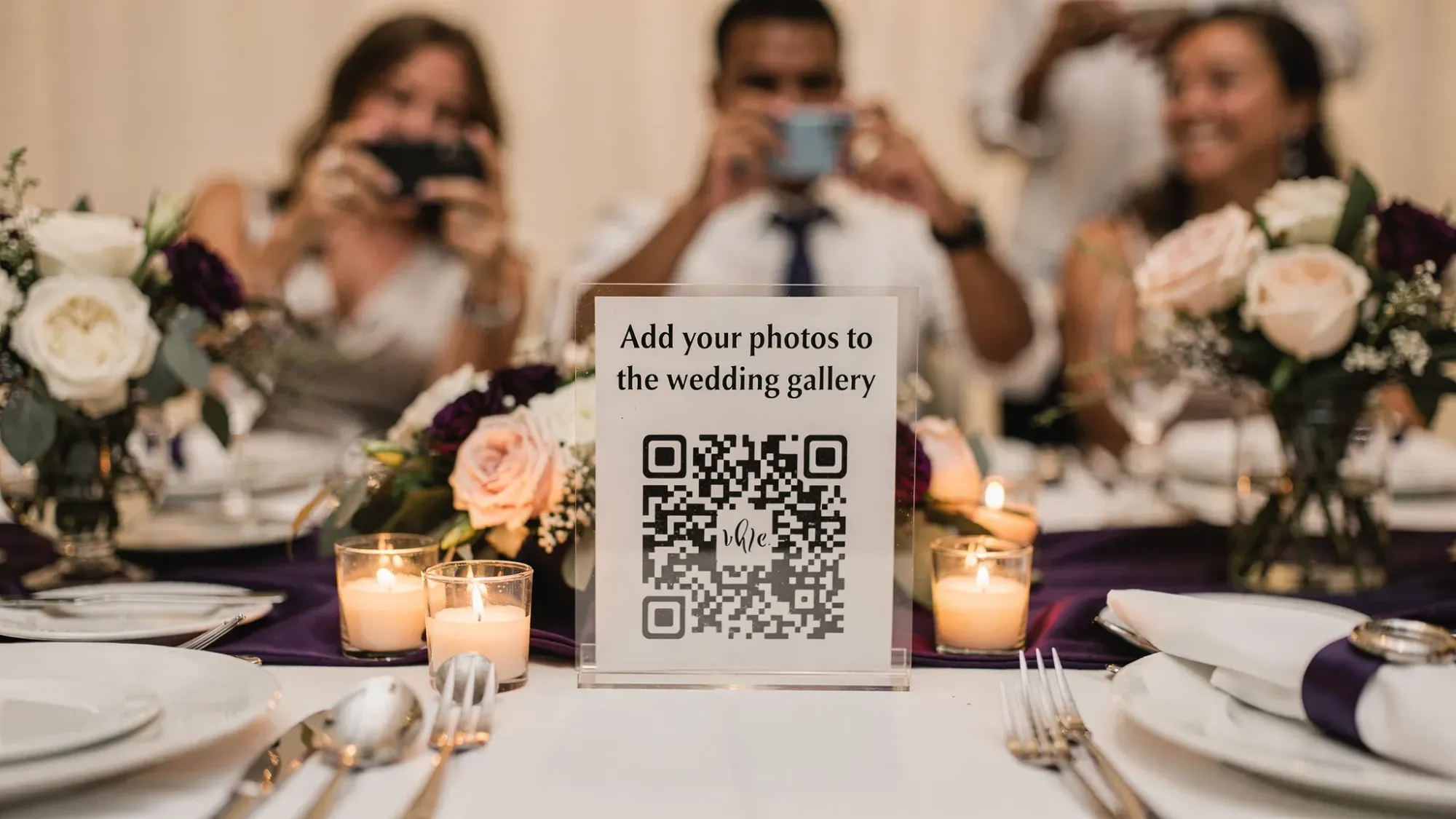
With Revel.cam, you can create a private wedding Moment and let guests join instantly by scanning a QR code or tapping an NFC tag. On iPhone it opens as an App Clip, so there’s no download and no account. Guests take photos, and they upload automatically into one gallery.
This complements your professional photographer by capturing:
- Table perspectives you never see
- Dance floor candids between formal moments
- Getting-ready “in-between” shots from friends
- After-party energy when formal coverage ends
It also keeps things organized: one gallery instead of a dozen group chats and fragmented shared albums.
How to coordinate Revel.cam with your photographer (so it stays professional)
Guest photo collection works best when it doesn’t interfere with the pro.
- Tell your photographer you’re using a QR-based guest gallery for candids, not as a replacement.
- Place QR signage at the welcome area and reception tables, not during the ceremony.
- Consider setting photo limits per guest to keep contributions intentional and reduce noise.
- Use host review if you want to curate before sharing broadly.
- End the Moment after the reception so the final gallery feels complete.
If you want the simplest flow for your guests (scan, shoot, done), you can set up your wedding Moment at Revel.cam.
A quick decision checklist before you book
Before you sign, you should be able to answer “yes” to these:
- I’ve seen at least one full gallery in lighting similar to my wedding.
- The coverage hours match my timeline, including travel and buffer.
- I understand exactly what I receive (digitals, print release, album specs, delivery timing).
- The contract covers rescheduling, backup plans, and delivery expectations.
- I like how the photographer communicates, not just how they shoot.
If any answer is “no,” you don’t necessarily need to walk away, you just need clarity before you commit.
Bringing it all together
Searching “wedding photographers near me” is the start. Comparing packages well is what gets you photos you’ll still love in ten years.
Once you’ve picked the professional coverage that fits your priorities, consider adding a guest photo layer so your wedding story includes the candid moments happening outside the photographer’s frame.
When you’re ready, create a private wedding Moment in minutes at Revel.cam and let guests scan a QR code to capture and upload instantly, no app, no logins, no chasing photos later.

A writer interested in connection, memory, and the everyday moments that matter more than we realize.
Tags: Wedding photos , Wedding photo sharing , DYI wedding photography , Wedding photo gallery , Wedding planning tool