Wedding Event Coordinator Duties: A Clear Day-Of Breakdown
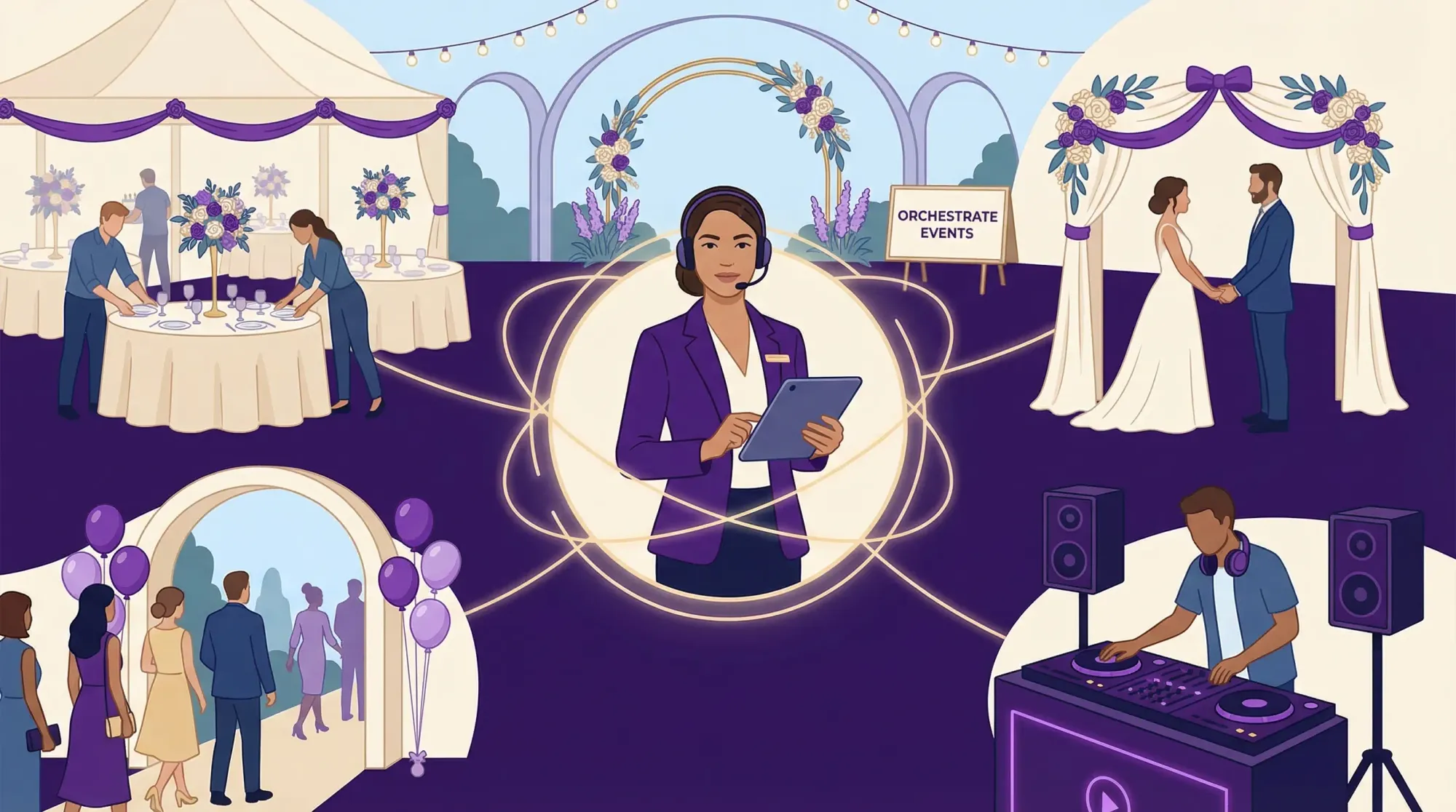
A wedding day is a live production: multiple vendors, hard start times, emotional people, and a timeline that cannot simply “run long” without consequences. The wedding event coordinator (often called a day-of coordinator or wedding manager) is the person whose job is to make sure everything happens when it should, where it should, with as little stress on the couple as possible.
Below is a clear, practical breakdown of wedding event coordinator duties, from the prep work that makes the day possible to the hour-by-hour responsibilities that keep the entire event on track.
First, what a wedding event coordinator is (and isn’t)
Most couples book a coordinator because they want a professional to run the day, not because they need someone to pick linens or negotiate catering menus. Titles vary by market, so it helps to separate the roles by responsibility.
| Role | Main focus | Typical start time | Common misconception |
|---|---|---|---|
| Wedding planner (full or partial) | Decisions and planning (budget, vendors, design, logistics) | Months to a year+ out | “They’ll also be the show caller unless specified” |
| Wedding event coordinator (management / month-of / day-of) | Execution (timeline, vendor coordination, on-site leadership) | 4 to 8 weeks out (often) | “They only show up on the wedding day” |
| Venue coordinator | Venue operations (space access, staff, rules, safety) | Per venue contract | “They manage all vendors and the full timeline” |
A good rule: your wedding event coordinator manages the wedding, your venue coordinator manages the venue.
The core goal: be the “show caller” so you don’t have to
On the wedding day, the coordinator’s job is not just to “help.” It’s to own the operational outcome.
That typically means they:
- Protect the couple’s attention (you stay present, they handle the problems).
- Run the timeline (start cues, transitions, buffers, and recovery when something slips).
- Direct vendors (confirm arrivals, placements, changeovers, and handoffs).
- Keep guests oriented (signage, seating flow, ceremony timing, special needs).
- Keep details correct (personal flowers, place cards, escort display, favors, final look).
Wedding event coordinator duties before the wedding day
Even “day-of” coordination is only possible because of prep work. Here is what a wedding event coordinator usually handles in the final stretch.
4 to 8 weeks out: information gathering and timeline control
This is the period where a coordinator shifts the wedding from “plans” to “operations.” Typical duties include:
- Collecting vendor contracts and contact info, then building a master contact sheet.
- Confirming key logistical answers (load-in rules, parking, rain plan, power access).
- Drafting or refining the wedding day timeline with real durations and buffers.
- Identifying decision gaps (who holds rings, where tips are stored, who bustles the dress).
- Creating a family photo plan and confirming who will gather people.
If you want a deeper look at what’s typically included in modern coordination tiers, Revel.cam’s guide to wedding planning services in 2026 is a useful reference.
7 to 10 days out: confirmations and final documents
A coordinator’s week-of work is about preventing “silent failures,” like a vendor assuming the wrong entrance or a rental company arriving during the ceremony.
They typically:
- Confirm vendor arrival times, setup durations, and strike times.
- Confirm final counts and versions of key items (floor plan, seating chart, menu signage).
- Lock ceremony details (processional order, music cues, mic plan, unity items).
- Build a run-of-show and distribute it to vendors (not just the couple).
Rehearsal: fix the ceremony before it’s public
At rehearsal, the coordinator’s role is to remove ambiguity.
They usually:
- Teach the processional and recessional timing (walking pace, spacing, where to stand).
- Assign who holds what (bouquets, rings, vows) and where items go after.
- Confirm the cue system (who signals music, who releases rows, who closes doors).
- Identify small risks (trip hazards, uneven aisle, sun angle) and adapt.
The day-of breakdown: wedding event coordinator duties by phase
Every wedding is different, but most days follow the same operational phases. Use the breakdown below as a reference for what a coordinator is actually doing while you are getting married.
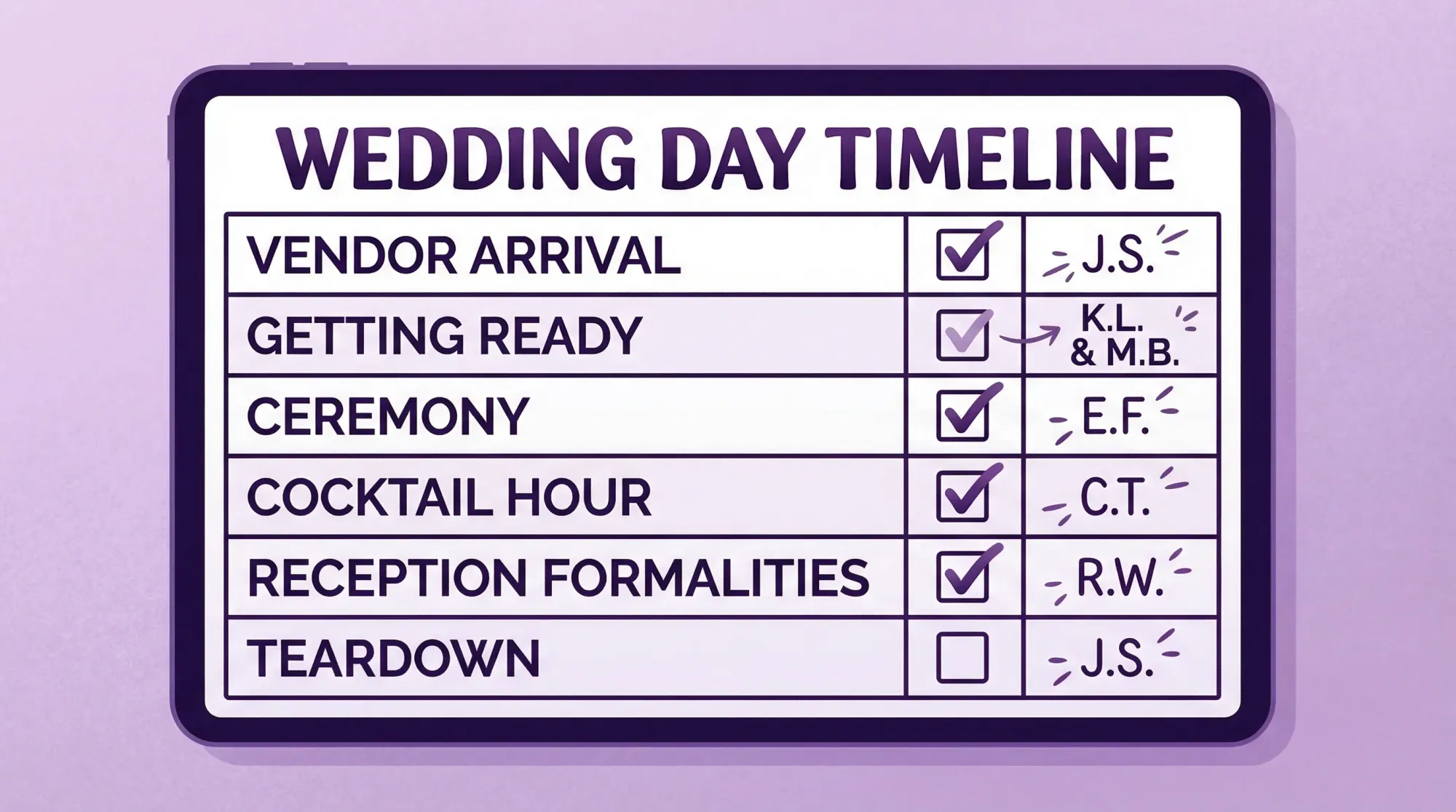
Phase 1: Arrival and venue setup (typically 2 to 5 hours before ceremony)
This is the “build the world” window.
Coordinator duties usually include:
- Arrive early, check access, and do a fast venue walkthrough.
- Confirm floor plan orientation (ceremony chairs, aisle width, reception layout).
- Direct vendor load-in and ensure they use correct entrances and staging areas.
- Verify rentals and deliveries against the order (counts, condition, placement).
- Manage detail placement (guest book, cards, gifts, signage, favors, reserved seats).
- Coordinate florist placements and repurpose plan (what moves from ceremony to reception).
A coordinator is also quietly checking: weather shifts, lighting, sound readiness, and whether anyone needs a plan B now, not later.
Phase 2: Getting ready and pre-ceremony logistics (1 to 3 hours before ceremony)
This is where timelines slip most often because hair and makeup tends to expand.
Coordinator duties usually include:
- Keep hair and makeup on schedule and communicate hard cutoffs (especially for travel).
- Ensure the photographer gets details early (rings, invites, accessories) without chaos.
- Manage the “what goes where” items: vows, rings, boutonnières, bouquets.
- Confirm transportation timing, driver contact, and pickup points.
- Check ceremony setup is complete and aligned (seating, programs, water, reserved signs).
If there’s a first look, the coordinator manages positioning and privacy, so the moment stays calm instead of feeling like a logistics drill.
Phase 3: Ceremony execution (start time to recessional)
Ceremonies run smoothly when someone is confidently cueing.
Coordinator duties typically include:
- Line up wedding party and family, confirm order, and manage last-minute nerves.
- Cue musicians or DJ for processional starts, pacing changes, and microphone handoffs.
- Coordinate guest seating, including late arrivals.
- Troubleshoot sound issues, seating gaps, aisle obstructions, and “where do I stand?” moments.
- Manage the recessional and direct everyone to the next place (family photos, cocktail hour).
This is also where the coordinator protects your officiant from interruptions and keeps the ceremony start from drifting.
Phase 4: Transition and family photos (immediately after ceremony)
Post-ceremony is deceptively complex: guests are moving, vendors are flipping spaces, and family photo time is often emotionally charged.
Coordinator duties usually include:
- Direct guests to cocktail hour and keep pathways clear.
- Start the space flip (ceremony to reception) if applicable.
- Ensure personal items make it to the right place (your bouquet, ceremony decor, gifts).
- Run the family photo flow, or coordinate closely with the photographer and photo wrangler.
- Keep the couple hydrated and on schedule without rushing.
If you want to shorten group photo time without missing key combos, Revel.cam’s guide on group wedding photos that don’t take forever pairs well with good coordination.
Phase 5: Cocktail hour (buffer, recovery, and guest experience)
Cocktail hour is often where a coordinator “wins back time” if earlier moments ran long.
Coordinator duties typically include:
- Coordinate catering pace and bar readiness, especially if guests arrive early.
- Confirm reception details are ready (place cards, favors, table numbers, sweetheart table).
- Align DJ/band and catering on the reception start cue.
- Check bathrooms, trash, signage, and comfort items.
- Quietly reset the couple’s schedule (bustle timing, touch-ups, private moment, portraits).
Phase 6: Reception run-of-show (entrances, dinner, formalities, dancing)
A reception is a sequence of cues. Your coordinator is usually the person ensuring every cue is supported.
Coordinator duties often include:
- Line up entrances and cue the DJ/band on the correct order.
- Coordinate with catering on dinner service timing and toast windows.
- Keep toasts tight and on schedule (or adjust without derailing the night).
- Cue first dance, parent dances, cake cutting, bouquet toss, or other formalities.
- Handle small emergencies (spills, broken bustle, missing place cards) with minimal visibility.
For a deeper run-of-show structure, see Revel.cam’s wedding reception planner timeline, which is built around owners and buffers.
Phase 7: Late-night, send-off, and teardown
This is where “we’ll deal with it later” turns into real costs if nobody is in charge.
Coordinator duties typically include:
- Confirm vendor strike timing (rentals, florist, entertainment, photo booth).
- Ensure personal items are packed (cards, gifts, guest book, leftover desserts, signage).
- Manage final payments or tip handoffs if that’s part of the agreement.
- Coordinate transportation timing, send-off setup, and couple departure.
- Keep a simple lost-and-found plan (where items go, who holds them overnight).
The coordinator’s command center: the documents that make the day work
A wedding event coordinator’s effectiveness is often proportional to the quality of their documents.
| Document | What it includes | Why it matters day-of |
|---|---|---|
| Master contact sheet | Vendor names, roles, phones, arrival times | Eliminates guessing and delays |
| Run-of-show timeline | Every block with start times, cues, buffers | Keeps the whole team aligned |
| Floor plan | Layout, placements, reserved seating | Prevents setup errors and traffic issues |
| Ceremony cue sheet | Processional order, music cues, mic notes | Prevents awkward pauses |
| Must-have list | “Non-negotiables” for the couple | Helps prioritize when choices appear |
| Emergency plan | Weather plan, backup locations, key supplies | Reduces panic when conditions shift |
Communication is a duty, not a soft skill
A major part of the wedding event coordinator’s job is building a communication system that prevents the couple from being the hub.
A simple, common approach is:
- One official “show caller” (the coordinator) makes timing calls.
- One couple contact (often MOH or best man) handles personal questions.
- Vendors communicate changes to the coordinator, not to the couple.
| Situation | Best communication path | Why |
|---|---|---|
| Catering running 10 minutes late | Catering lead → coordinator → DJ/band cue adjustment | Keeps announcements consistent |
| Florist needs a decision on placement | Florist → coordinator → couple contact (if required) | Protects the couple’s time |
| Guests can’t find seating | Guest → coordinator or usher | Keeps couple from being interrupted |
What a wedding event coordinator typically does not do
This varies by contract, but many frustrations come from assumed duties that were never included.
Common non-inclusions (unless explicitly agreed):
- Building complex DIY installations from scratch (especially large-scale decor builds).
- Deep cleaning, trash hauling, or venue-required janitorial work.
- Full styling and design production (ordering, sourcing, warehousing rentals).
- Childcare or guest supervision.
- Acting as photographer, videographer, or content creator.
The best way to avoid surprise is to ask, “What are the boundaries of setup and teardown in your package?” then get it in writing.
A modern duty that’s easy to miss: guest photo collection
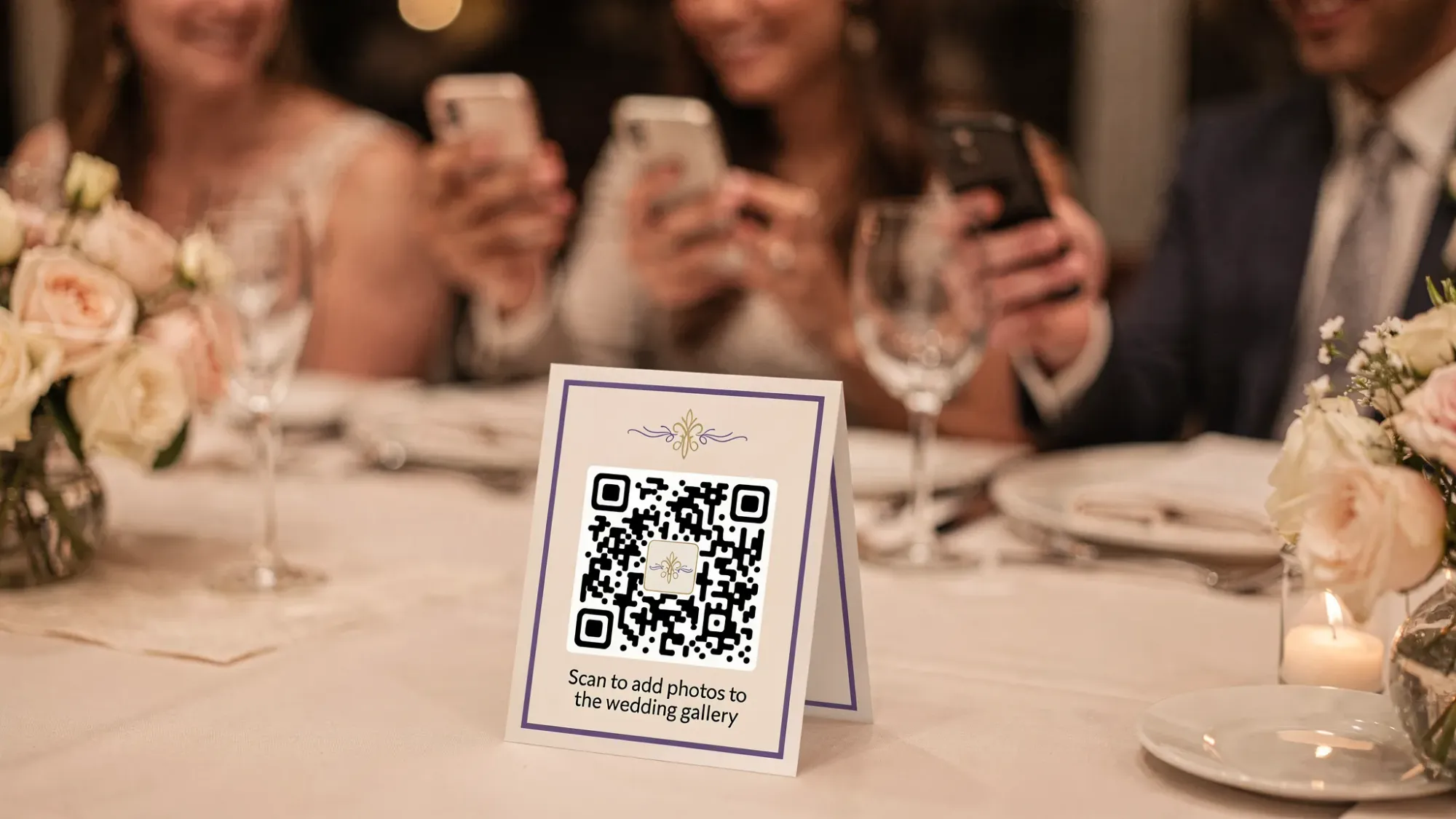
Even when you have a great photographer, guest photos fill gaps because they capture what is happening outside the “official lens.” The operational challenge is that guest photos get lost after the wedding if there’s no system.
A coordinator can treat guest photos like a real workstream:
- Decide the collection method before the wedding.
- Place signage where scanning is natural (welcome sign, bar, tables).
- Ask the DJ/MC for one short announcement when energy is high.
- Assign a helper to ensure signs stay visible and the link works.
Revel.cam is designed for this kind of day-of execution: guests scan a QR code or tap an NFC tag to open a shared camera and upload instantly, with no app install or signup required. Hosts can set photo limits, end time, and review photos before sharing.
If you want a step-by-step setup that fits into real timelines, start with Wedding Guest Photos: The Best Way to Collect Them Fast or the more comprehensive QR photo wedding guide.
How couples can make their coordinator dramatically more effective
If you want your wedding event coordinator to work magic, give them clean inputs.
The “handoff packet” to provide 1 to 2 weeks before
- All vendor contracts (or at least the key pages: arrival, delivery, payments, rules).
- Final vendor contact list (including assistants and day-of leads).
- Final timeline draft plus any immovable constraints (venue curfew, shuttle schedule).
- Floor plans, seating chart, and escort card plan.
- Ceremony plan: processional order, readings, music, mic needs.
- Special situations: sensitive family dynamics, surprises, accessibility needs.
- Who has authority to decide small things during the day (couple contact).
The easiest win: define “success” in one paragraph
A coordinator can prioritize better when they know what matters most to you.
For example:
- “We care most about a calm ceremony start, efficient family photos, and a reception that feels like a party.”
- “We care most about guest comfort outdoors and making sure dinner is on time.”
That single paragraph helps your coordinator make smart trade-offs when the day inevitably presents choices.
Where this leaves you: what you’re actually paying for
When you hire a wedding event coordinator, you are hiring someone to:
- Convert your plan into an executable run-of-show.
- Run vendor logistics and cues in real time.
- Protect your attention by absorbing problems and decisions.
- Deliver a smoother guest experience without you having to manage it.
If you are comparing options, look beyond the label. Ask about their prep process, their documents, and how they call cues during the reception. That is where great coordination becomes visible.
And if you want one piece of the day to become meaningfully easier, delegate your guest photo system into a simple, coordinator-friendly workflow with a single QR entry point and clear ownership. Revel.cam exists for exactly that: one shared camera, one private gallery, captured in the moment.

A writer interested in connection, memory, and the everyday moments that matter more than we realize.
Tags: Wedding planning , Affordable wedding planning , Wedding planning app , Wedding planning tool , DYI wedding photography , Group wedding photos , Wedding photo gallery , Wedding photography , Wedding photography costs , Wedding photos , Wedding photo sharing